
 close


 LOGIN
Aliceann Wilber: The history maker
In 1980, self-confessed soccer novice Alliceann Wilber became William Smith College’s first head coach – 44 years, 640 wins and two national titles later, she is a Hall of Famer who tells Carrie Dunn she still loves her job.
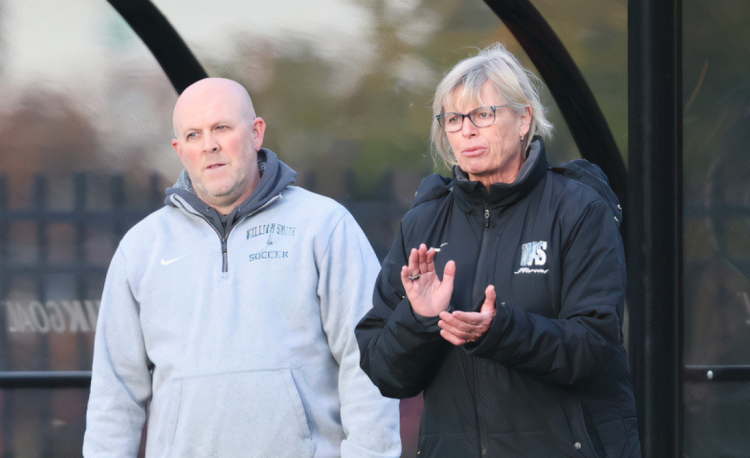
“The one thing I never wanted to do was coach.”
That’s a statement you wouldn’t expect to hear from one of the most successful college soccer coaches of all time.
Aliceann Wilber, the only head coach William Smith College has ever known, is the first woman in college soccer history to lead her team to 600 career victories.
In fact, she is second only to fellow college coaching legend Anson Dorrance in the list of match wins – 640 to his 934.
It is no wonder that she has been inducted into the United Soccer Coaches Hall of Fame, an accolade she received in 2019.
As she reflects on her career, though, she reveals that coaching soccer was never her childhood dream.
Indeed, growing up before Title IX sex-equality legislation guaranteed equal funding for men’s and women’s sports in education settings, her sporting hopes veered towards figure skating, or maybe track and field.
Growing up on a farm, and trying to overcome her shyness, gym class at school was the place she felt most comfortable.
“As a coach, I love training,” she told Women’s Soccer Coaching. “I love practising and getting things done.
“At some point late in my career, I realized, ‘Oh, now I understand why!’. Because, as a youngster, that’s what I did. I practised.”
After Wilber graduated from college in 1974, her ambition was to teach physical education to elementary school children.
“I coached soccer but I didn’t know anything – so I learned by the mistakes I made...”
She found a job at a small school in a remote area and was tasked with starting a sports program. She had good knowledge of a few sports – soccer was not one of them.
“I coached volleyball. I knew something about that because I’d been an athletic trainer as a student for a very good volleyball team at my college.
“I coached track and field and basketball. I coached soccer, but I didn’t know anything, so I learned by the mistakes I made.”
Wilber began to love soccer more and more. When she returned home to help her mother on the farm during summer vacations, she would play in pick-up soccer matches after work, where all the other players were male.
Her career path took a turn during a leave of absence from teaching, while she studied for her Masters degree in order to stay certified. A part-time position opened up at William Smith, in Geneva, New York, to start the women’s soccer program.
That was in 1980 – and Wilber has been there ever since.
She soon realised that, while her teaching background had helped her in a school sport environment, collegiate soccer was a step up.
Wilber admits now that this was a huge learning curve – not just for her, but for the college and the students.
“There was nothing. There had been a club, but it was non-existent, really. When we started here, not only was I ignorant of a lot about soccer – technique, tactics – but of the young women I had to train, many of them had never played soccer either. So we were this blank canvas.”
You need to be logged in to continue reading.
Please register for limited access or take a 30-day risk-free trial of Women's Soccer Coaching to experience the full benefits of a subscription.

Carrie Dunn

Latest Content
Subscribe Today
Newsletter Sign Up
Subscribe Today




Newsletter Sign Up
Subscribe Today
Latest Issue
Discover the simple way to become a more effective, more successful soccer coach
In a recent survey 89% of subscribers said Women's Soccer Coaching makes them more confident, 91% said Women's Soccer Coaching makes them a more effective coach and 93% said Women's Soccer Coaching makes them more inspired.
*includes 3 coaching manuals
Get Inspired
All the latest techniques and approaches


Women's Soccer Coaching offers proven and easy to use soccer drills, coaching sessions, practice plans, small-sided games, warm-ups, training tips and advice.
We've been at the cutting edge of soccer coaching since we launched Soccer Coach Weekly in 2007, creating resources for the grassroots youth coach, following best practice from around the world and insights from the professional game.
