
 close
close


 LOGIN
LOGINYou are viewing
1 of your 3 free articles
Becky Langley: The right fit at London City
The London City Lionesses first team assistant coach tells Carrie Dunn about her role with the club, why it’s the job for her, and her journey getting there


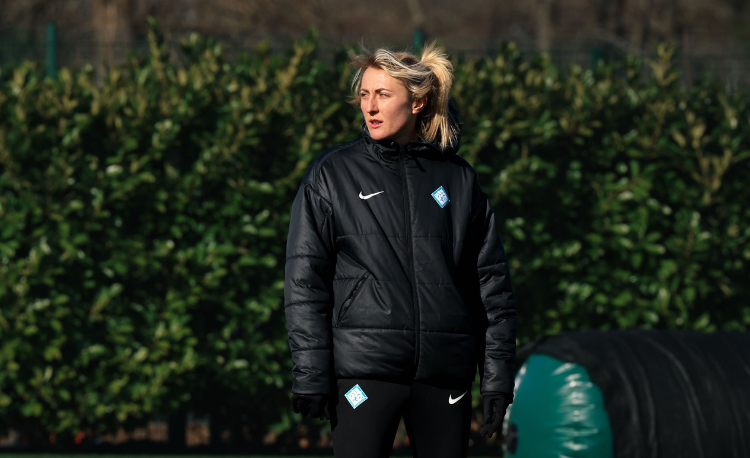
“A hugely ambitious club, very forward-thinking and very women-centred in terms of its approach.”
Becky Langley is talking about London City Lionesses, the Women’s Super League club she joined as assistant coach to Eder Maestre in January 2026. It is the first time she has worked in the top tier, and she describes it as “a really exciting start”.
On the pitch, they have smashed the usual pattern for a newly-promoted team, rapidly becoming part of the furniture towards the top of the table rather than struggling against relegation – and putting together a Women’s FA Cup run to reach the fifth round.
“We’re all really, really ambitious and the plans for next season will be even more ambitious than this season,” she says.
And off the pitch, Becky is inspired by London City Lionesses’ owner, the billionaire businesswoman Michele Kang.
“There’s no limits to her excitement and ambition to drive the project forward, and there’s a real commitment to keep doing so. I’m very lucky, but also really enthusiastic to be a part of that.”
Becky’s time at Newcastle United
But it has also been a time of immense change for Becky. She moved from Northumberland down to the south-east to take the role, meaning she is away from her usual support network that she has built over a number of years.
After beginning her coaching career at Nottingham Forest, she moved into the higher education sector, coaching at Loughborough University and then at Northumbria University – a role that ultimately developed into becoming Newcastle United manager. She steered the Magpies into the second tier and a fully professional era.
After taking Newcastle United from a part-time outfit to a professional one in the WSL2, Becky says that she was “heartbroken” to not be able to take that extra step and lead them in the top flight as well.
“When I first joined Newcastle, it wasn’t a full-time job,” she adds, explaining that it had been a role that evolved from a collaboration with Northumbria University, where she was coaching the students. “It was quite the learning curve when I was so young.”
And since leaving the club, she says she has been able to see what an impact her work created in the region.
“To start a team where there would be 20 to 30 people watching the women’s team to then playing in front of 38,500 at St. James’s Park against Sunderland and understanding the difference I’ve made to women’s football in that region is probably more important to me than actually taking it to that WSL1 next stage. The legacy I’ve left is more important than actually anything else.
“At the same time, it’s been a good learning curve for me because navigating not being there has made me reflect of what I could have done better. I navigated so much change so quickly.
“I’m really proud of the job I’ve done there.”
But at London City Lionesses, Becky found her opportunity at WSL1 level.
“In football it’s massively about relationships that you build on and off the pitch with people. So when I understood that London City were interested in another coach coming on board the project and given that female-centred approach, which I’d given a lot of commitment to at Newcastle, I think it probably just was the right fit.”
Understanding the assistant coach role
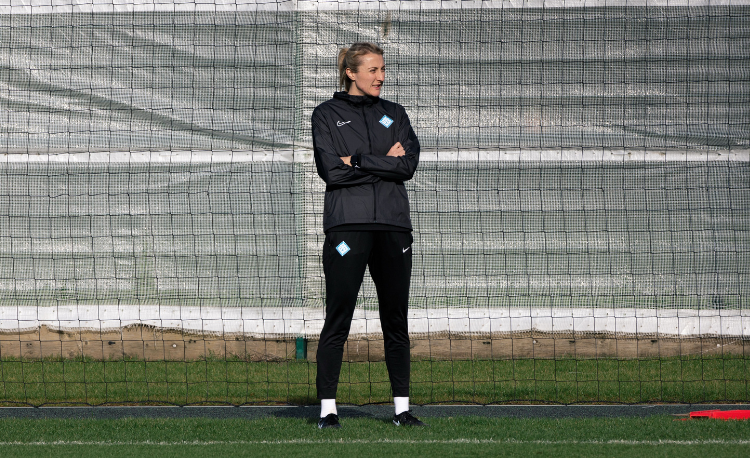
She is also adjusting to being an assistant coach rather than a head coach – something she calls “a really interesting learning curve”.
“Initially it’s a lot less stressful, in terms of managing everything day-to-day. The project at Newcastle was massive. It wasn’t just managing players and staff. We were rebuilding a full new training centre. We were navigating a lot of change on and off the pitch. When I left Newcastle, we’d spent 18 weeks moving across three different sites. We were training at one site, gyming and lifting at another site, and we were eating at St James’s Park. So in terms of the navigation of all of that as a manager, it was a lot.
“Coming to London City where I’m an assistant, my role is very specific in terms of what I’m being asked to do. I’m not overseeing everything. It’s been nice to take an upward step in terms of the level of the players that I’m actually working with. However, the role is obviously very different than being that leader right at the top as the manager. It’s been really interesting for me to understand what it feels like to be that number two role. If I’m ever a manager again in the future, it’s given me a greater depth of understanding of what I would want from a number two supporting me.”
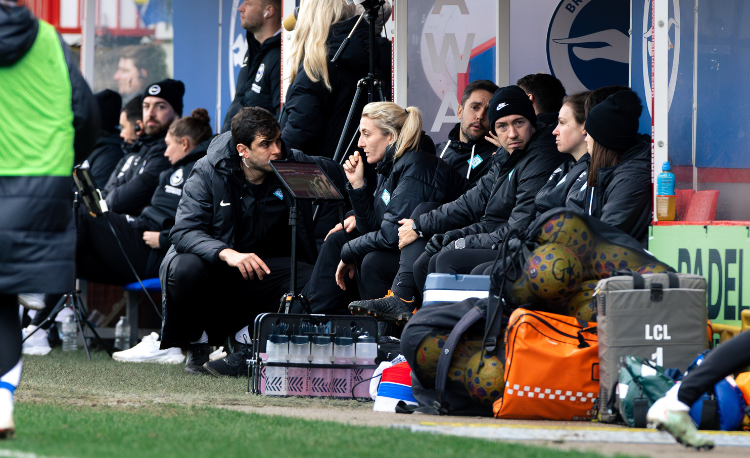
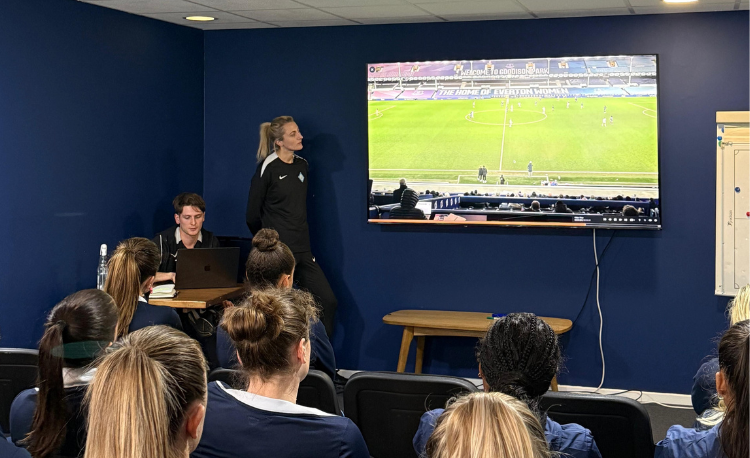
She lists her usual duties: “Delivering practices and sessions for the team, going through clips one to one with players. I spend a lot of my time working with the analyst, looking at the opposition; every week I would produce a report on the opponents who are playing against that weekend, what I think the main trends of the opponent are, what tendencies do we see often from them, how do I think we can look to exploit the gaps that they’re proposing, which are the key players in that opposition team, and then feed that back to the manager.”
She also says that creating strong personal relationships with players is crucial for an assistant coach.
“Players will always want to speak to the manager because they are the person that picks the team. They know that they’re the main decision-maker. But I think with assistants, it can feel less emotional because you’re talking about their clips or how they’ve been training, and reviewing those together and [it’s] definitely about building those relationships so that there’s the element of trust there between you and the player.
“So they can give honest feedback but at the same time understand you’re going to feed some things back to the manager because that’s your job, but at the same time you’re not going to run to the manager with everything that the player is saying.”
Her experience as a head coach helped her to shape her approach as an assistant.
“I reflected on what I thought my assistant at Newcastle did well to support me, and one of those things was massively about being honest and having honest conversations with me instead of being a yes person. She was very good at telling me straight when I was doing something wrong, but also telling me, ‘I thought that was really good and you need to continue doing that’, so I learned a lot from her in terms of what I wanted to then do to support Eder.
“It’s really important to have two very different skill sets in terms of a head coach and an assistant coach. When I first sat down with Eder, I tried to understand what he wanted from me specifically. He’s got a very educated tactical understanding and I’ve learned a lot from him tactically, but obviously I’ve got that understanding of the English leagues probably a little bit more from working in this area a little longer.”
Neither Becky nor Maestre had coached in the English top flight before this season, though, and she thinks that brings a “freshness” to their approach: “You’ve got two people that are very passionate and hungry to learn and want to grow with the club, so there’s a real humbleness with that.”
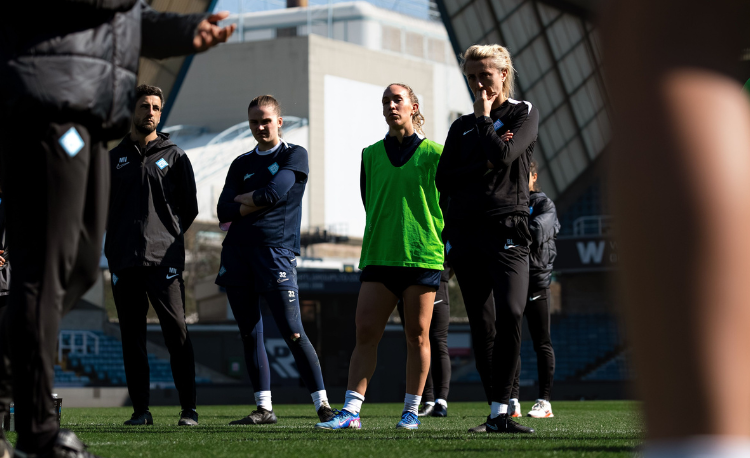
With London City Lionesses the only club in the top flight who operate independently of a men’s set-up, they have plenty of challenges – but also massive opportunities to create an exciting legacy. Becky points to the sell-out crowd of over 5,400 they attracted for their home match against Arsenal at the CopperJax Community Stadium in Bromley, and the 4,820 fans who attended the clash against Chelsea at Millwall’s Den.
“It’s so special having that independent women’s team, and that’s what’s brilliant about this football club. The CEO is on the same training site as we all are, and having lunch at the same time as those guys. So everything’s very approachable. The access is there, which is brilliant, which you don’t often find in a football club that’s attached to the men’s side because the CEO is working across both [men and women] and can’t give the same amount of attention to the women’s team as they do the men’s first team.
“It’s super special. That was what attracted to me to move down to Kent and work here - it’s a very female-centred approach.”
The common thread
Becky considers herself lucky to be able to coach world-class players every day – but though the achievement level might have changed, some things in her life have stayed exactly the same.
She has a degree in sports science from Loughborough University, and although she played to a semi-professional level, the chance was not there for her to turn fully professional. She concentrated on education and coaching, with her first big break coming when she was appointed sports science intern at Nottingham Forest.
“I was more excited in the conversations that I had with the coaches than I was crunching the GPS data and running warm-ups,” she admits. “I got that feeling that I wanted to start coaching more. I was already coaching girls’ teams at the time. It went from there, really.
“I’m really proud that I’ve coached in the top five divisions of women’s football. I was Loughborough students’ coach when the team were competing in Tier 5, and then coaching Newcastle from Tier 4 to Tier 2.”
She also led the women’s football programme at Northumbria University, with students in her squad representing the big-name clubs in the region, or having elite experience in the USA.
“I was surrounded by high quality players, and I was only 23, 24 years old myself!” she recalls. “There was no staff team around me. It was me running everything from warm-ups right the way running through the full session and everything to do with that.
“The professionalism of uni football is very different to a full-time professional club, but I think it gave me some really good lessons in terms of player management.”
“At London City, it’s very different to me working with uni players, but I think what’s stayed the same is my commitment to make the players better - and my passion to win is still the same regardless of the context. You’ve got to stay true to yourself and not compromise your values.”

Carrie Dunn

Latest Content
Subscribe Today
Newsletter Sign Up
Subscribe Today
Newsletter Sign Up
Subscribe Today
Latest Issue

Discover the simple way to become a more effective, more successful soccer coach
In a recent survey 89% of subscribers said Women's Soccer Coaching makes them more confident, 91% said Women's Soccer Coaching makes them a more effective coach and 93% said Women's Soccer Coaching makes them more inspired.
*includes 3 coaching manuals
Get Inspired
All the latest techniques and approaches


Women's Soccer Coaching offers proven and easy to use soccer drills, coaching sessions, practice plans, small-sided games, warm-ups, training tips and advice.
We've been at the cutting edge of soccer coaching since we launched Soccer Coach Weekly in 2007, creating resources for the grassroots youth coach, following best practice from around the world and insights from the professional game.
