
 close


 LOGIN
How to spot when a player needs recovery rather than more running
What signs might there be that a rest is needed? And how can you best check in with your players?
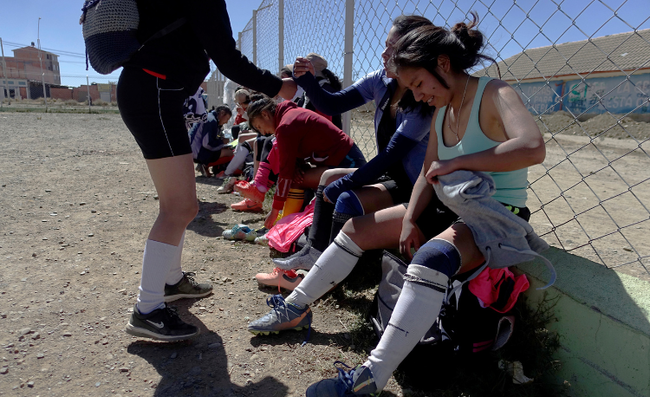
As coaches, we’ve all experienced sessions where a player looks off the pace. How many of us are guilty of our first thought being, “she needs to work harder”?
Sometimes that’s true. But sometimes another running drill is the last thing she needs.
There’s a big difference between a player who isn’t putting the effort in and one who’s simply running on empty. And it’s important as coaches that we can spot the difference and address it accordingly.
One of the first signs of fatigue is when a player’s quality drops rather than her attitude. Maybe her first touch isn’t as clean as normal, she’s taking longer to make decisions or she’s losing races she’d usually win. You can often tell she’s trying, but her body just isn’t responding.
I also watch body language. Is she getting up slowly after challenges? Taking longer to recover between drills? Is she unusually quiet or not communicating with team-mates? These little things can often tell you more than the running stats.
With women’s football, there are so many things outside of football that affect recovery too. Most grassroots players are juggling work or university, family life and long days before they even get to training. Some have played five-a-side with friends, been to the gym or gone for a run because they think they need to do more. Add two training sessions and a match every week and it’s easy to see how fatigue builds up.
It’s also worth remembering that every female player is different. Energy levels can fluctuate during the menstrual cycle and some players genuinely feel brilliant one week and completely drained the next. Creating an environment where players feel comfortable saying, “I’m not quite at it today,” can make a huge difference. They don’t need to tell you every detail, but knowing they can be honest helps you make better coaching decisions and tailor workload accordingly.
That doesn’t mean wrapping players in cotton wool. Sometimes they do need a push. The skill is knowing when to push and when to ease off.
If I’ve got a player who’s clearly fatigued, I might reduce her running load but keep her involved in technical practices, possession games as a bounce player, or in finishing exercises. She still gets quality touches and tactical learning without emptying the tank even further.
A quick check-in with players before training is often enough. You might ask:
- “How are the legs feeling?”
- “How have you recovered from Sunday’s game?”
- “Anything feeling tight or sore?”
As coaches, we spend a lot of time planning how hard we’re going to work our players –. but considering players’ recovery will provide more longer-term gains both physically and mentally.
You need to be logged in to continue reading.
Please register for limited access or take a 30-day risk-free trial of Women's Soccer Coaching to experience the full benefits of a subscription.

Hannah Duncan

Latest Content

Subscribe Today

Newsletter Sign Up
Subscribe Today



Newsletter Sign Up
Subscribe Today
Latest Issue

Discover the simple way to become a more effective, more successful soccer coach
In a recent survey 89% of subscribers said Women's Soccer Coaching makes them more confident, 91% said Women's Soccer Coaching makes them a more effective coach and 93% said Women's Soccer Coaching makes them more inspired.
*includes 3 coaching manuals
Get Inspired
All the latest techniques and approaches


Women's Soccer Coaching offers proven and easy to use soccer drills, coaching sessions, practice plans, small-sided games, warm-ups, training tips and advice.
We've been at the cutting edge of soccer coaching since we launched Soccer Coach Weekly in 2007, creating resources for the grassroots youth coach, following best practice from around the world and insights from the professional game.
