
 close
close


 LOGIN
LOGINDeveloping talent identification and scouting for beach soccer and futsal
Scouts in futsal and beach soccer must go beyond traditional frameworks to unlock deeper insights into a player’s technical skill, adaptability, intelligence, and resilience and find the next generation of female stars


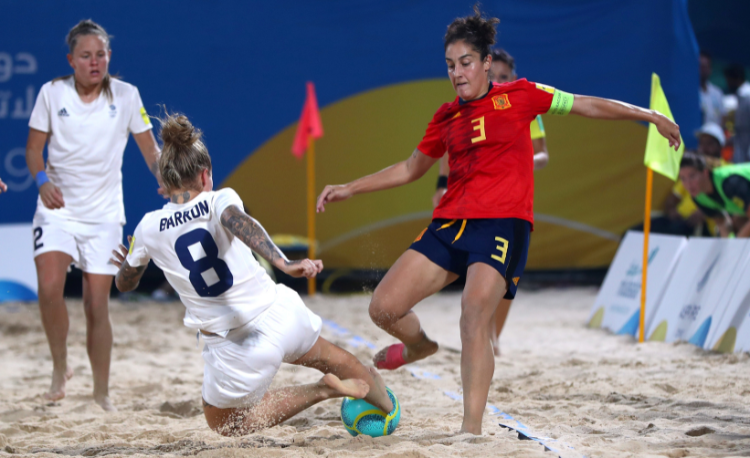
The search for the next star in women’s beach soccer and futsal doesn’t always start on the grass. Some of the most creative, technically gifted, and resilient players emerge from grassroots organisations and small-sided games similar to beach soccer and the tight confines of futsal.
In traditional scouting, these modalities offer rich insights into a player’s potential beyond physical metrics especially important in the women’s game, where late developers, confidence gaps, and systemic bias can obscure real talent.
This article explores how scouts can build inclusive talent ID frameworks in futsal and beach soccer, and how to look beyond what’s obvious to uncover future stars.
Beyond physical metrics: What makes a future star in women’s futsal and beach soccer?
Beyond the physical metrics, when looking for a future star in either women’s futsal and beach soccer, I believe viewing players as a whole is critically important. Many players do not begin playing futsal or beach soccer - this is usually a sport that is learned after playing the traditional 11-a-side grass game.
Game decisions, spatial awareness, first touch and ball control, creativity in tight spaces, game intelligence and anticipation are examples of skills they may have developed that are all relative to beach soccer and futsal.
Further, a true future star would be one who is humble and willing to make mistakes technically and tactically whilst growing in the specifics of both of these modalities.
Spotting late developers: How to keep the door open for emerging talent
Being able to spot late developers is prime for emerging talent for players within both futsal and beach soccer modalities. As the pathway for both of these modalities is emerging as we speak, it is critically important to keep the door open for emerging talent and provide helpful insights to the sport and playing opportunities both domestically and internationally.
On the ID side, it’s important to evaluate where a player stands relative to their peers, how their improvement and growth is flowing, ie. gradual, consistent, linear? Is this player coachable?
By tracking performance over time specifically in beach soccer and futsal environments, you can then be able to identify players who could have been potentially overlooked in traditional formats but show signs of high potential.
Creating a talent ID framework for grassroots girls
In order for these modalities to become truly enticing and engaging for the sport, it is crucial to have a grassroots framework instilled for younger players to understand and grow with the game on both a technical and tactical level. Frameworks containing technical learning, game understanding, contextual evaluation and repeated observation are key.
The earlier the development, a better a player can gain insight and higher tactical IQ whilst engaging all specific technical skills from beach soccer and futsal. The training and development at the grassroots level will provide substantial mental and physical growth and make an extremely well-rounded athlete able to be fluid within any modality of the sport.
Bias in talent ID: How to recognize and reduce it in female pathways?
Unfortunately, there are areas of bias in talent ID, as with any area of soccer, but in order to minimise any type of bias, there needs to be clear and organised frameworks and procedures instilled, creating a culture of focused viewpoints that have the scope to view a variety of skill sets. The more you look at a player in their entirety, the more you can gain a higher perspective with the overall player in mind, avoiding any potential bias.
What to look for in specific positions
In beach soccer and in futsal, each and every position has their unique physical and technical skills.
Defensive players, most commonly referred to as ’Fixos’, are players that have a stronger skillset at winning the ball in 50/50 and 1v1 situations.
Technically, they are players that have tight ball control and are very precise, accurate short and long-range passing. Tactically, they are often part of the initial play making and must have good vision, knowledge of the rhythm of the game and also move in transitions of play.
Midfield players, most commonly referred to as ’Alas’, are players who usually have a good level of transitional speed and endurance as they move the most freely on the court.
Technically, these players often have quick ball control with several parts of their feet depending on the surface (court/sand). In beach soccer, these players are often aerial and can move with the ball on their thigh and can score with volleys and even bicycle kicks.
Forward players, most commonly referred to as ’Pivos’, are players that execute finishing and are focused on finding the back of the net.
A solid Pivo is a player who has extremely good foot skills, can hold a ball close to their body and manipulate that ball to score or to combine an attacking play. A player in this position has explosive speed and maintains strength to beat defensive players.
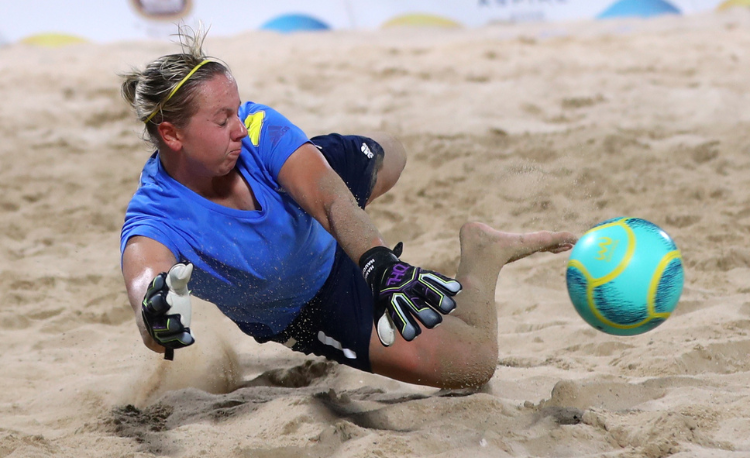
Goalkeepers are essential in both modalities, setting the initial rhythm and able to assist with the start of plays. They must have quick reactions, a presence of strength and confidence, exceptionally accurate distribution with feet and hands, and they are often an important line of defence.
Overall, important features for any position within these modalities is maintaining a high level of strength and physical fitness as well as good technical control. Since they are both considered small-sided games, each player must be able to move fluidly and at ease and will often be in positions required to attack and defend in certain phases of the game.
How culture and confidence impact talent recognition in girls and how coaches can mitigate against this
Culture and confidence can have major impacts on talent recognition because it is often the player’s mental state in performance that can be difficult to truly ID players.
Coaches can help to mitigate against this by doing mental training with their players in order to ingrain this as part of their football culture.
Using data and tech in female talent ID
Technology in football is currently widely used and will continue to be so. There are different forms of tracking devices for movement patterns, tactical awareness and video analysis in beach soccer and futsal. Technology helps to track development over time to see development and growth.
The most common challenges with data and tech are cost and accessibility. There are multiple other tools that can be used at the grassroots level, including smart phones, partnering with local universities in their sport science department, and keeping player evaluations as a means to monitor their development over time.
Beach soccer and futsal are both growing and evolving modalities of football; they are more than just off-season gap-fillers in football, they are a haven for some amazing female footballers. For scouts in futsal and beach soccer, they must go beyond traditional frameworks, these formats unlock deeper insights into a player’s technical skill, adaptability, intelligence, and resilience.
By embracing these non-traditional modalities, reducing bias, and building inclusive long-term frameworks, we can ensure that the next generation of female stars in beach soccer and in futsal will be found!

Luisa Meza

Latest Content

Subscribe Today

Newsletter Sign Up
Subscribe Today


Newsletter Sign Up
Subscribe Today
Latest Issue

Discover the simple way to become a more effective, more successful soccer coach
In a recent survey 89% of subscribers said Women's Soccer Coaching makes them more confident, 91% said Women's Soccer Coaching makes them a more effective coach and 93% said Women's Soccer Coaching makes them more inspired.
*includes 3 coaching manuals
Get Inspired
All the latest techniques and approaches


Women's Soccer Coaching offers proven and easy to use soccer drills, coaching sessions, practice plans, small-sided games, warm-ups, training tips and advice.
We've been at the cutting edge of soccer coaching since we launched Soccer Coach Weekly in 2007, creating resources for the grassroots youth coach, following best practice from around the world and insights from the professional game.
