
 close
close


 LOGIN
LOGINYou are viewing
1 of your 3 free articles
Stephanie Zambra: Player to coach
Following a successful playing career with the likes of Peamount United, Houston Dash, Sunderland, Florentia, Shamrock Rovers, and the Republic of Ireland international team, Stephanie Zambra has moved into coaching. She tells Carrie Dunn all about the transition


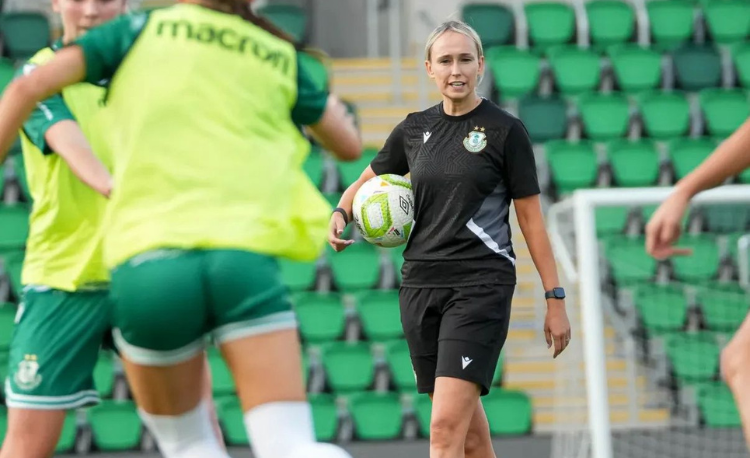
When football’s glitterati headed to the FIFA Best Awards at the end of 2025, Stephanie Zambra was recalling her own moment in that very bright spotlight.
Over a decade ago, she was there as one of the three shortlisted players for the prestigious Puskas Award, for the best goal of the year.
Then Stephanie Roche – before her marriage to husband and fellow footballer Dean Zambra – her effort from distance for Peamount United in 2013 went viral on social media.
“It was a crazy, crazy time,” the former Ireland international recalls. She was tagged in a tweet that told her she’d made the top ten, and she was astounded by the level of support she got.
“The whole country got behind me. I had people coming from all over the world to interview me - I had a guy from Brazil come over, which I thought was just mental that they were coming all the way over to interview me, because I was just an Irish girl who loved playing football. I wasn’t a superstar by any means.
“I was just lucky to have so much support, and Irish people are brilliant in getting behind their own.”
As a player, she also represented Sunderland, and had spells in Italy, France and the USA, before retiring at the end of 2024.
Steph enjoyed some immense highs during her playing career, but also some awful luck. She thinks those experiences help her to empathise with her players now.
“I’ve had a good career. I’ve got to experience some amazing memories. I’ve played in some great teams. I got to play in the WSL in England. I’ve played for my country a number of times, but there’s always those ones that you look back on and go, ‘If that had been better or if I hadn’t got that injury, what could have happened?’ But that’s the reality of football.”
She adds: “I do try to look back on my career and think of it fondly, but there’s also so many things that I’ve learned from and that have helped make me not just a better player or a better football person or a coach, but just a better person, because I’ve experienced everything you can imagine in the game.
“I try to share the knowledge and experience I’ve had with as many young players as possible to try to give them the tools to be able to deal with the stuff that maybe I wasn’t prepared for - I think that’s something that I can take from it, that I’ve learned from everything that’s happened and tried to turn everything into a positive as much as possible.”
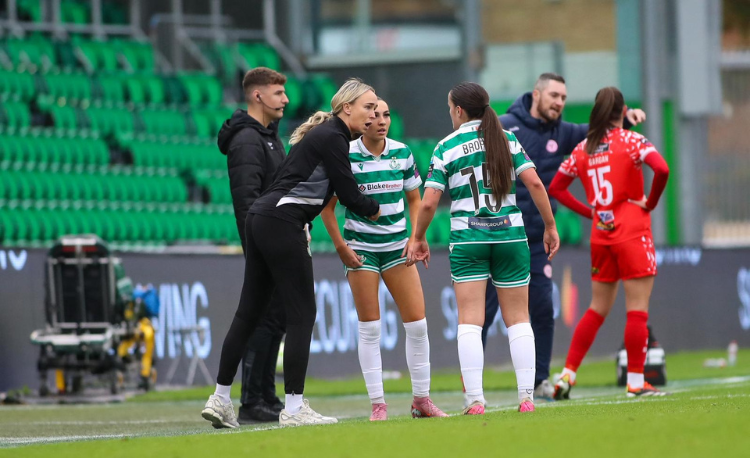
Transitioning from player to coach
In the summer of 2025, Steph took over as interim head coach of Shamrock Rovers, steering them to the end of the season.
“It’s been a very, very quick turnaround in terms of me retiring from football and getting straight into coaching, but I don’t think I’d have it any other way. Football’s been my whole life, it’s always been there, and over the last maybe 10 years of my playing career, I always thought, ‘I want to get into coaching and I want to stay involved in football.’
“The manager’s job definitely came a little bit quicker than I expected. I was still just finding my feet in terms of coaching.”
Steph had been assistant coach to previous incumbent Collie O’Neill, and as a senior player before her retirement, she did not struggle too much with the transition to the top job.
“I was always kind of nearly a coach as a player, if that makes sense, particularly because a lot of the girls in my team in my last season were very, very young - we had some girls who were only 16 and 17 years of age. So a lot of the time when I was playing alongside them, I was nearly coaching them as I went, and they’d always ask me questions about different things. So I think I’d probably become that coach on the pitch anyway.
“I would have been that go-between between the staff and the players anyway, myself and Aine O’Gorman, who was the captain, we would have always been that senior presence on the pitch, so it wasn’t a huge difficulty.
“If I’m honest, the reason why I stopped playing was because I was looking around me going, ‘Jeez, these are all very, very young! It’s probably my time to transition out of football and get into coaching!’”
The learning curve
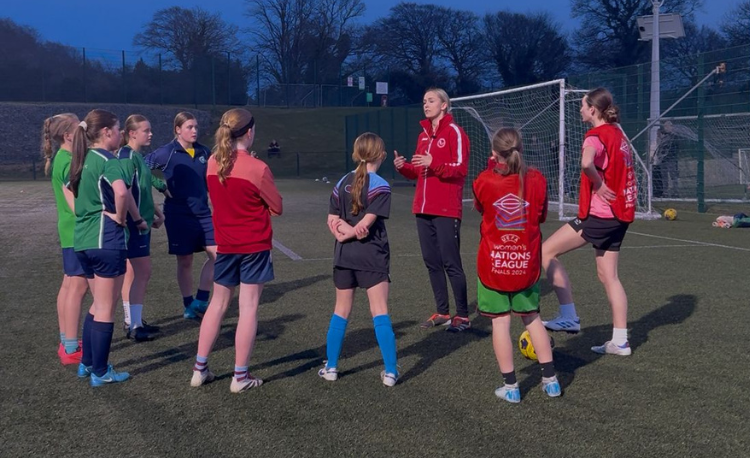
However, taking over at Shamrock Rovers was by no means her first experience of coaching. She set up her own coaching company several years ago, and that is now her full-time job, visiting schools to give on-pitch sessions and mindset coaching, talking about her own career.
And as she came towards the end of her playing career, she signed up for the FAI’s player to coach programme in association with the PFAI, the footballers’ union in Ireland, which has given her the opportunity to get additional coaching experience in the international set-up with the Ireland under-17s.
She says she has “enjoyed every minute” of her time with the Ireland under-17s – despite some nerves at first.
“I didn’t want to be going away and the girls just thinking I’m just there because of the high-profile player I was. I wanted to prove that I actually am a good coach and I know what I’m doing when it comes to coaching, because I think far too often in my playing career, I would have come across players maybe who just finished up playing and they come in [as a coach] and they probably wouldn’t have put any effort in or work in, and you notice that straight away as a player.”
In that first camp, the squad travelled to Spain for their group matches in qualification for the European Championships – and Steph says she learned a lot from head coach James Scott.
“It was a really good learning curve for me - even just little things like presenting analysis and doing stuff like that wouldn’t have been something I would have done that often. Obviously I would be very good at reading games and being able to clip analysis for myself and my own individual stuff, but actually picking out stuff from games and trying to help young players, and even just something as simple as getting up and presenting to a group of people, that was something that I hadn’t really done before.”
She adds: “It is a difficult transition, when you’ve been so used to being the player and receiving the information and now you’re the one that’s giving the information and having to make sure these players are prepared.
“That definitely did help with my hunger to want to go on, because after that trip, I was like, ‘Yeah, this is definitely for me. I want to give everything to this and I want to get as good as I can be and be the best coach possible.’”
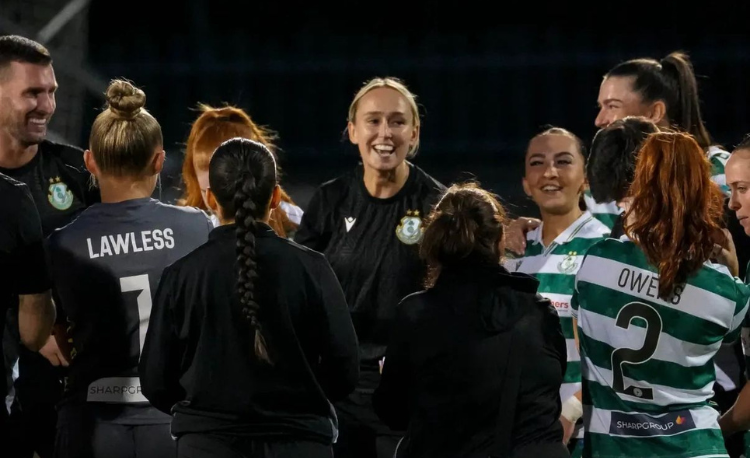
Steph’s empowering approach
Steph says she has been very fortunate in her early coaching career, gaining mentorship from experienced coaches including Scott and O’Neill.
“They’re both coaches that are very different but bring different elements that I could definitely pick into,” she says.
“As a coach, I’m probably very similar to the way I was as a player. Since taking over with Rovers, the biggest thing I wanted to try and get the girls to do was to believe in themselves and have confidence when playing.
“I probably have an old-school approach to football. I’ve been to loads of different coaching courses. I’ve done a lot of CPD events. Sometimes when I hear other coaches talking about football, I think they complicate it a lot.
“I just try to simplify everything I do. I would have been the type of player that played with a style of ‘we’ll score more than you’, so I want my players to play that way too. I want them to have an understanding that you’re going to make mistakes in games, things aren’t always going to go perfectly, but it’s how you approach the game, how you approach setbacks within a game, and just to try and empower the girls to have their own problem-solving skills on the pitch and be able to help each other and coach each other through.
“The reality of it is that a coach can only prepare you so much. The individual player has to be able to go out and put the performance in and do what’s required throughout the game.”
She also wants to empower everyone else on the coaching staff to express their opinions.
“I’ve been in environments before as a coach where you’re afraid to say something because it might not be the right thing that the other coach thinks of. Obviously you all have to have the shared message and the same shared goal in place, but it is important that everybody in the staff has their input and isn’t just going along [with it], because if you’re just going through the emotions as a player, you’re not going to give everything, and it’s the same as a coach.”
One of Steph’s key words is “professionalism” – and she wants to bring that to everything she does.
She does, however, admit that football is unusually important to her.
“It’s literally my whole life,” she says. “I was joking with the girls in one of my pre-match talks towards the end of the season and I said, ‘A lot of the time, my weekend depends on the result of Shamrock Rovers and the result of Manchester United,’ - and Manchester United weren’t in a very good state at the time - so I was saying, ‘Everything rests on you now, you determine whether I have a good weekend or not!’
“They were laughing at me, but it’s the truth. I care so much about football that it does affect my life if it doesn’t go well.
“I have to now get the balance. It’s important that I put across a professional standard, but also make sure they enjoy what they’re doing and they’re happy to come and be in the environment that we’ve put together.”
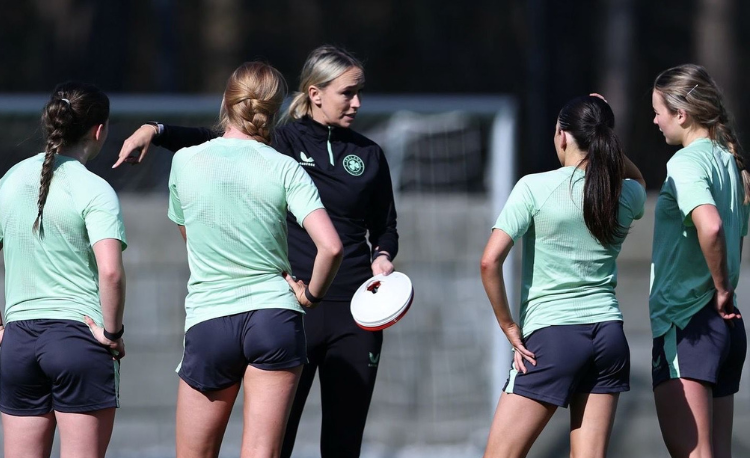
The fun of football
There’s a big difference between coaching the youngest schoolchildren and coaching a women’s senior team, though.
“Being in the schools and seeing how much the kids enjoy it when they’re out playing, that gives me the reminder of this is why people play football. When you’re in a really elite environment and everything’s really intense and everything’s about win-win-win and you have to be prepared and you have to do all the right things, being in this environment with Champion Coaching can give me a little bit of a step back where I go, ‘Right, you know what? This side of it is also really important.’”
And she reminds herself of that when she is working with young players who are new to senior football.
“It’s important that you have that balance with them and you remember that they started playing football because they loved it and they had fun doing it - and if you take that away from them too soon, then you’re not going to get the best from them.
“So I think what I do, in all levels of the football that I do, comes together to help make me a better coach.”

Carrie Dunn

Latest Content
Subscribe Today

Newsletter Sign Up
Subscribe Today
Newsletter Sign Up
Subscribe Today
Latest Issue
Discover the simple way to become a more effective, more successful soccer coach
In a recent survey 89% of subscribers said Women's Soccer Coaching makes them more confident, 91% said Women's Soccer Coaching makes them a more effective coach and 93% said Women's Soccer Coaching makes them more inspired.
*includes 3 coaching manuals
Get Inspired
All the latest techniques and approaches


Women's Soccer Coaching offers proven and easy to use soccer drills, coaching sessions, practice plans, small-sided games, warm-ups, training tips and advice.
We've been at the cutting edge of soccer coaching since we launched Soccer Coach Weekly in 2007, creating resources for the grassroots youth coach, following best practice from around the world and insights from the professional game.
