
 close
close


 LOGIN
LOGINYou are viewing
1 of your 3 free articles
Emma Byrne: Finding her home at Lewes FC
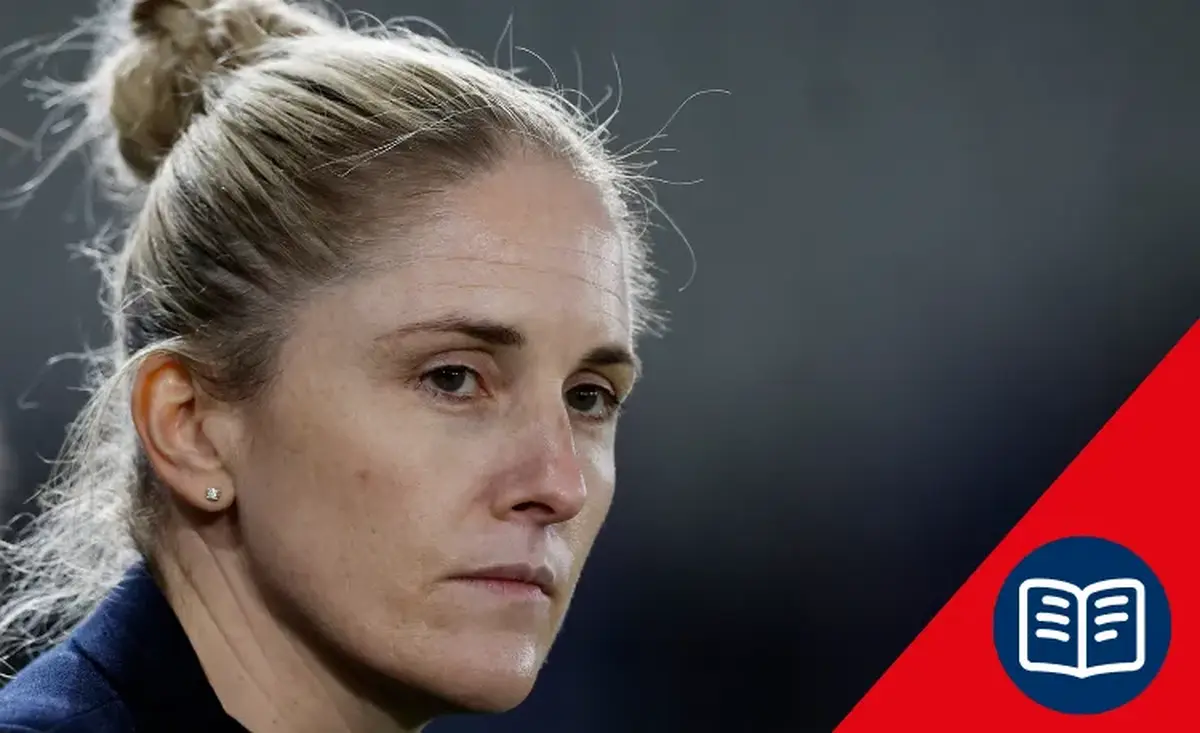
In July 2025, Emma Byrne was named manager of FA Women’s National League South team Lewes FC. The former Arsenal goalkeeper, and Ireland’s most capped player, tells Carrie Dunn why the club is the place for her


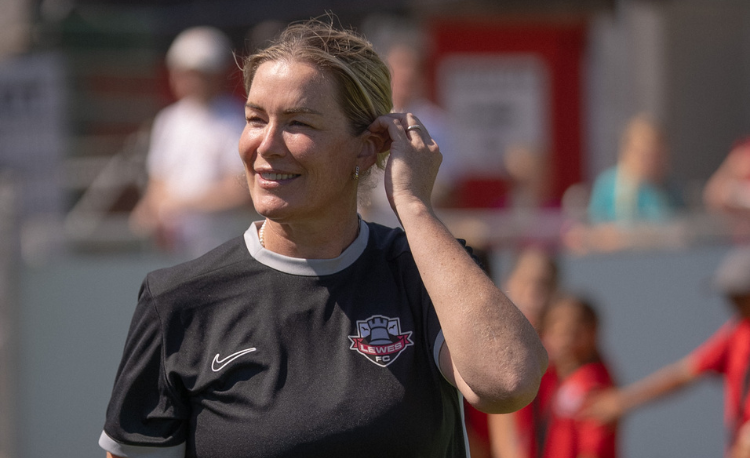
“I just want to work somewhere that’s supportive and that respects women and respects coaches and respects people and respects each other because I can’t be dealing with any kind of negative environment or any kind of toxic environment.”
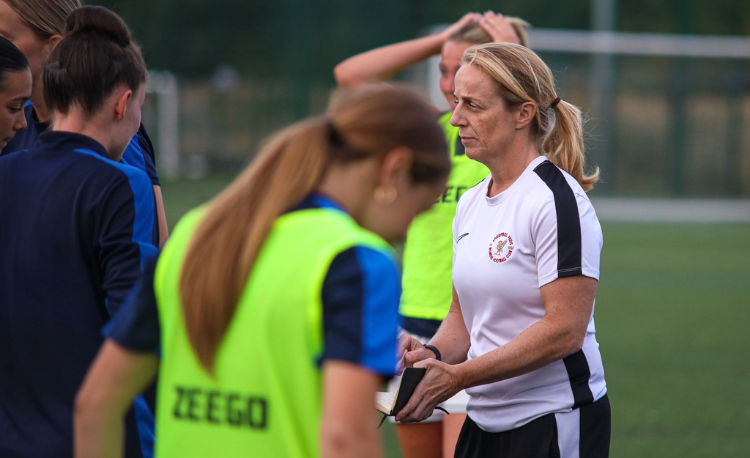
Emma Byrne has found what she is looking for, at third-tier Lewes FC, where she is in her first season as head coach. Lewes has been referred to in shorthand as “Equality FC” because it pays its men and women equally regardless of the level they are playing at, and they are also committed to working with commercial partners whose values link with theirs.
Emma immediately felt that Lewes was the right place for her as soon as she stepped into the club, but after discussions with head of women’s football Lynne Burrell and COO Kelly Lindsey, she was even more sure of her decision.
“It just so happens that the club is ambitious, so they’ve got all the nice extras, but for me, it was all about the environment. You speak about equality, but when you say equality, I just hear respect for everybody and respect for whoever is working here and whoever belongs to the club, and that is here in abundance. It’s definitely the right place for me.”
“A great club”
Emma was familiar with Lewes, their set-up and their ethos because she had travelled there previously to watch one of her Ireland goalkeepers, Sophie Whitehouse.
“It was just such a lovely environment to come down to and to speak with the general manager, and people on the board were all very friendly, very down to earth. [The ground is] dog friendly, which was a massive, massive bonus for me - I thought that was incredible to see dogs in the stadium!
“But more importantly, [Lewes has] really good people running a club and trying to do it the right way and in a very supportive environment, which is hard to find in football, so I knew straight away that it was a great club and that I felt very good just going to watch the games, and I felt very good speaking to people here.
“When they did get in touch saying they needed a hand, it was very easy because I needed time on the pitch. They needed someone to come in and help them out in what was already a great structure. I needed a really good environment to be in.
“So it was a win-win.”
Why goalkeeper coaching is so specific
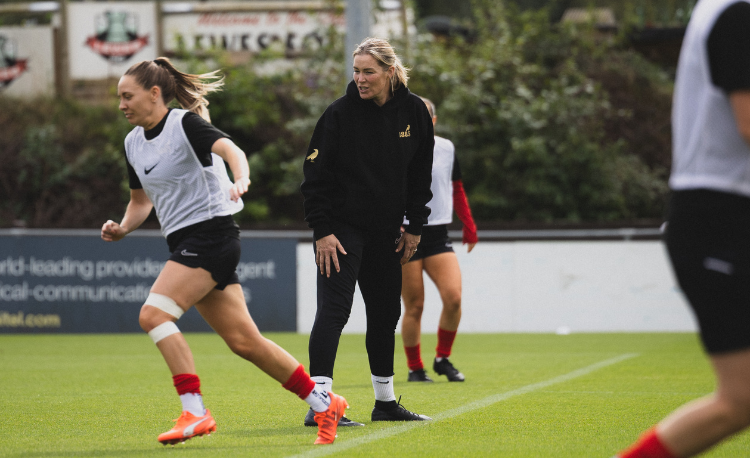
Alongside her role as head coach at Lewes, Emma has the job of head of goalkeeping, supporting the women’s team goalkeeper coach. Such specialist support wasn’t common at the start of her own playing career, which spanned nearly three decades and included a UEFA Women’s Champions League title (then the UEFA Women’s Cup) as well as multiple leagues and cups, plus more than a century of caps for Ireland.
“I was on the women’s national team when I was 15, so I was lucky in that way, but there was nothing before that. There definitely wasn’t a goalkeeping coach at my club level, so I was [only] getting goalkeeping coaching when I went to the national team, which wasn’t often, so, obviously, that was a problem.”
When she joined Arsenal in the year 2000, things began to change, because she got to train with the boys’ goalkeepers and benefit from their coaching from Alex Welch, who has since served as something of a mentor and inspiration to her.
“Alex helped me through my whole career and the transition into coaching and was a massive, massive reason why I stayed at the club for so long,” she says.
It was Welch who also encouraged her to start taking her coaching badges.
“He convinced me. He was like, ‘Start it now, and then you’ll have it when you’ve finished.’
“I said, ‘OK, I’ll do it,’ because I had loads of respect for him, and then I ended up going into coach education as well – I loved that. Coach education for me was extremely rewarding, and that’s just basically coaching coaches how to coach.”
But she says other than the occasional honourable exception, there has historically been a big lack of goalkeeping coaches in the women’s game, especially at the highest level.
“It’s taken a long time for females to get that professional level of coaching,” she says. “Obviously, we’re going to be a little bit behind because we’re still catching up, and there’s been a definite improvement in the goalkeeping at the [2025] Euros, for example – I thought it was good.
“But there’s also a lack of very, very good goalkeeping coaches, and that’s difficult because I do believe that you have to have the experience of playing in goal and to understand the mental side of it.
“You don’t have to have played at a high level to be a good outfield coach, I don’t believe. I think you can have that knowledge and you can deliver it very well. But goalkeeping coaches, I think it’s very specific. There’s a lot of different elements that goes into it.”
Emma isn’t someone who thinks goals need to be adjusted to take account of women’s generally smaller physical frames – but there are some changes she’d like to see in the women’s game that she thinks would help support the progress of goalkeeping standards.
“I do think we need a lot more of the research of how female bodies work and how we can develop at a certain age with the power and the athleticism,” she says.
“We need to start developing these goalkeepers earlier and thinking about their bodies and how they develop.”

Arsenal’s “special group”
Emma was part of what she describes as a “special group” during more than a decade at Arsenal, including an incredible year when the Gunners, under the leadership of Vic Akers, won the quadruple.
This was in an era before a professional domestic league in England, meaning players had to arrange their training around their work or study commitments.
“We had to work very, very hard to get to the level we got to. That was a lot of individual work because we trained [as a squad] twice a week, sometimes three, and then the rest of that time, we were working on our own.”
Even if it wasn’t their full-time job, football was their priority.
“The winning mentality was far greater than any other kind of thing, or studies - everything was on the back burner. We were so focused on just trying to win and to improve and it was a great team environment as well. We were very, very competitive - even with one another!
“If you all have the same goal in any walk of life, you will work together well.
“You had this group of people who are willing to put in the extra, who are willing to fight for each other, just for the sake of winning.”
"We’re in a better place now"
And at international level, not only did she captain her country, she was also one of the players who sparked a campaign for change at national level.
“When we were playing, through the early years, we didn’t believe there was anything more.
“We thought we were actually lucky. We felt lucky to play football and lucky to be in a team. We had nearly a sense of gratitude for everything we got.
“And then it was a moment of realism. It was like, ‘Well, hang on a minute. Why can’t we have that? Because that’s nothing to do with money - that’s to do with just being permitted to play in that area or to receive these things.
“We were coasting along but once you push us too far, that’s it. Then we’re going to fight for whatever we need.”
She points to the US women’s national team campaigning for equal pay at around the same time as Ireland were asking for improved conditions, in 2017 going so far as to threaten to go on strike. It gave her and her team-mates increased momentum, and also inspired other players around the world.
Now players’ union FIFPro are in place to lead on these kinds of negotiations, and there are other businesses and organisations who can offer support if required.
“We needed someone to help us to whether it was legal or whether it was just advice or whether it was just telling us, ‘Well, actually, you do deserve that.’ I think it’s in a much, much better place [now].
“Now that they have this this support system, it’s a lot easier for players to fight for what they believe in and what they deserve.”

“I love the competitive side of things”
Emma always knew that she wanted to go into coaching after retirement – but she needed a break from football for a while, which she thinks was beneficial.
“I always liked coaching. I was always going to go into teaching - I was a teacher up until two years ago. I’ve always liked the small details of it.
“You’ve all this knowledge and you’ve obviously loved the game. It is quite a natural thing to go and develop as a coach, but a lot of people don’t realise how hard it is to do that and the work and the education that goes into it.
“For me, not to go into a football environment would be would have been silly, really. I went into teaching, and I did think that there were a lot of similarities, But I love the competitive side of things and wasn’t getting that in teaching.
“I always knew it, but it takes time, and you obviously are so focused on your career. When I finished, I needed a break from it because I was 23 years constantly thinking about how we’re going to win, about how I train, and I just needed a little break, and I did that.”
And as if her dual job at Lewes wasn’t enough, Emma currently works part-time within the Irish FA set-up, which involves a lot of travel as she goes to visit and scout goalkeepers.
Emma’s swift shift into the coaching set-up within the Ireland team was tricky at first, as she was working with players who had previously been her team-mates. She confesses it was “a little bit weird” – and though she hasn’t changed who she is, she’s just tweaked how she acts as a coach.
“It’s like teaching. You’re performing,” she says. “It was difficult to change mentalities, but you also have a huge advantage of knowing what the players need and their way of thinking and slight little triggers that they might need.
“I think I’m quite good at reading a situation and aware of people’s personalities and finding the right way to approach people.”
She is also grateful that Lewes have agreed to support her when she goes into national team camps, meaning time away from the club.
“It might not work anywhere else, but with Lewes, it works because they’ve such a really good network of people working here. It’s been absolutely amazing. They just make it work.
“That was the conversation coming in here: ‘I need to go to camps, and if I am away for ten days, how would that look and how would the players be?’
“I’m a bit of a freak for commitment. If I commit to something, I’m all in. It’s all or nothing. But the conversation went well.
“It will work. We’ll make it work.”

Carrie Dunn
Latest Content
Subscribe Today
Newsletter Sign Up
Subscribe Today
Newsletter Sign Up
Subscribe Today
Latest Issue
Discover the simple way to become a more effective, more successful soccer coach
In a recent survey 89% of subscribers said Women's Soccer Coaching makes them more confident, 91% said Women's Soccer Coaching makes them a more effective coach and 93% said Women's Soccer Coaching makes them more inspired.
*includes 3 coaching manuals
Get Inspired
All the latest techniques and approaches


Women's Soccer Coaching offers proven and easy to use soccer drills, coaching sessions, practice plans, small-sided games, warm-ups, training tips and advice.
We've been at the cutting edge of soccer coaching since we launched Soccer Coach Weekly in 2007, creating resources for the grassroots youth coach, following best practice from around the world and insights from the professional game.
