
 close
close


 LOGIN
LOGINYou are viewing
1 of your 3 free articles
Pauline Hamill: Leading the Afghan women's refugee team
As part of FIFA’s strategy for action, Pauline Hamill is coaching the Afghan women’s refugee team - Afghan Women United - sanctioned in May 2025. She tells Carrie Dunn about the approach she’s taking to the job, and the importance of FIFA’s backing


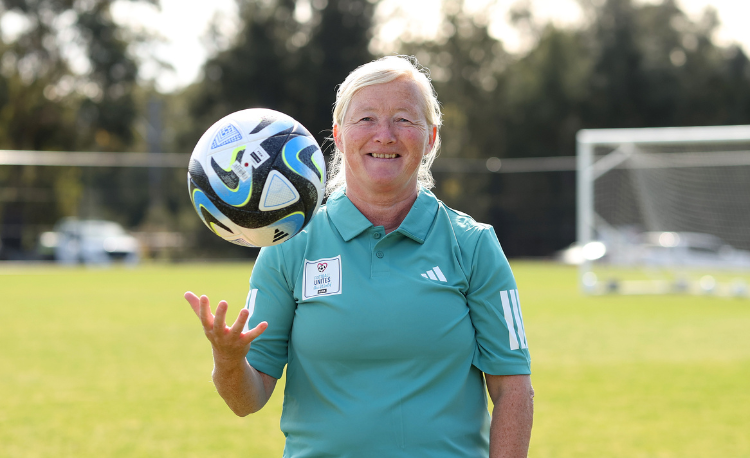
Pauline Hamill is always up for a challenge.
She became the first female coach at Rangers when she was appointed to a youth development role in 2003. She has worked with Scotland’s women at Under-17 and Under-19 levels. More recently, she was head coach for the Saudi Arabia women’s Under-20 national team.
Now she is coaching the Afghan women’s refugee team as part of FIFA’s strategy for action.
FIFA’s support for the Afghan team
FIFA have pledged to aid Afghan players with individually tailored support, such as providing equipment and building connections with local clubs, facilitating access to counselling, media and social media training. They will also support them with identifying potential educational pathways and opportunities within football, including coaching and refereeing.
“I am confident that we have taken an important step in the right direction by offering these women the opportunity to play internationally while prioritising their safety and well-being,” FIFA president Gianni Infantino said earlier in 2025. “This forms part of FIFA’s broader strategy, which includes support for Afghan women living in exile – helping them connect with existing football pathways – as well as continued engagement with stakeholders to also assist those in Afghanistan. We are proud of this, of having brought to life this pilot project, and our aim is to expand it in the future to include women from other countries as well.”
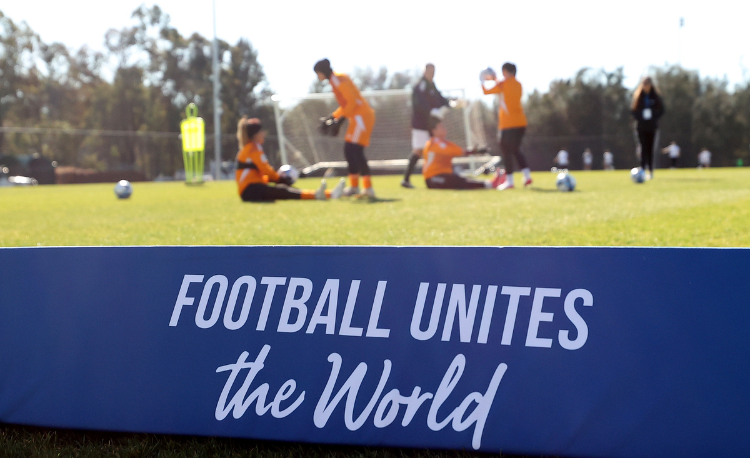
Talent ID for the Afghan women’s refugee team
In Sydney, Australia, while the media focused on the major international tournaments across the world, a group of Afghan refugees took part in the first of three worldwide talent identification camps that Hamill and her staff will use to select the team ahead of a series of friendlies later in the year.
“When I first knew I had the opportunity to take the job as the head coach, it just felt really, really exciting,” says Pauline. “It’s a project that can really be impactful for all of the people involved: most importantly the players, but also all of the staff who’ve come on board as part of the performance team. It’s just such a wonderful project to be a part of and something I hadn’t really done before.”
Pauline worked closely with her staff to establish the right approach for the talent identification camps – although they hadn’t met each other prior to taking up the roles.
“We have a lot of experience and expertise in terms of looking at and creating environments for players to really excel in that ID camp. For us, that was the most straightforward part because it’s about creating opportunities for the players to show themselves in the best possible way.
“Yes, it’s coming into an environment where you don’t know anyone, but you quickly get to know people and quickly get to understand through what you’re doing on the pitch and off the pitch, and that allows you to gather an idea of those players even in a relatively short space of time. We were always really confident that we could do that.”
She adds: “I always think the head coach is one person [in a staff team], but you’re one of many, and there are so many people with such experience and expertise in other areas that are contributing massively to this project.”
Hamill’s players are not seeking qualification for a major tournament, nor are they youth players looking to progress to the senior set-up; at the moment, all they have on the calendar are a handful of friendlies. Additionally, with a group of women that have had so many life experiences in recent years – some seriously traumatic - it means a different way of looking at coaching and planning the squad.
“For us, it’s about sitting with the players and trying to understand what they want to achieve. This project is theirs. We are part of this journey with them, but it’s their project, and we want to ensure that they reach what they feel their goals and targets are, so it’s about discussing that with the players and trying for them to take some ownership of that, and that allows us to set our clear ideas and objectives.
“You’re getting to have dialogue with people. You’re getting to try to connect. You can start to understand them a little bit on a human level.
“That really helps guide the performance staff on what is going to be best for those players.”
She explains: “The qualities you have as a person can really help because it is about getting to know the people, and in the end, football is that. It’s about getting the best from people.”
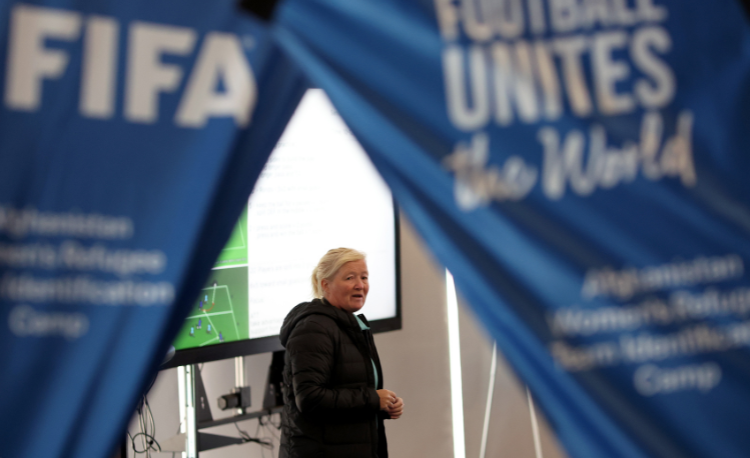
Pauline’s career – player and coach
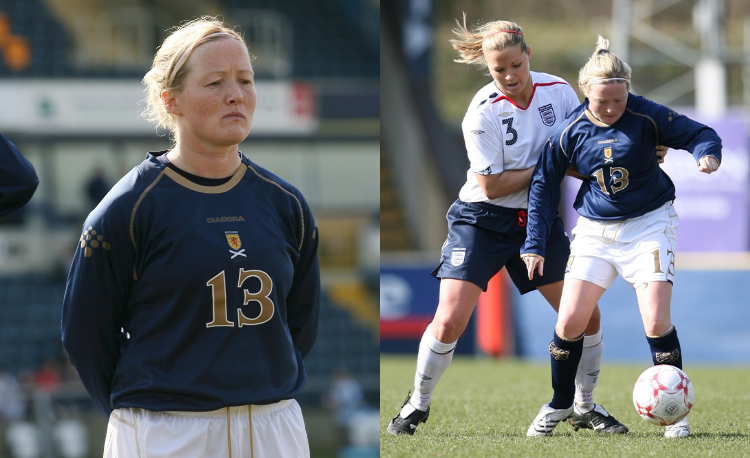
Pauline has worked with some of the best in the game, as a coach and as a player. During her playing career, she had spells at Cumbernauld, Stenhousemuir, Kilmarnock, Hibernian, Celtic and Spartans in her native Scotland, and featured for Doncaster Rovers Belles and Blackburn Rovers in England as well as IBV in Iceland. She was the first woman to win a century of caps for Scotland, a senior international career that began in 1992 and extended to 2010. Even as a youngster, she was impressed by the impact a good coach could have.
“I really liked how you could help people. I think it really comes back to helping and trying to use the skill set that you have to help other people.
“I always knew I was going to be a coach, even from being a very young player. It was always something I was going to do, and it was just about defining a clear pathway. Playing football was my biggest priority in that moment, but I also had one eye on how am I going to be a coach, because that was something that did really excite me.”
She planned out her progress through her coaching badges, culminating in her UEFA Pro Licence. She learned a lot from watching other coaches – mentioning Jim Fleeting, Anna Signeul and Vera Pauw as particular inspirations - and picked up what she describes as “credibility” from the formal coach education.
“Sometimes people go through coach education pathway really quickly, but I was really determined to learn as I went along and gain and gather new experiences before moving on to the next coach education possibility.
“It was then about working with the youth national teams and you then get other opportunities in coach and club development. You have this all-round approach to being a coach and not just focusing on coach education - focusing on many other aspects that can be really beneficial to you when you’re learning.”
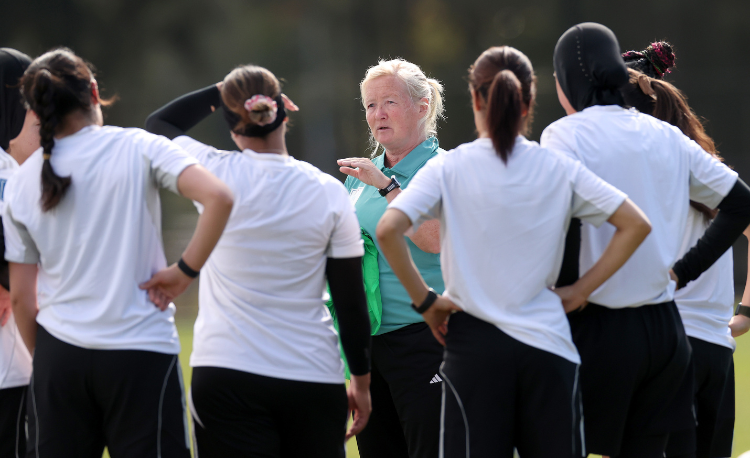
Who Pauline is as a coach
She says this has helped her to create the coach she is now, and describes herself as a coach who likes to connect with people.
“I always go back to that because I really believe coaching is about helping people become better, and I think you need to have really good qualities to be able to, first of all, figure out how you can get to that player and really try to understand them and understand what makes them tick and to get the best from them, but then to put that into practice, because I think that you have to have a clear idea on how you’re going to do that.
“I’m someone who likes to be really organised and have a playing style that suits the players that you’re working with as well, and also make training sessions really interesting and enjoyable because I’ve been a player, and, of course, that’s something that really excites you. Your whole day is focused on the training session, so you want to make that something that’s really enjoyable for the players and challenging, and they go away having learned from it.”
Pauline’s most recent role was as under-20s head coach in Saudi Arabia, but she also assisted the senior team head coach and supported the under-17s. Despite the cultural differences, and the vast geography of the country, it was a challenge that she enjoyed.
“Everybody is striving for the same thing. Women’s football is just pushing forward at a rate of knots, to a level where you’re trying to keep up and hold on and keep going. It was just an incredible experience and really building a team from nothing again. There was no under-20 team [previously, so it meant] scouting Saudi to find the players that could represent the team, but it was so exciting: visiting all these places and finding these girls who are just in the middle of nowhere playing football and then they come into the national team.”
Representing your country
Scotland were famously the only UEFA nation to vote against taking women’s football within its control in 1971. When Pauline was playing in the 1990s and beyond, things were slowly beginning to change.
“Everything evolves over time and certainly as a player, there were some challenges, there was no doubt about it, but always that generation of people were then trying to make it better for the next generation. That was always what I felt: we try to fix some things and we try to make it better for the next, and I think if you have that mindset, then you can really move things forward.”
She hopes that the progress will continue.
“They want to get to a major tournament now. That’s the next thing, and they’ve not done that for some time. But I’m sure that’s the major goal. There’s so much that’s really positive about the game in Scotland, but it has come from a place where there’s been many stumbling blocks along the way and many challenges, like every country, but I think they’re also a really good example of a country that has done really well now as well, working really, really hard to improve what they have for their female players.”
The honour of representing one’s country is something Pauline experienced herself more than a hundred times, and it’s something she has never forgotten – along with the sheer enjoyment of every day she’s had in the game she loves. There’s little she would change about the career she has had – and little advice she would give to her younger self.
“I would say, just enjoy every single minute: I think I have anyway, but I would say just enjoy. I would listen to my dad, and my dad would say, ‘Just enjoy it, Pauline. Do your best and just try to make a difference and be yourself.’
“That’s how I’ve tried to do it.”

Carrie Dunn
Latest Content
Subscribe Today
Newsletter Sign Up
Subscribe Today
Newsletter Sign Up
Subscribe Today
Latest Issue
Discover the simple way to become a more effective, more successful soccer coach
In a recent survey 89% of subscribers said Women's Soccer Coaching makes them more confident, 91% said Women's Soccer Coaching makes them a more effective coach and 93% said Women's Soccer Coaching makes them more inspired.
*includes 3 coaching manuals
Get Inspired
All the latest techniques and approaches


Women's Soccer Coaching offers proven and easy to use soccer drills, coaching sessions, practice plans, small-sided games, warm-ups, training tips and advice.
We've been at the cutting edge of soccer coaching since we launched Soccer Coach Weekly in 2007, creating resources for the grassroots youth coach, following best practice from around the world and insights from the professional game.
