
 close
close


 LOGIN
LOGINYou are viewing
1 of your 3 free articles
Eight ways to support players when a team-mate suffers a significant injury
WSC Editor Hannah Duncan reflects on a player injury can have on the team as a whole, and offers advice on how to manage it as a coach


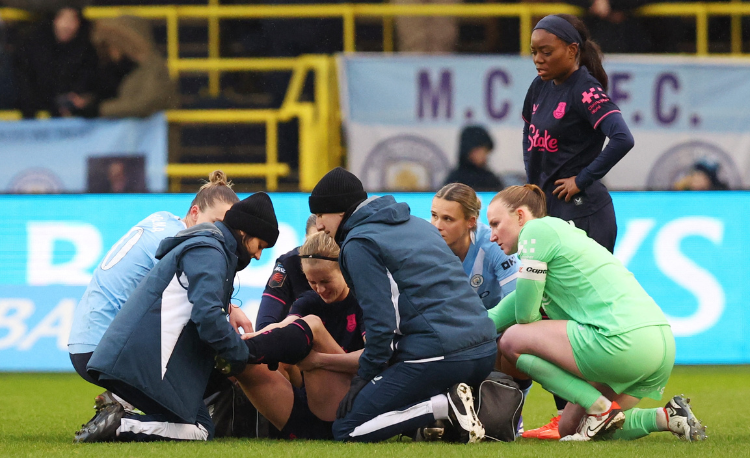
Serious injuries are unfortunately part of football, but their impact reaches far beyond the player who has been hurt.
Sadly this season, I’ve already witnessed the dreaded major knee injuries to two team-mates – one in training and one in a match.
Both are young players, just 18 and 21 respectively, and it can be devastating to see people who are team-mates and friends in such distress, already knowing what a long road they have ahead to get back playing.
I think for female players in particular, the emotional and psychological ripple effect can be significant. Team-mates may feel shock, fear, guilt, worry, or suffer a sudden dip in confidence.
As coaches, how we respond in the minutes, hours and days that follow can make a huge difference to team wellbeing and resilience. I’m pleased to say our manager – who is a physio himself – and our coaches, did a fantastic job of supporting the team following these injuries.
Here are key strategies to support your players effectively.
1. Acknowledge the emotional impact immediately
When an injury occurs, the instinct is often to move players away and “get on with it.” But giving them space to process what they’ve witnessed is crucial. Female players often value emotional validation and may internalise feelings if they’re rushed back into activity too soon.
A simple, grounding message helps: “That was tough to see. It’s completely normal to feel shaken - let’s take a moment.”
This recognition reduces anxiety and signals that emotional responses are acceptable. If the injury occurs during a game, you may want to gather players round while the player is being treated, or encourage senior players to lead a quick chat. Otherwise it may be a message for half-time or full-time.
2. Provide clear, factual information (without speculation)
Uncertainty fuels worry. Share only what you know, avoid guessing and reassure players that the injured team-mate is being cared for.
If appropriate, update the group as soon as you have confirmation from medical staff or the player’s family. If possible, the player themselves may want to update the group.
3. Manage the immediate return to play carefully
Some players will want to continue; others may feel unable to concentrate. Offer a brief reset - water break, regroup, refocus - before deciding whether to continue. For younger or less experienced groups, scaling down intensity temporarily can help players rebuild psychological safety.
If the injury occurs during training and the session continues, set clear, simple tasks. Decision-making loads should be low to avoid overwhelming players who may still feel unsettled.
4. Create space for conversation after the event
Within 24–48 hours, give players a chance to talk openly about the incident. This might be a short, facilitated team conversation, small-group chats, or optional one-to-one check-ins.
Encourage players to express concerns such as:
- Fear of re-injury
- Anxiety around similar tackles or situations
- Worry for the injured team-mate
- Guilt (especially if they were involved in the incident)
Normalise these feelings and reinforce that the coaching staff are available for ongoing support.
5. Reinforce safe decision-making and technical confidence
A team-mate’s injury can make players more cautious in challenges or movements. Build confidence through controlled, technical exercises - particularly those that replicate the situation in which the injury occurred.
Emphasise:
- Correct technique
- Safe body positions
- Reading cues early
- Communication to reduce collisions or risky situations
This helps players regain trust in themselves and their environment.
6. Maintain contact with the injured player - but protect their privacy
Players often worry about their team-mate’s recovery. Coordinate appropriate updates with the player or family, ensuring consent is given for what can be shared.
Encourage supportive but not overwhelming contact: group messages, a team card or gift, or short video messages. These gestures help the injured player feel connected and reassure the rest of the squad.
7. Support team leaders and senior players
Captains and experienced players can often absorb the emotional task of holding the group together. Check in with them too - they may need support, assurance or guidance on how to lead during a challenging moment.
8. Reinforce importance of good preparation and injury prevention
Many injuries may be unavoidable and are simply part of the game. But a significant injury to a player can be a good opportunity to remind your squad about the importance of elements such as strength and conditioning, a thorough warm-up and other preparation techniques to help reduce injury risk going forward.

Hannah Duncan

Latest Content

Subscribe Today

Newsletter Sign Up
Subscribe Today

Newsletter Sign Up
Subscribe Today
Latest Issue

Discover the simple way to become a more effective, more successful soccer coach
In a recent survey 89% of subscribers said Women's Soccer Coaching makes them more confident, 91% said Women's Soccer Coaching makes them a more effective coach and 93% said Women's Soccer Coaching makes them more inspired.
*includes 3 coaching manuals
Get Inspired
All the latest techniques and approaches


Women's Soccer Coaching offers proven and easy to use soccer drills, coaching sessions, practice plans, small-sided games, warm-ups, training tips and advice.
We've been at the cutting edge of soccer coaching since we launched Soccer Coach Weekly in 2007, creating resources for the grassroots youth coach, following best practice from around the world and insights from the professional game.
