
 close


 LOGIN
Getting the balance right in matchday preparation
60% us, 25% opposition behaviours, 15% the unexpected - a guide on how to structure your game plans
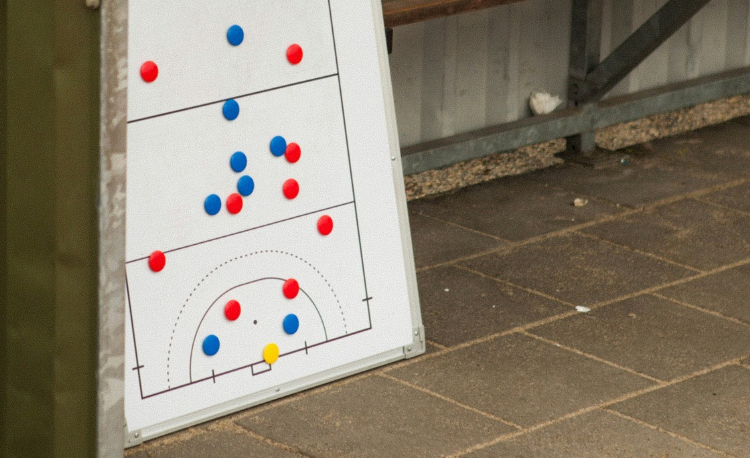
With the widespread availability of matchday footage through accessible tools such as Veo, it’s easier than ever to get a sighting of your next opponents and get an understanding of how they play and their strongest and weakest players.
But while the opportunity for opposition analysis may be greater than ever, how much time and effort is actually worth putting into providing our own players with in-depth detail? Is there a balance to be struck between focusing too much on the opponents rather than thinking about what your own team are capable of?
Arguably, the best match preparation gives players enough information to recognise the opponent’s threats without allowing those threats to dominate the team’s thinking.
Start with your own identity
Before analysing the opposition, establish what you want your team to do.
If your team normally builds through a back three, presses on specific triggers and attacks through wide rotations, those principles shouldn’t disappear because the opposition play a particular shape.
A useful starting point is: What are our three biggest strengths?
Then: What could stop us using them? The ‘what-ifs’.
Opposition analysis should answer the second question.
For example, if your strength is progressing through your full-back and winger, but the opposition consistently overload that side with their winger and full-back, the answer may not be abandoning that route. It might be adjusting the positioning of your No. 8, creating a third-player option or changing the timing of the full-back’s overlap.
The opponent should influence your solutions, not replace your identity.
Analyse patterns, not players
With limited time, avoid trying to produce a dossier on every opponent. Look for repeatable behaviours. Especially outside of the professional game, it’s largely impossible to tell which opposition players may or may not be available on any given week, due to holidays, work commitments, injuries etc.
In possession
Ask:
- Where do they build from?
- Do they use a back three or create one through a dropping midfielder?
- Which player initiates progression?
- Where do their overloads occur?
- How quickly do they switch play?
- What happens when they lose the ball?
Out of possession
Identify:
- Their pressing height
- Their pressing triggers
- Whether the front line screens centrally or presses outside-in
- The distances between their units
- Whether their back line steps aggressively or protects depth
- Where space appears when they are pulled laterally.
In transition
This is often where the most useful information sits.
- What happens in the first five seconds after possession changes?
- Do they counter immediately?
- Does their full-back recover inside or outside?
- Does their No. 6 protect the centre?
- Does their centre-back step into midfield?
These behaviours are more actionable than knowing that their left winger “likes to cut inside.”
Reduce it to three problems
A common mistake is giving players everything you’ve discovered. The coach watches 90 minutes of footage and arrives with 17 observations. By kick-off, the opponent sounds terrifying and players’ heads are muddled with a load of information they’ve not had time to process.
Instead, identify three things that matter most.
For example:
1. Stop their central progression.
Their No. 10 drops between the lines, so the nearest midfielder must recognise the trigger and track rather than allowing a free receiver.
2. Protect the space behind our full-back.
When our full-back goes forward, the nearest centre-back and No. 6 provide cover.
3. Attack their high full-back.
When we regain possession, our first forward pass should look into the space behind their right-back.
Every point should ideally have three components: What do we see? → What do we do? → What does that give us?
This the helps turn analysis into behaviour, which is a lot more digestible and actionable for players who will see those pictures on the pitch and understand how to respond.
Don’t create fear through preparation
There is a psychological consequence to excessive opposition analysis.
If the message throughout the week is “watch out for them” and “they’re dangerous at this” and “we have to stop their No. 10”, players can begin to perceive the match as something they need to survive rather than something they can impose themselves upon.
This can affect decision-making. Players become more reactive.
A winger who normally attacks her full-back starts checking where the full-back is before considering her own attacking option. A centre-back drops five yards too early because she’s concerned about a striker running behind.
The team becomes opposition-led rather than game-led.
But that doesn’t mean you should ignore threats that you’ve spotted through analysis. It means framing them within a positive action and solutions.
Instead of the threat: “Their winger is really quick, so don’t get caught high.”
Provide a solution: “When the ball goes into their full-back, we can press aggressively. If they break that pressure, then we protect the space behind.”
Use the ‘if–then’ principle
Technical preparation becomes much easier for players when information is conditional – eg if this happens, then we do this.
For example:
- If our full-back advances and we lose possession, then the nearest midfielder immediately provides cover while the centre-back protects depth.
- This is particularly useful for less experienced squads because players don’t need to memorise an entire tactical plan. They need to recognise triggers.
Make your team the headline
A simple way to structure limited matchday preparation is:
- 60% what we want to do.
- 25% the three opposition behaviours that matter.
- 15% what we do if the game doesn’t look as expected.
Overall, your players shouldn’t be carrying a mental encyclopaedia of the other team. Especially at grassroots and semi-professional level, where preparation time is scarce, clarity beats volume.
You need to be logged in to continue reading.
Please register for limited access or take a 30-day risk-free trial of Women's Soccer Coaching to experience the full benefits of a subscription.

Women's Soccer Coaching

Latest Content

Subscribe Today

Newsletter Sign Up
Subscribe Today



Newsletter Sign Up
Subscribe Today
Latest Issue

Discover the simple way to become a more effective, more successful soccer coach
In a recent survey 89% of subscribers said Women's Soccer Coaching makes them more confident, 91% said Women's Soccer Coaching makes them a more effective coach and 93% said Women's Soccer Coaching makes them more inspired.
*includes 3 coaching manuals
Get Inspired
All the latest techniques and approaches


Women's Soccer Coaching offers proven and easy to use soccer drills, coaching sessions, practice plans, small-sided games, warm-ups, training tips and advice.
We've been at the cutting edge of soccer coaching since we launched Soccer Coach Weekly in 2007, creating resources for the grassroots youth coach, following best practice from around the world and insights from the professional game.
