
 close
close


 LOGIN
LOGINHow to effectively assess and scout goalkeepers within the women's game
Effective analysis of a goalkeeper’s performance maps their output against the key positional skills. But there are a number of ways to do it. Dr James Mayley explains more


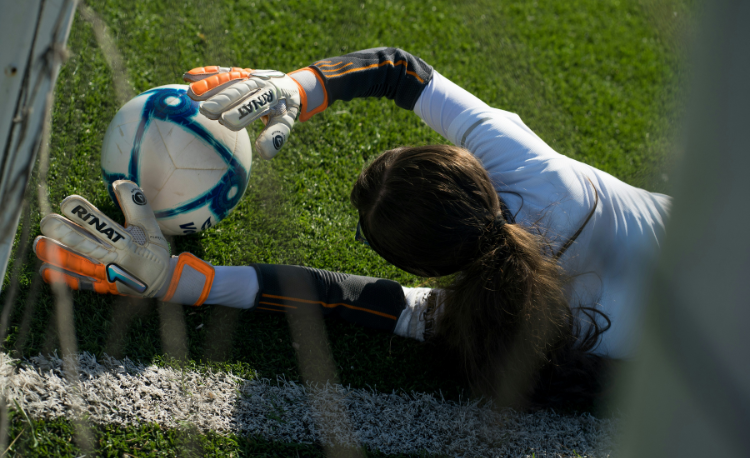
Scouting goalkeepers within women’s football is a unique challenge given that the role and skillset of the goalkeeper is dramatically different from that of all other positions within the game.
Goalkeepers at the elite end of the sport possess not only exceptional ‘traditional’ goalkeeping skills but are also excellent with the ball at feet, demonstrate high levels of physical performance, and make rapid and accurate decisions.
While it may appear overly simplistic or obvious, it is vital to have a clear understanding of the roles and skills of a goalkeeper before jumping ahead to consider recruitment and talent identification approaches. Without such an understanding, it is impossible to put in place structures that will allow for accurate judgements to be made. While this article will provide a generalised overview of this, it is important for readers to consider how to weight or apply these concepts at their club. For example, you may ask questions regarding whether certain skills are more important within your game model or level of competition.
The role of the goalkeeper can be divided into four distinct areas. Out of possession, goalkeepers must both defend the goal and defend the space in front of the goal. In possession, goalkeepers are required to start and support build-up play, while in all phases they need to communicate with teammates to provide clear and relevant information. These four areas require a range of skills which will now be considered.
Goalkeeper skills: out of possession
To effectively defend the goal, the goalkeeper must be capable of making saves from a variety of scenarios. These include 1v1s, long-range shots, reaction saves and shots from cutbacks/crosses. This requires a broad skillset of physical (e.g. speed, power, flexibility), technical (e.g. footwork, diving, handling), psychological (e.g. concentration, confidence, bravery) and tactical (e.g. decision-making, positioning) skills. Ideally, a goalkeeper should be capable of making big, match defining saves as well as demonstrating the consistency required to limit errors when dealing with less challenging efforts on goal.
Defending space can be split in terms of a goalkeeper’s ability to defend balls from wide areas and central areas. Defending space from wide areas requires a goalkeeper to be effective in dealing with crosses, cut-backs and corners. From central areas, the goalkeeper is tasked with defending the space behind the defensive line. Speed, power, bravery, positioning (start position), decision-making, distance judgement and communication are all vital skills in this regard as is having the technical skills (e.g. catching, punching, deflecting, ball control, clearances) to execute an effective action.
Goalkeeper skills: in possession
In the modern game around 75-80% of a goalkeeper’s actions are linked to distribution. Goalkeepers should be capable of accurately distributing the ball over both long and short distances from both their feet and hands. Goalkeepers should also be able to receive the ball with both feet, allowing them to play quickly and cope with pressure applied by opposition attackers. Goalkeepers also need to understand their team’s tactical approach and the state of the game to make quick and accurate decisions on pass selection.
Goalkeeper skills: all phases
The final role of the goalkeeper is to provide clear and precise information to teammates both in and out of possession. Goalkeepers who are effective communicators develop shared language with teammates allowing for short, clear communication which is understood by all, have a sound tactical understanding to ensure the information provided is relevant and accurate, while remaining positive in their choice of words and tone. They will also demonstrate the confidence and resilience to continue to communicate and positively impact the team even after a mistake or when their own level of performance is below their usual standard.
A four-corner framework
With all this in mind let’s now consider how to design a framework to observe and recruit goalkeepers. Most commonly, in England, this has been done by rating a goalkeeper’s skills within the English Football Association’s four corner model, incorporating physical, technical, psychological and social.
An example of this, adapted from the Professional Football Scouting Association’s framework, can be seen below:
|
|
|
Rating |
|||||
Physical qualities |
Speed |
1 |
2 |
3 |
4 |
5 |
N |
|
Agility |
1 |
2 |
3 |
4 |
5 |
N |
|
|
Presence |
1 |
2 |
3 |
4 |
5 |
N |
|
|
Strength |
1 |
2 |
3 |
4 |
5 |
N |
|
|
Power |
1 |
2 |
3 |
4 |
5 |
N |
|
Technical qualities |
Set position |
1 |
2 |
3 |
4 |
5 |
N |
|
Handling |
1 |
2 |
3 |
4 |
5 |
N |
|
|
Shot stopping right |
1 |
2 |
3 |
4 |
5 |
N |
|
|
Shot stopping left |
1 |
2 |
3 |
4 |
5 |
N |
|
|
1v1s |
1 |
2 |
3 |
4 |
5 |
N |
|
|
Claiming crosses |
1 |
2 |
3 |
4 |
5 |
N |
|
|
Punching |
1 |
2 |
3 |
4 |
5 |
N |
|
|
Right foot |
1 |
2 |
3 |
4 |
5 |
N |
|
|
Left foot |
1 |
2 |
3 |
4 |
5 |
N |
|
|
First touch |
1 |
2 |
3 |
4 |
5 |
N |
|
|
Short passing |
1 |
2 |
3 |
4 |
5 |
N |
|
|
Long passing |
1 |
2 |
3 |
4 |
5 |
N |
|
|
Throwing short |
1 |
2 |
3 |
4 |
5 |
N |
|
|
Throwing long |
1 |
2 |
3 |
4 |
5 |
N |
|
Psychological qualities |
Concentration |
1 |
2 |
3 |
4 |
5 |
N |
|
Composure |
1 |
2 |
3 |
4 |
5 |
N |
|
|
Bravery |
1 |
2 |
3 |
4 |
5 |
N |
|
|
Dealing with mistakes |
1 |
2 |
3 |
4 |
5 |
N |
|
Social qualities |
Communication |
1 |
2 |
3 |
4 |
5 |
N |
|
Support |
1 |
2 |
3 |
4 |
5 |
N |
|
|
Organisation |
1 |
2 |
3 |
4 |
5 |
N |
|
Tactical qualities |
Crosses: catch or punch |
1 |
2 |
3 |
4 |
5 |
N |
|
Balls between defence and GK |
1 |
2 |
3 |
4 |
5 |
N |
|
|
Shots: catch or deflect |
1 |
2 |
3 |
4 |
5 |
N |
|
|
Start positions |
1 |
2 |
3 |
4 |
5 |
N |
|
The effectiveness of the goalkeeper in match scenarios
However, more recently, goalkeeping performance has been considered in terms of the effectiveness of the goalkeeper in match scenarios.
When considering goalkeeping in these terms, it may be more appropriate to consider a goalkeeper’s performance and skills mapped against their role, rather than the four corner model. By doing so, you may build a more accurate picture of what it is they do and how they perform in matches.
While there is no magic formula for this, I have found a checklist, mapped against the role of the goalkeeper, with additional comments on physical and mental performance a useful starting point for observations. This checklist, an example of which is below, can provide a useful tool to guide observations and assessments although it may not be possible to observe every subsection within a single match.
Shot stopping
Ability to make a variety of big saves
|
DistributionAbility to retain possession, break lines, create in transition and build accurate pictures
|
Defending spaceAbility to prevent chances through sweeping & dealing with crosses
|
Organisation and communicationAbility to prevent chances through communication with team-mates
|
PhysicalAbility to quickly cover the goal and space both laterally and vertically
|
MentalAbility to stay connected to the game regardless of ability and game state
|
The skills in the checklist can then be assessed either quantitatively or qualitatively by a scout. Quantitative assessments can be useful in terms of providing quick and easily interpretable information/judgements on a range of skills and comparisons to other goalkeepers being scouted.
However, they can introduce biases in terms of different scouts providing different ratings as well as challenges around accurately mapping ratings against different performance levels. For example, say a goalkeeper is rated a 4 out of 5 for defending the goal in WSL2, does this change if they are now playing in WSL1? Alternatively, qualitative assessments may not allow for as easy comparisons, however, can allow for greater depth of understanding regarding a goalkeeper’s performance and actions.
Below is an example of a completed scout report for an international women’s goalkeeper using a qualitative approach.
Defending the goal+
-
|
Defending central space+
-
|
Defending wide space+
-
|
Build-up play+
-
|
Communication+
|
Mental+
|
Style notes
|
|
No one way to scout goalkeepers
The key takeaway from this article should be that there is no right or wrong way to scout goalkeepers. However, the approach taken should identify a goalkeeper’s performance against their role and/or key skills of the position.
To maximise effectiveness, the approach taken should also be adapted to both the needs of the team and the experience/skills of the scouts. For example, less experienced scouts may require a more prescriptive framework, whereas experienced scouts may thrive on a framework which provides them with more freedom in their judgements and observations.

James Mayley
Latest Content
Subscribe Today
Newsletter Sign Up
Subscribe Today
Newsletter Sign Up
Subscribe Today
Latest Issue
Discover the simple way to become a more effective, more successful soccer coach
In a recent survey 89% of subscribers said Women's Soccer Coaching makes them more confident, 91% said Women's Soccer Coaching makes them a more effective coach and 93% said Women's Soccer Coaching makes them more inspired.
*includes 3 coaching manuals
Get Inspired
All the latest techniques and approaches


Women's Soccer Coaching offers proven and easy to use soccer drills, coaching sessions, practice plans, small-sided games, warm-ups, training tips and advice.
We've been at the cutting edge of soccer coaching since we launched Soccer Coach Weekly in 2007, creating resources for the grassroots youth coach, following best practice from around the world and insights from the professional game.
