
 close
close


 LOGIN
LOGINYou are viewing
1 of your 3 free articles
Carly Davies: Taking Forest forwards
During a recent international break, Nottingham Forest head coach Carly Davies caught up with Carrie Dunn and talked the club, the industry, and her trajectory


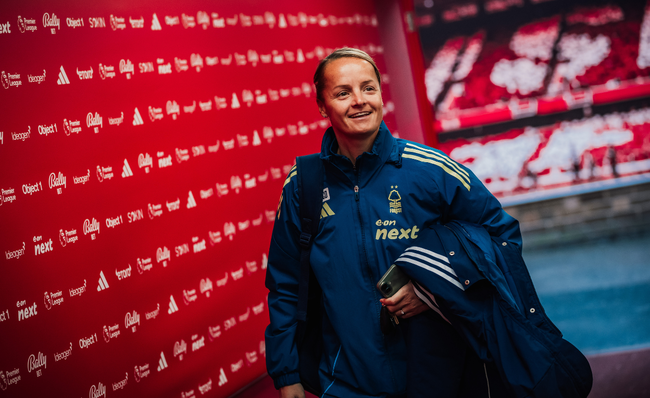
During an international break, a head coach might have fewer players on site, but there is still plenty to do.
Nottingham Forest head coach Carly Davies is hard at work even while many of her players are with their national teams.
“It’s a good time to evaluate the third part of the season,” explains Davies. “We’ve not got many players left behind from international duty, so I take a bit of a step back in this period and let my assistants do a lot of the coaching, which gives me a little bit more time to speak to individuals, get to know our new players a little bit more and build more of a relationship and rapport with them, just develop some greater understanding around individuals and just supporting them, which is the time that we don’t necessarily get when the games are coming thick and fast in season.”
Davies and her staff team take time to review progress every quarter, assessing their performances against Forest’s playing principles.
“There’s a little bit of reflection and accountability on our part. Are we delivering what we need to on the pitch and are the players understanding that? Is that transferring onto the football pitch and into performances? So we’re always looking at the fine margins and where we can look to improve.
“We review against some data metrics that we always look at throughout the course of the season around our playing principles and philosophy and then where we need to improve, or areas that we can continue to keep driving forward. This period gives us a good time to do that.”
Davies took over as head coach at Nottingham Forest in 2023 as they moved into a professional hybrid era. The season after that, she led them both to the FA Women’s National League Cup and promotion to WSL2, where the squad are now fully professional. She says the club have made their ambition clear right from the start.
“We’re really proud of what we’ve achieved so far, but we are super ambitious here. I am. Ownership are. Directors of football are. And we want to keep developing all the time. We don’t just want to be a side in this league that makes [the numbers] up. We want to be a side that people look at and can see the ambition internally, externally, and hopefully we can achieve our goal to get into the WSL.”
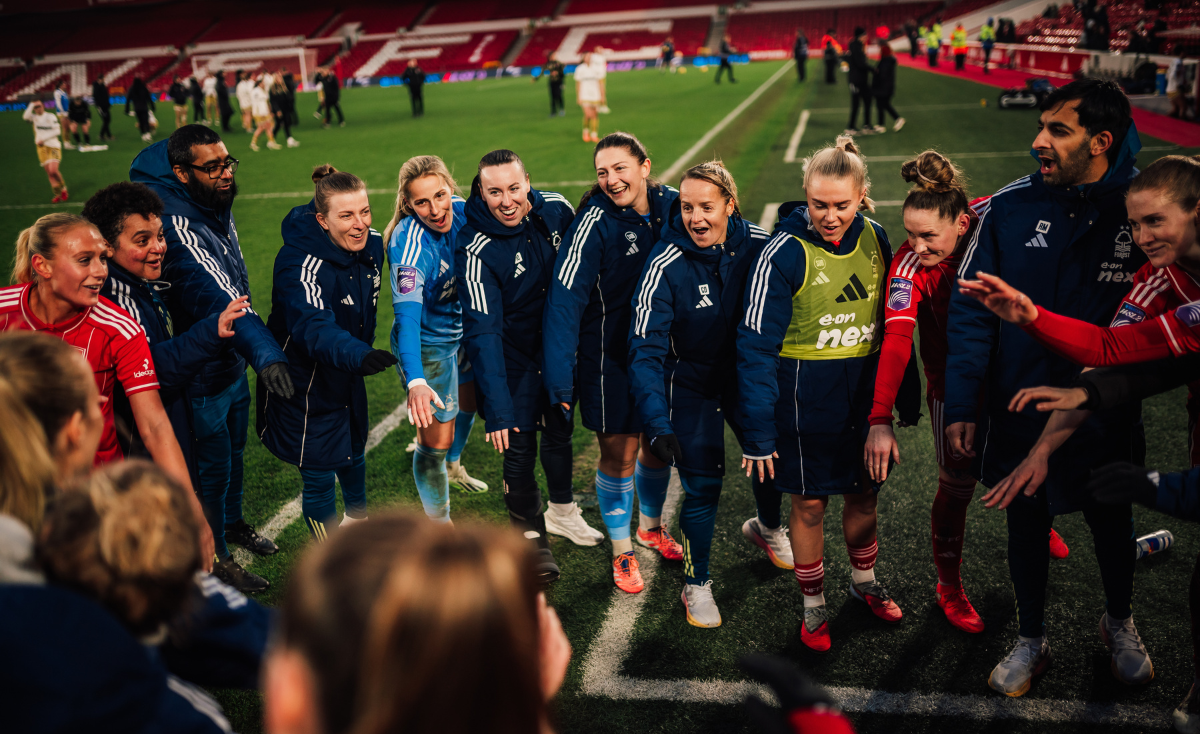
What you need to succeed
Davies spent two decades playing for Aston Villa, where she began coaching in the community department, which she describes as a natural progression of her love for football. She moved on to spend ten years with the FA, including spells with the national talent pathway, supporting Rehanne Skinner with the England under-19s, and then assisting with the under-16s, taking them to a European Championship.
“Tournament football is very different to club football,” she says with understatement, adding that it helped her to understand how to get the extra one per cent out of players in a limited time frame. “When you’re at tournament football, you only have maybe two or three training sessions and then the next game comes, and to prepare them for a fixture, you only get those players for a ten-day window.”
Davies is careful to distinguish between successful coaching and good management. She says that she considered her career route carefully before opting to apply for head coach roles.
“Coaching was always something I think I was naturally going to do. I love working with people. I love being part of a team. It really drives me. I’m ambitious, but I just love being around other people and helping them develop and thrive and be the best version of themselves.
“More than anything, my biggest question was always management. because coaching and management are very different. You have to be a very good leader to be a good manager as well. It’s a slightly different skill set, and I wasn’t always quite sure if management was the route that I wanted to go down.”
Those leadership skills, she says, are crucial for a good manager or head coach.
“You’ve got to be good with people. The coaching side of it, the tactical side of it, the understanding football - you’ve got to have that knowledge to be in any role as a coach [or] manager in the game.
“But I think management in itself and being a good leader is a real art. You can be naturally good with people, and I think that is a real strength of mine. I believe I am good with people. I love working with individuals.
“But how you get the best out of individuals, that’s a real skill set. How you manage 25 players and a staffing group of maybe up to 15 people whilst trying to win games of football, giving everybody the autonomy and the space and the room that they need to develop at their own rate whilst trying to win games of football is the biggest challenge.”
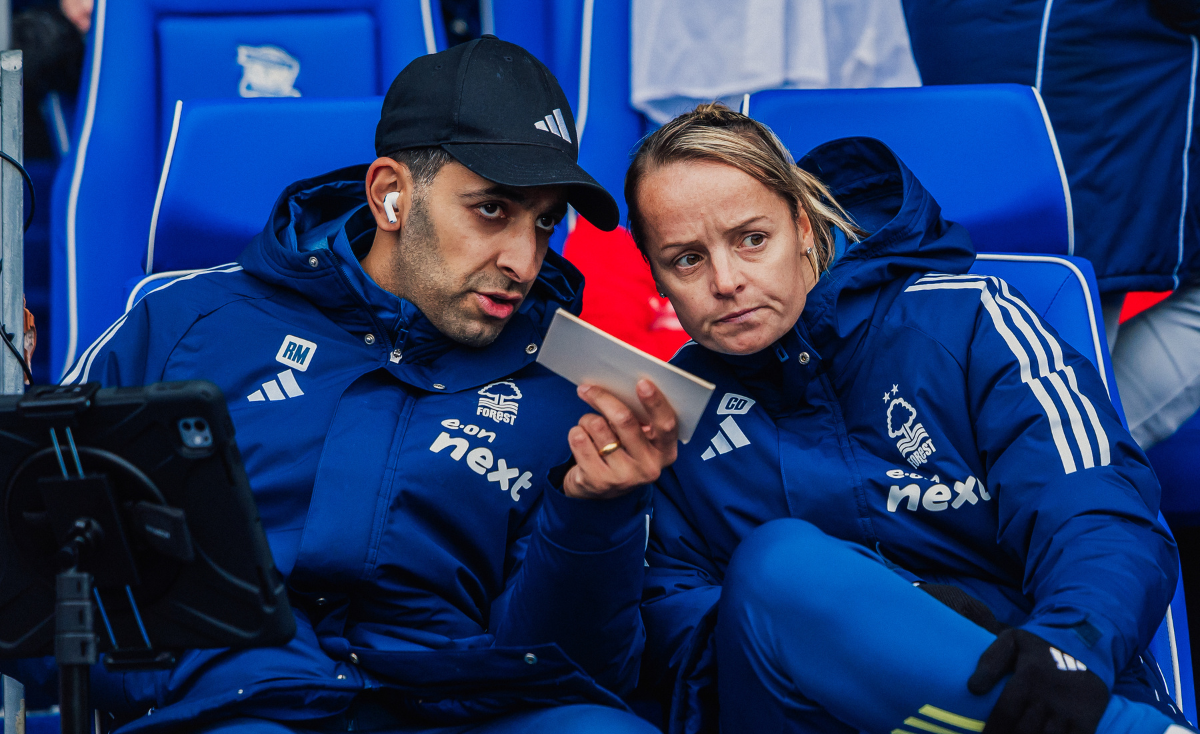
Carly’s learning trajectory
And good management skills are transferable, no matter where those strengths are picked up.
“I took a lot of learnings from a lot of different jobs that I’ve done in football and it helped me to be able to transition into being a manager. But like anybody, I’m always learning. I’m always going to make mistakes. I think one of the arts of a good manager and leader is that you can accept when you have made mistakes and show a little bit of vulnerability around that as well, and that helps to bring people on the journey with you.
“So I’m still learning, I’m still developing, but I’m always hungry to be better, so I think that’s also important as a leader. You’ve got to have high ambition, but you’ve got to be okay with knowing that you’re not going to get everything right.”
While her decades in the game as a player, coach and now manager give her an important perspective, and the ability to relate to players from her own experiences, Davies notes that those coming into the professional game now learn very differently to those who were playing at the highest level alongside another career.
“It looks very different now to what it did 20 years ago, and you need to be able to have flexibility in your approach to dealing with individuals and how you get the best out of them. I think that’s a real art form and skill set in itself.
“It’s important to remember where the game’s come from. It’s important to know the struggles that players go through, both mentally, physically, but also just trying to survive in the industry now.
“It’s difficult, it’s very tough, it’s very competitive, but it’s heading in a trajectory and a direction that’s so quick - and it’s our job to make sure that we upskill everybody that we’re in contact with to make sure that we can take them on that journey as well.”
And in a club as famous as Nottingham Forest, Davies also has the task of managing upwards.
“Naturally, there’s always going to be pressure from the top down, but that’s part and parcel of being in elite sport, and it’s my job to obviously manage the team around me, but also manage the directors as well, knowing that we’re doing the right things on the ground and that we’re heading in the right direction.
“I’m really fortunate here to have a wonderful head of women’s football in Amber Wildgust and also Craig Mulholland, our assistant sporting director here at the club, who’s been a great support to me and really supporting me to take the team forward in the direction that we want to.
“I feel very, very fortunate to be at a club that care about people, but that also are ambitious and give us the tools that we need to be able to fulfil that ambition.”
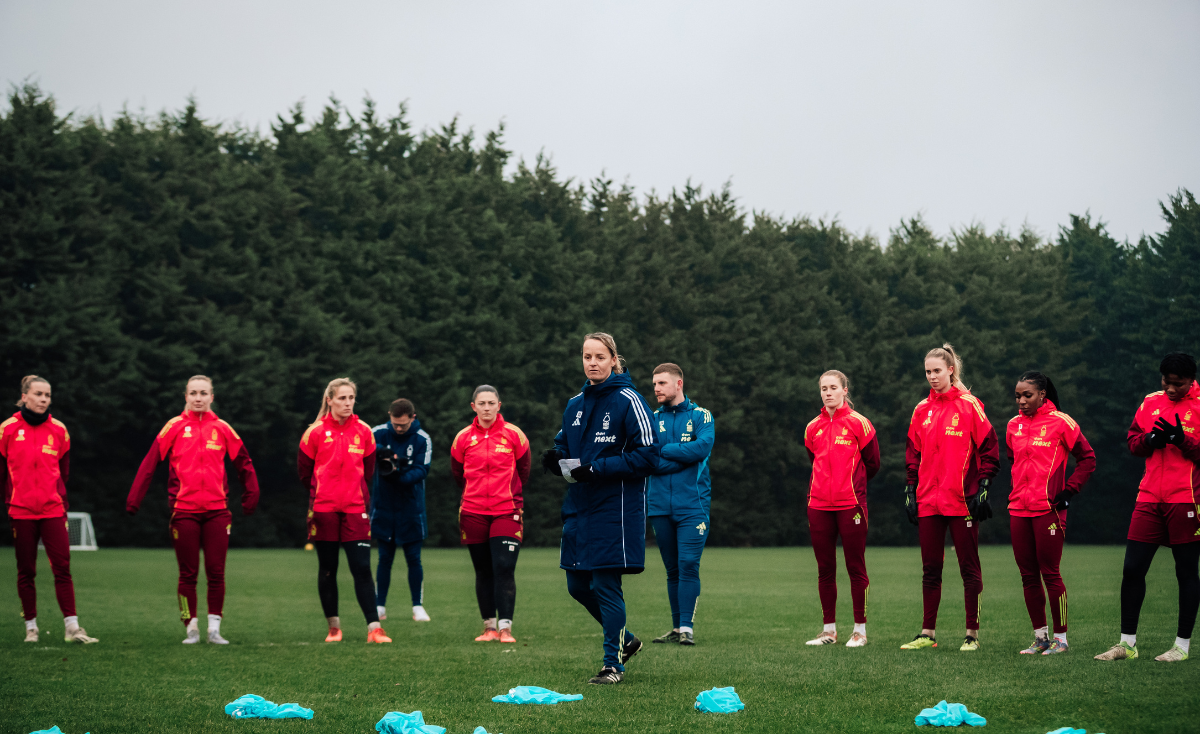
The coaching evolution
The women’s game was amateur during Davies’s own playing days, so there were few female coaches whose career trajectory she wanted to emulate, but she mentions some visible role models – former England boss Hope Powell, and Mo Marley, who is now Davies’s mentor on the UEFA Pro Licence. She adds that lots of coaches have inspired how she creates her environment now – but other elements of her work are ever-changing.
“In terms of a style of football, I think that’s developed over my time coaching,” she says. “The way that I see the game being played - I love to possess the ball. I love it to be exciting for our fans to watch. I want us to control games of football. I think that’s come from just the way I like to play the game, but then also just the areas of the game that I enjoy coaching. I love the build-up phase. I love to see our teams play through pressure and be brave on the ball and exciting with the ball, not just playing from back to front, but also having variety in our game as well.”
She says that’s a philosophy she’s developed over time, but acknowledges that this will likely evolve even further.
“I’m certainly at the beginning of a journey, but I just want to excite the fans. I want to play a style of football that the players enjoy playing in, that’s exciting for them, that they have an element of freedom and enjoyment when they are playing and that they have bravery to get on the ball and be exciting. We want to be hard working, make sure that we’re difficult to play against, but we [want to] enjoy it. And that’s the main thing for me: that we’re enjoying what we’re doing when we’re turning up to work every day.”
And as for Davies’s journey, she’s part of the 2026 cohort on the UEFA Pro Licence, which she says was the obvious next step for her after moving into management.
“You’ve got access there to some unbelievably experienced individuals, and being able to share experiences and just check and challenge each other is really great because I think sometimes when you’re in the day-to-day and in the thick of the game, you don’t always get that time. So being able to step away and focus a little bit more around yourself. and developing you as an individual to support the development of your staff and your players in the direction that you’re heading is really important.
“I’m really looking forward to continuing that journey this year. It’s intense. There’s a lot of work to do alongside what we’re doing day-to-day here at the club as well. But that’s the nature of the industry. It’s thick and fast, and if you want to continue on this really fast trajectory that the women’s game going on, then you’ve got to keep up.”

Carrie Dunn
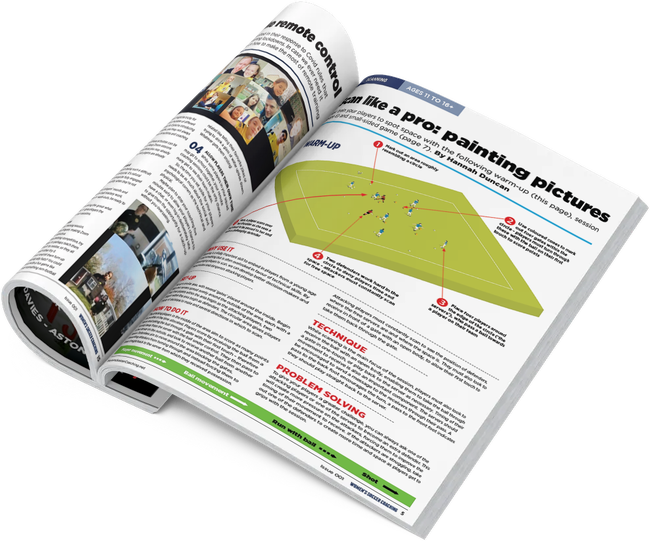
Latest Content
Subscribe Today
Newsletter Sign Up
Subscribe Today
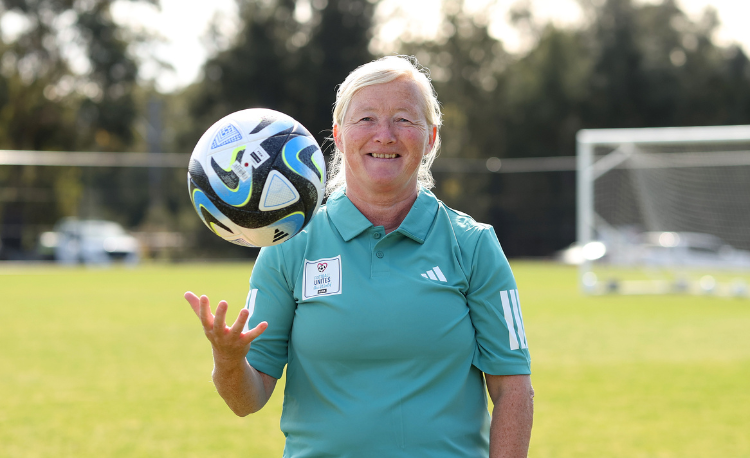
Newsletter Sign Up
Subscribe Today
Latest Issue
Discover the simple way to become a more effective, more successful soccer coach
In a recent survey 89% of subscribers said Women's Soccer Coaching makes them more confident, 91% said Women's Soccer Coaching makes them a more effective coach and 93% said Women's Soccer Coaching makes them more inspired.
*includes 3 coaching manuals
Get Inspired
All the latest techniques and approaches


Women's Soccer Coaching offers proven and easy to use soccer drills, coaching sessions, practice plans, small-sided games, warm-ups, training tips and advice.
We've been at the cutting edge of soccer coaching since we launched Soccer Coach Weekly in 2007, creating resources for the grassroots youth coach, following best practice from around the world and insights from the professional game.
