
 close
close


 LOGIN
LOGINYou are viewing
1 of your 3 free articles
Combination play to break lines
A three-part session which works on using tempo changes and rotations to break lines. Session structure: Practice 1, Practice 2, Small-sided game


Warm-up
WHY USE IT
This warm-up prepares players technically and mentally and introduces positional interchange and scanning under pressure.
Set-up
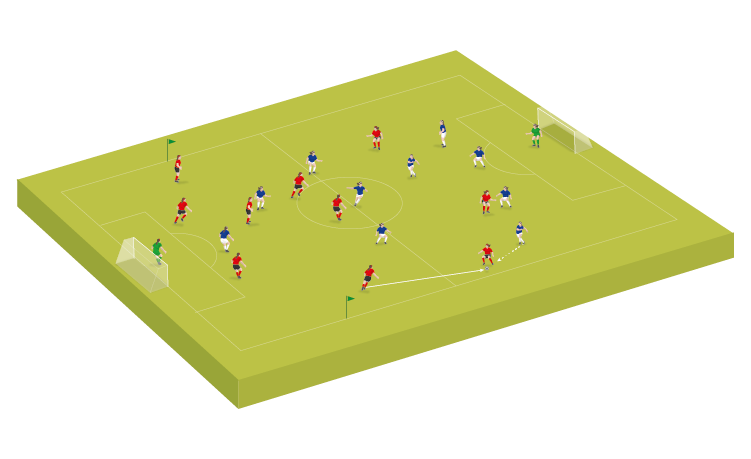
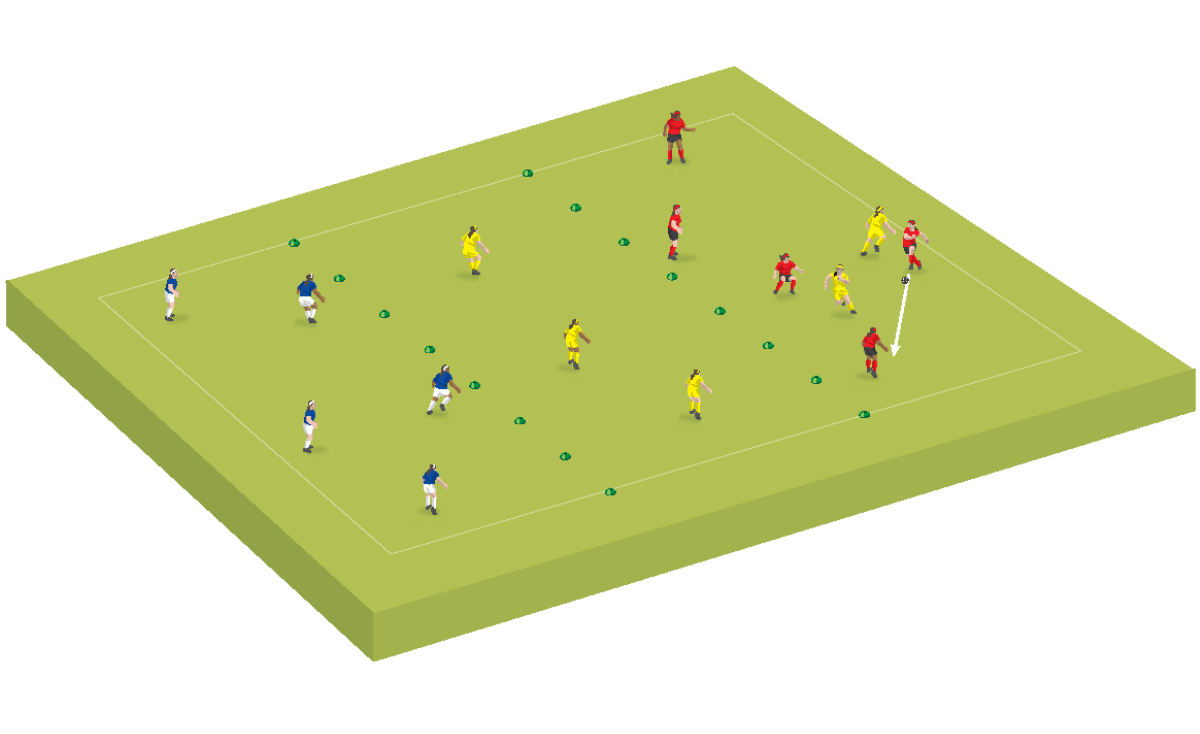
Mark out an area relative to the age, ability and number of players. Each area will ideally have eight players – six in possession, two defenders.
HOW TO play
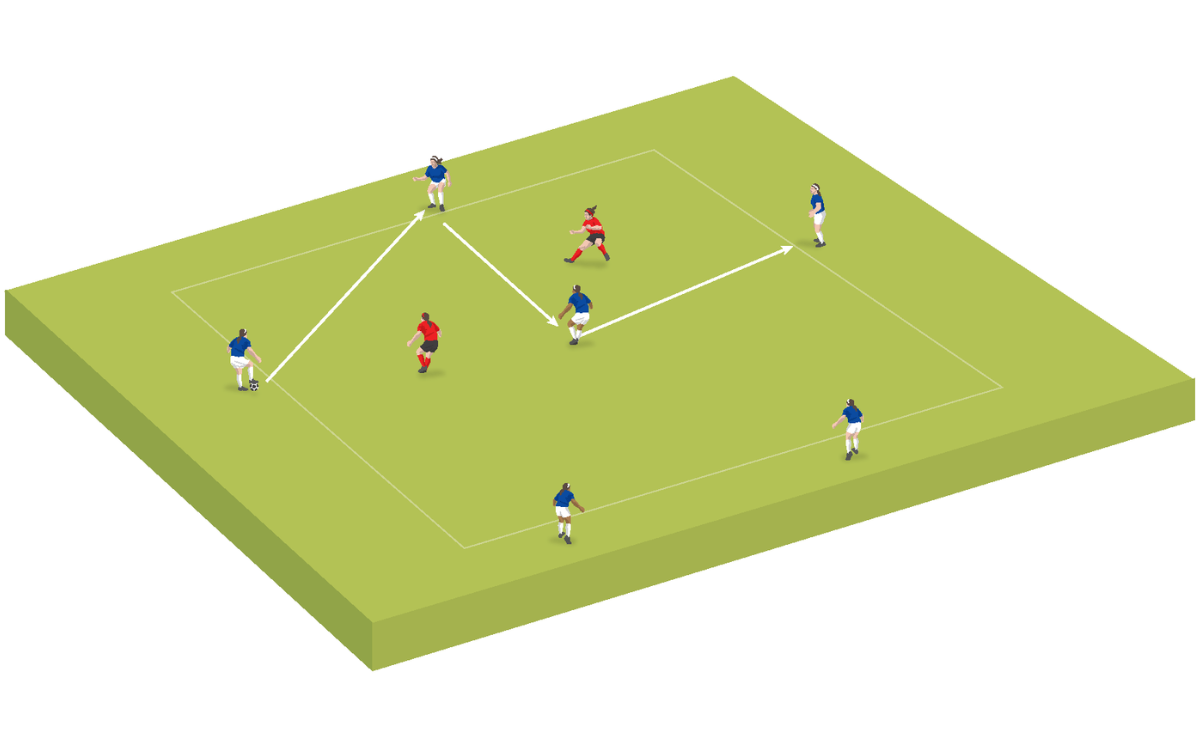
Play as a normal rondo, with five in-possession players around the outside of the area and one in the middle, with the two defenders. The in-possession players earn a point for every five successful passes. If the defenders win the ball or the ball goes out of play, they switch with two in-possession players.
ADAPTATIONS & progressions
You can change the number of touches players are allowed to make it harder or easier. You can also stipulate that if a pass successfully splits the two defenders, they must stay in for another round.
COACHING POINTS
-
Scan before receiving
-
Focus on body shape when receiving to enable the next pass quickly (open body so you can see the whole area)
-
Play as a normal rondo, with five in-possession players around the outside and one in the middle with the two defenders
-
The in-possession team earns a point for every five passes
-
If the defenders win the ball or it goes out of play, they switch with two in-possession players
Practice 1
WHY USE IT
This practice develops combination play, forcing players to adapt to inside/outside roles and introduces tempo variation.
Set-up
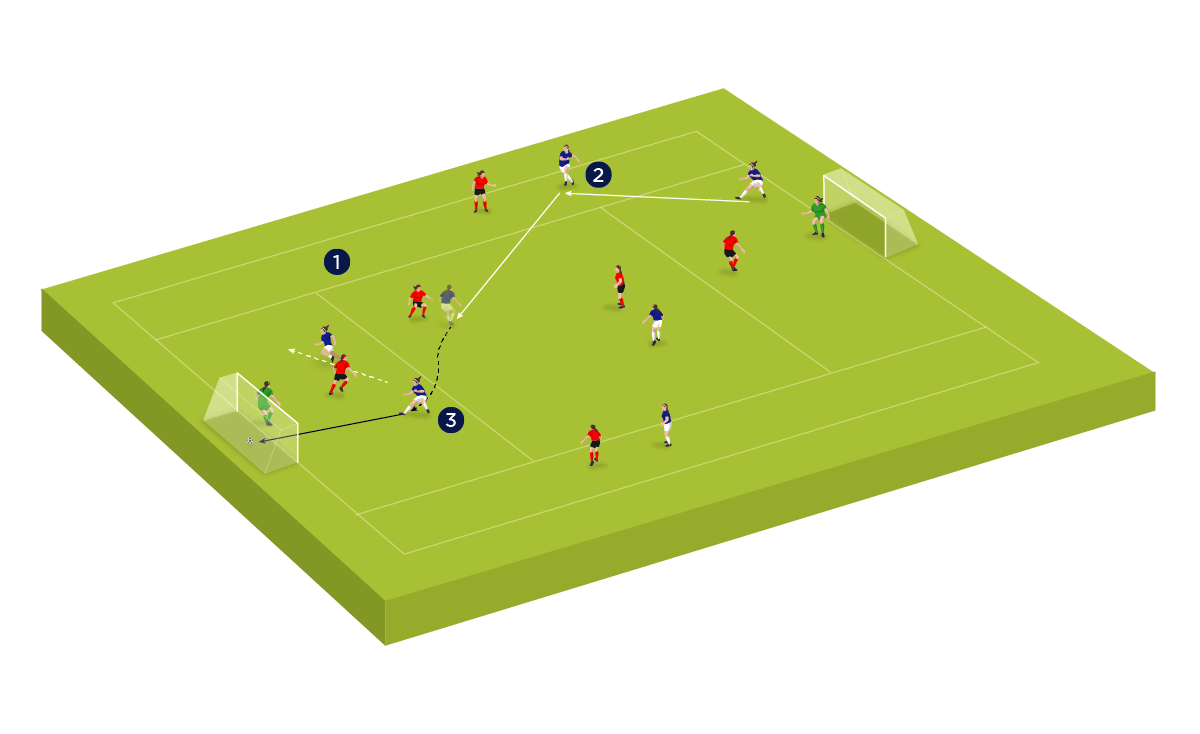
Mark out an area relative to the age, ability and number of players. The area should be divided in half. One half has two attackers and two defenders in the middle, with two neutral players on the outside. The other half has one attacker and one defender, both resting to start with.
HOW TO play
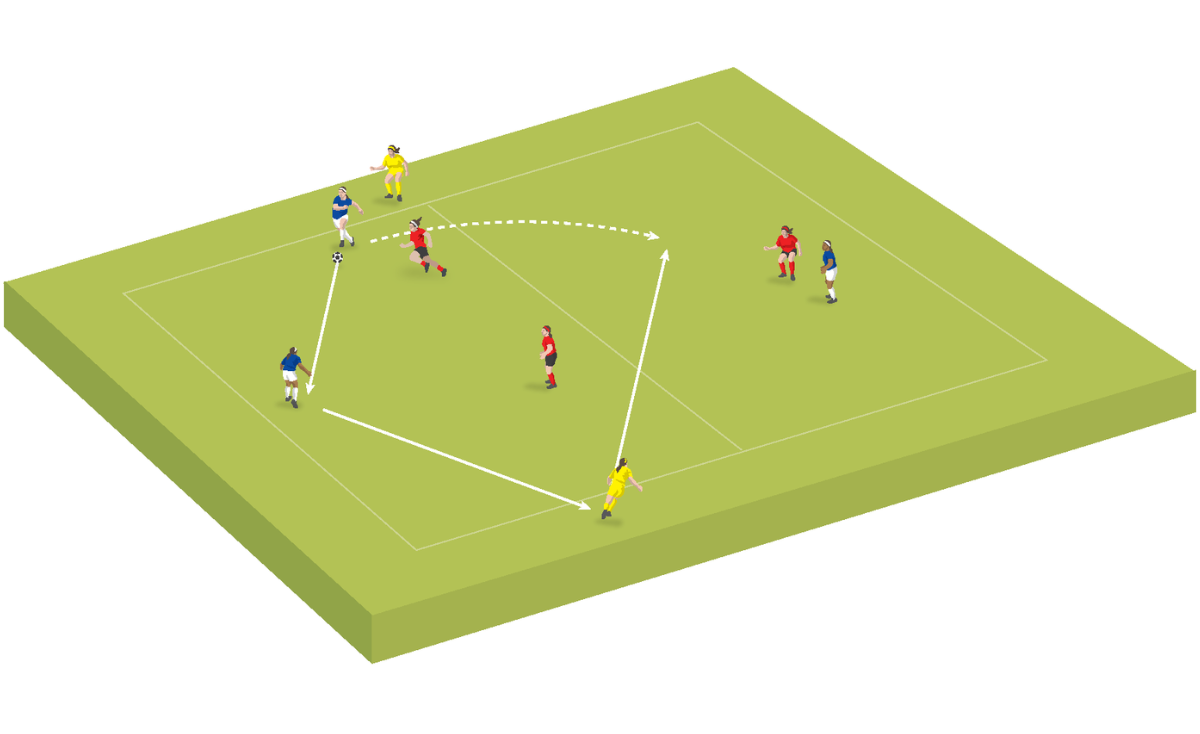
Playing in a slow tempo, the attacking players aim to switch play in the other half of the pitch. After four passes, they can switch play. When the ball is switched across, one attacker and one defender move across as well to create a 2v2(+2) in the other half and the practice continues.
When the coach shouts ‘fast tempo’, the players can switch play as quickly as they want, with no minimum passes. Rotate roles every few minutes.
ADAPTATIONS & progressions
You can increase the minimum number of passes for the slow tempo section. If players are finding it too hard, remove a defender – they can be a central neutral player. You can also stipulate that the switch has to be received by an attacker on the run while switching sides, rather than the ball going to the attacker already in the other half. This will encourage more third-man runs off the ball and playing into space.
COACHING POINTS
-
Scan before receiving
-
Body shape for switches and disguise
-
Third-man run must adjust instantly to tempo
-
Playing in a slow tempo, the attacking players aim to switch play to the other half of the pitch, which they can do after four passes
-
When the ball is switched across, one attacker and one defender must move across too
-
When the coach shouts ’fast tempo’, players can switch play as quickly as they want
Practice 2
WHY USE IT
This practice encourages players to adjust to formation changes, use tempo changes to break lines and rotations between lines.
Set-up
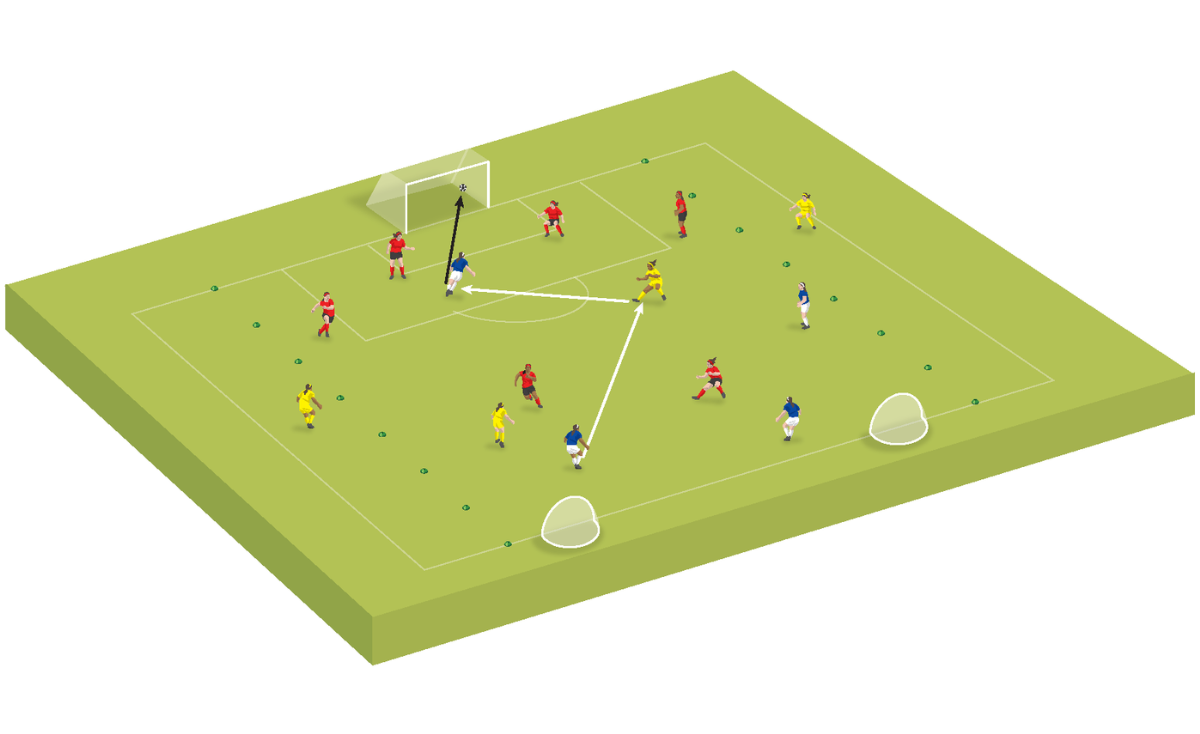
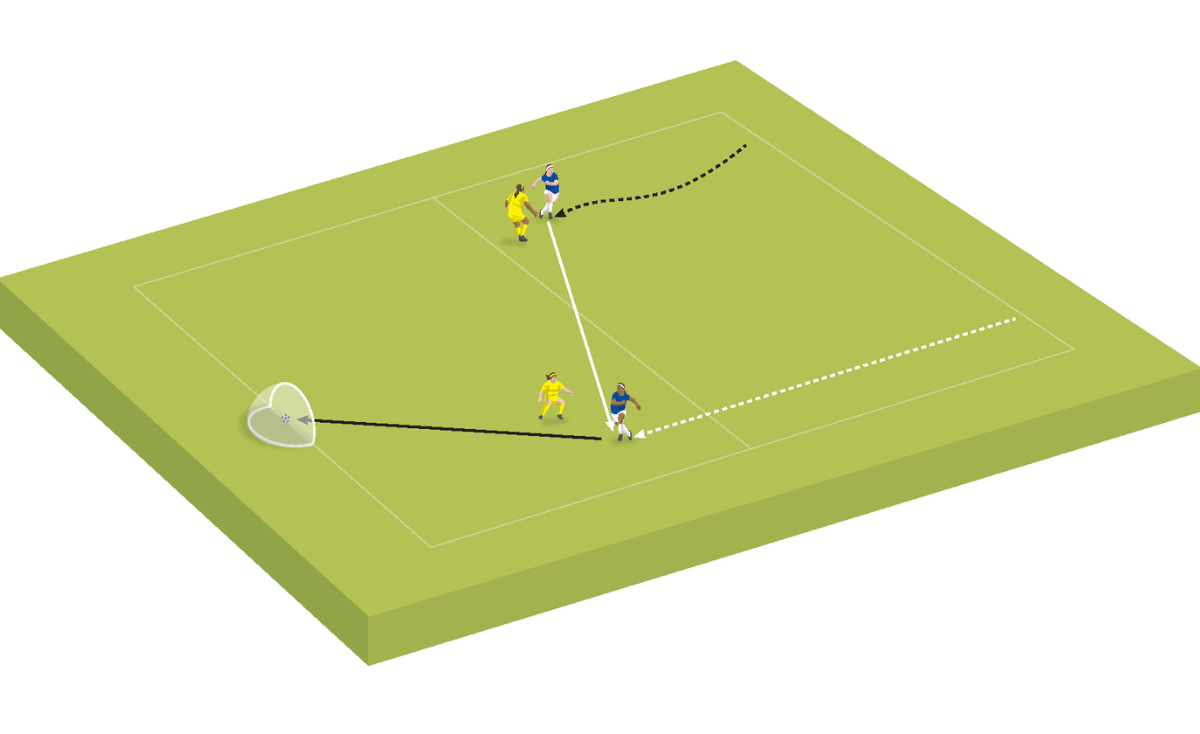
Use the final third of a pitch with a full-size goal and two mini goals at the other end. Play 6v6 in the middle, with two neutrals in wide channels and two neutrals in the middle.
HOW TO play
Teams must look to break lines to score in the mini goals or full-size goal. The coach can use tempo triggers mid-game:
-
Pause: Recycle and rebuild
-
Strike: Immediate forward pass/dribble
Progressions/adaptations
You can increase the minimum number of passes for the slow tempo section. If players are finding it too hard, remove a defender – they can be a central neutral player. You can also stipulate that the switch has to be received by an attacker on the run while switching sides, rather than the ball going to the attacker already in the other half. This will encourage more third-man runs off the ball and playing into space.
COACHING POINTS
-
Use positional rotations to create superiority, not chaos
-
Wide players must consider when to stay wide and when to drop into half-spaces
-
Central pivots must stagger to provide different angles
-
Teams look to break lines to score in the mini goals or full-size goal
-
’Pause’ direction from the coach asks players to recycle and rebuild
-
’Strike’ direction from the coach asks players to make an immediate forward pass or dribble forward

Women's Soccer Coaching
Latest Content
Subscribe Today

Newsletter Sign Up
Subscribe Today
Newsletter Sign Up
Subscribe Today
Latest Issue

Discover the simple way to become a more effective, more successful soccer coach
In a recent survey 89% of subscribers said Women's Soccer Coaching makes them more confident, 91% said Women's Soccer Coaching makes them a more effective coach and 93% said Women's Soccer Coaching makes them more inspired.
*includes 3 coaching manuals
Get Inspired
All the latest techniques and approaches


Women's Soccer Coaching offers proven and easy to use soccer drills, coaching sessions, practice plans, small-sided games, warm-ups, training tips and advice.
We've been at the cutting edge of soccer coaching since we launched Soccer Coach Weekly in 2007, creating resources for the grassroots youth coach, following best practice from around the world and insights from the professional game.
