
 close
close


 LOGIN
LOGINYou are viewing
1 of your 3 free articles
Middle-third combinations
Develop awareness and understanding of middle-third combination play. Session structure: practice 1, practice 2, small-sided game.


Why use it
This three-part session develops players’ awareness and understanding of middle-third combination play, providing an opportunity to practice combinations unopposed before putting them into a game-realistic setting.
Practice 1
Set up
Mark out an area relative to the age, ability and number of your players. Divide players into groups of six where possible, setting out cones as shown.
How to play
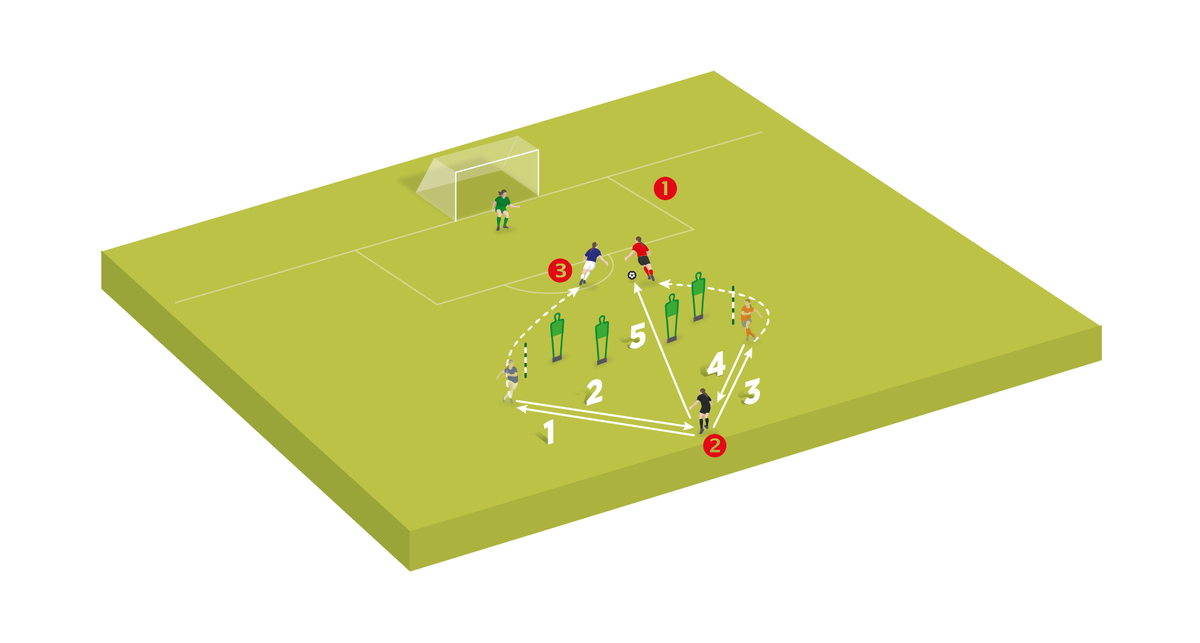
The first player (winger/wing-back) passes to a central midfielder, who moves away from their cone to receive and play a one-two around the cone. Upon receiving again, the midfielder switches play to the other winger/wing-back, who plays short to the striker’s feet, before receiving back and playing a one-two with the striker around the cone and into space.
Progressions/adaptations
Players must play one-touch when setting the ball back, and two-touch for switching play.
Coaching points
Encourage players to make dynamic movements before receiving the ball. This should be two movements – one away and one towards, or vice versa. Encourage players to scan before receiving the ball.
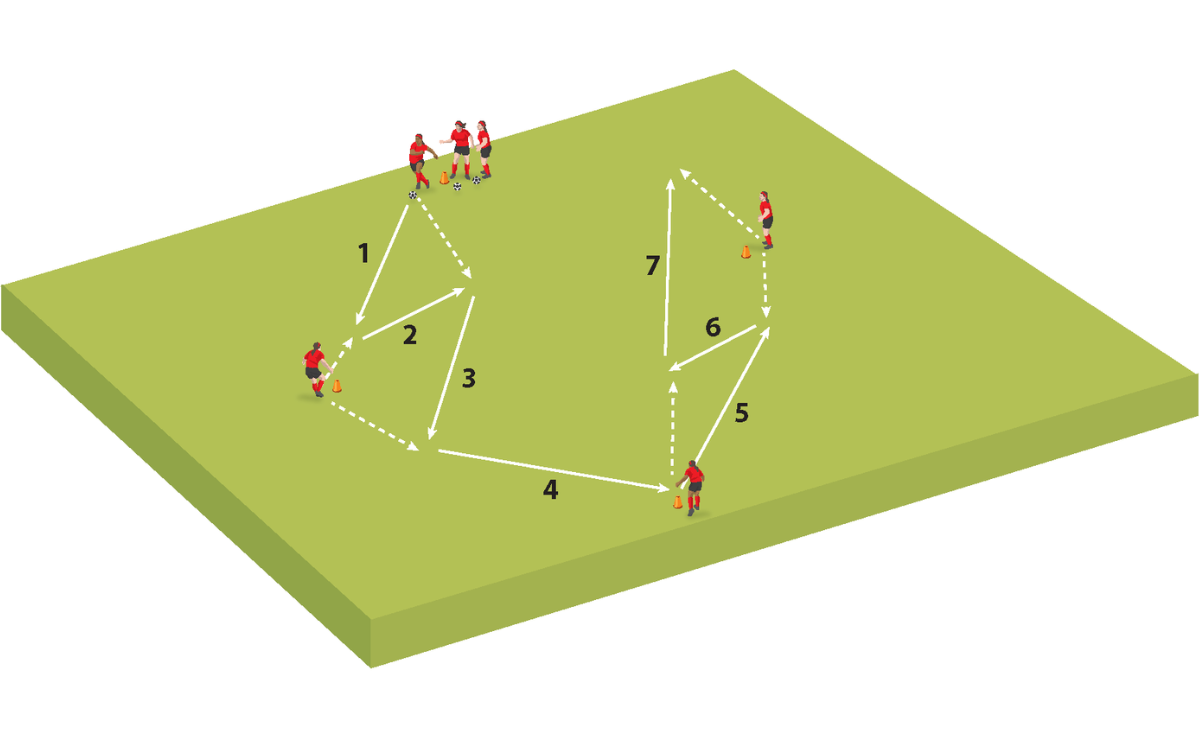
2.The midfielder switches play
3. The winger or wing-back plays short to the strikers feet, before receiving it back and playing a one-two
Practice 2
Set up
The same set up as practice 1.
How to play
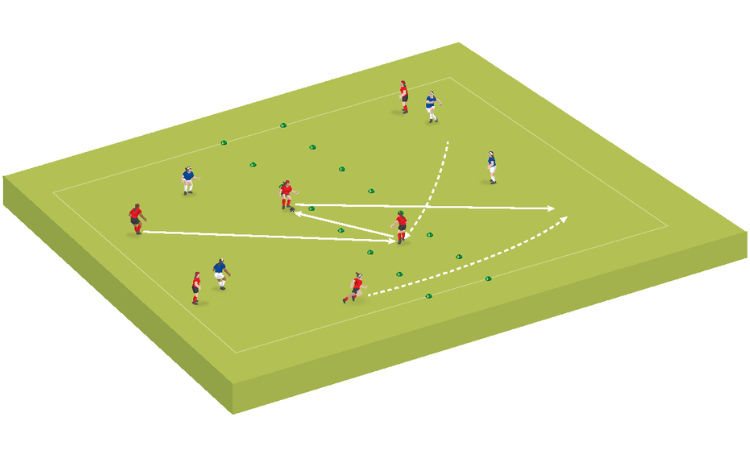
The first player (winger/wing-back) passes to a central midfielder, who moves away from their cone to receive and set the ball back. The winger/wing-back then switches play to the opposite winger/wing-back, who moves infield towards the ball to receive. They set back to the midfielder who plays into the striker’s feet. The striker sets back for the winger, who plays a one-two back to the striker into space.
Progressions/adaptations
Players must play one-touch.
Coaching points
Encourage players to make dynamic movements before receiving the ball. This should be two movements – one away and one towards, or vice versa. Encourage players to scan before receiving the ball.
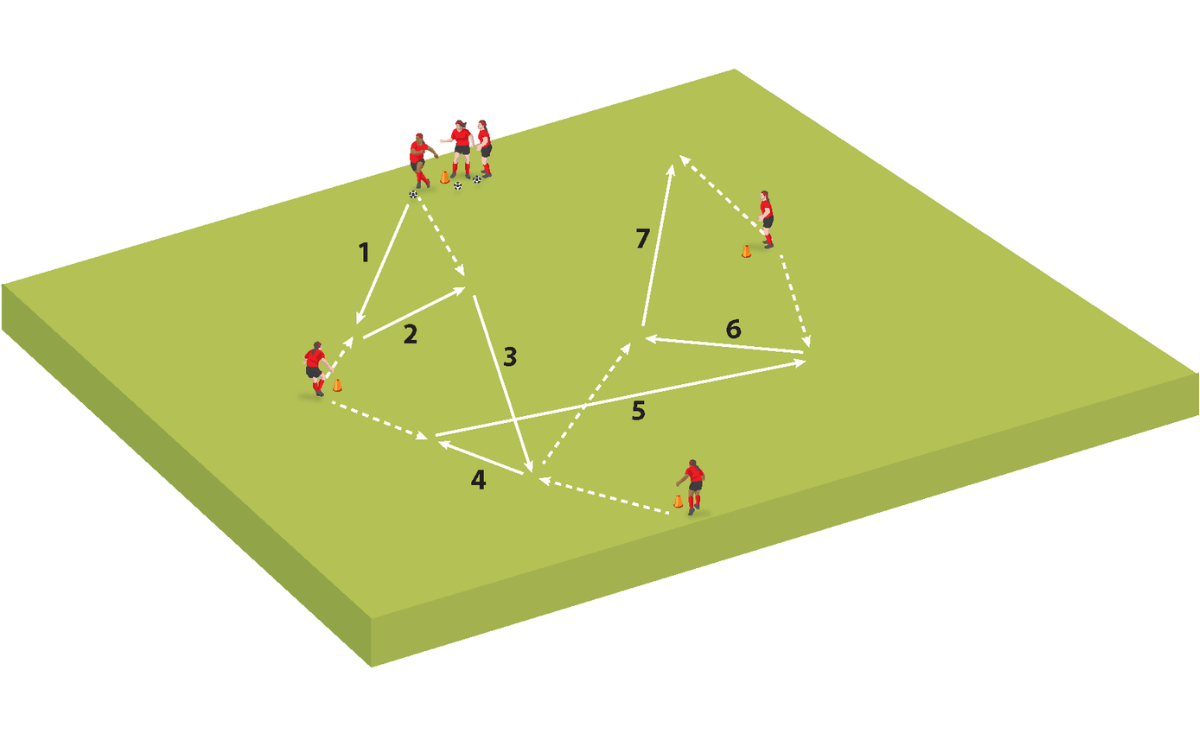
2. The player switches play
3. The winger or wing-back sets back to the midfielder who plays into the strikers feet, they go on to combine
Small-sided game
Set up
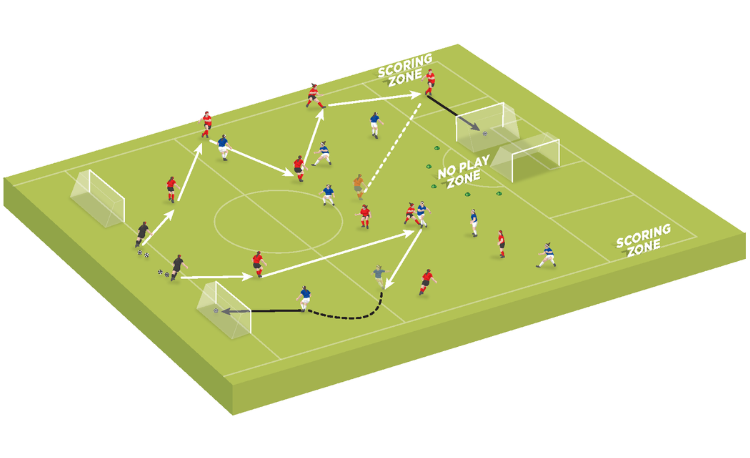
Mark out an area relative to the age, ability and number of your players. Mark out a halfway line and a final third zone at one end. At this end, place a goal. Divide players into two teams. The attacking team needs three central midfielders (one 6 and two 8s), two wingers/wing-backs and two strikers. The defending team needs a back four and central midfielder.
How to play
The ball always starts with the attacking #6. The #6 and two #8s start in the first half against one defender (#6). If #7 or #11 drop in then the two full-backs (#2 and #5) can follow. They look to advance the ball into the #9 or #10 and once either has touched the ball the attacking team can score. If the defending team win the ball they must play a pass into the #6 over the halfway line to score.
Progressions/adaptations
Progress into a full-size game.
Coaching points
Encourage attacking players to play one or two-touch where possible.
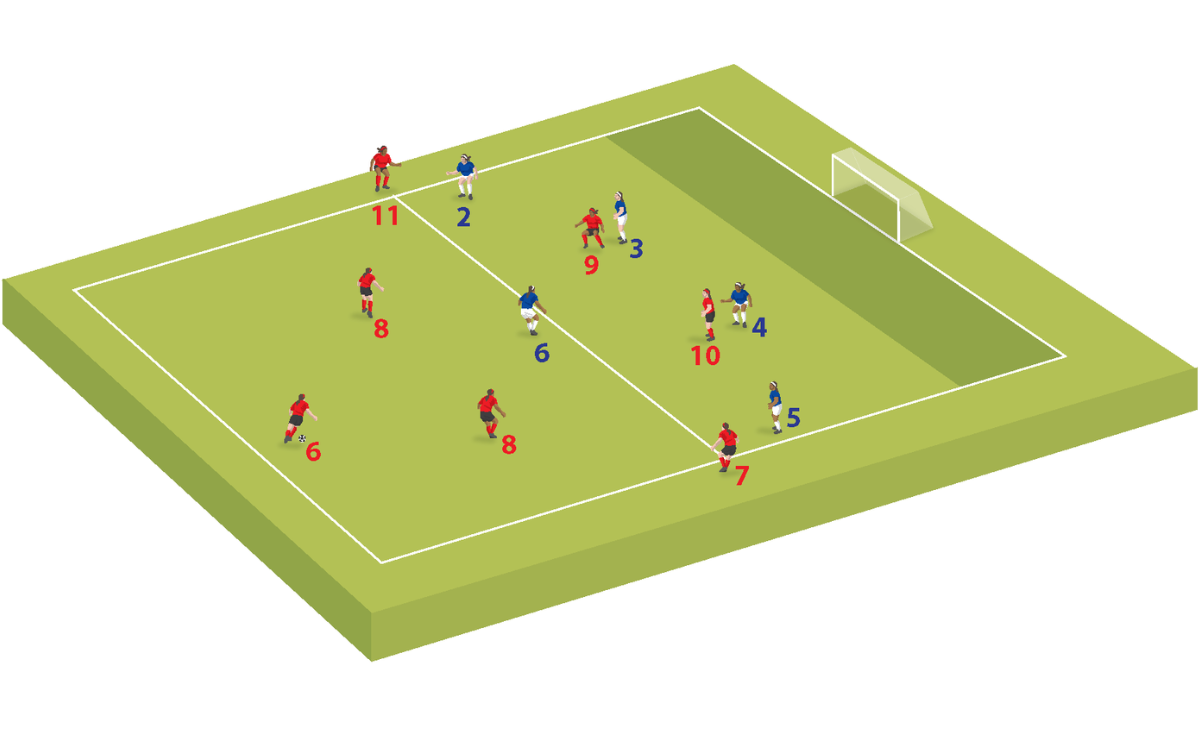
2.Once the team has advanced the ball into the #9 or #10, the attacking team can score
3. If the defending team win the ball, they must play a pass to the #6 over the halfway line to score

Steve Greenwood

Latest Content
Subscribe Today

Newsletter Sign Up
Subscribe Today
Newsletter Sign Up
Subscribe Today
Latest Issue

Discover the simple way to become a more effective, more successful soccer coach
In a recent survey 89% of subscribers said Women's Soccer Coaching makes them more confident, 91% said Women's Soccer Coaching makes them a more effective coach and 93% said Women's Soccer Coaching makes them more inspired.
*includes 3 coaching manuals
Get Inspired
All the latest techniques and approaches


Women's Soccer Coaching offers proven and easy to use soccer drills, coaching sessions, practice plans, small-sided games, warm-ups, training tips and advice.
We've been at the cutting edge of soccer coaching since we launched Soccer Coach Weekly in 2007, creating resources for the grassroots youth coach, following best practice from around the world and insights from the professional game.
