
 close
close


 LOGIN
LOGINYou are viewing
2 of your 3 free articles
The relative age effect in women’s soccer
Dr Matthew Andrew and Prof Adam Kelly share insights on the relative age effect, developed from examining thousands of female players across Europe, the United States, and the CONCACAF region


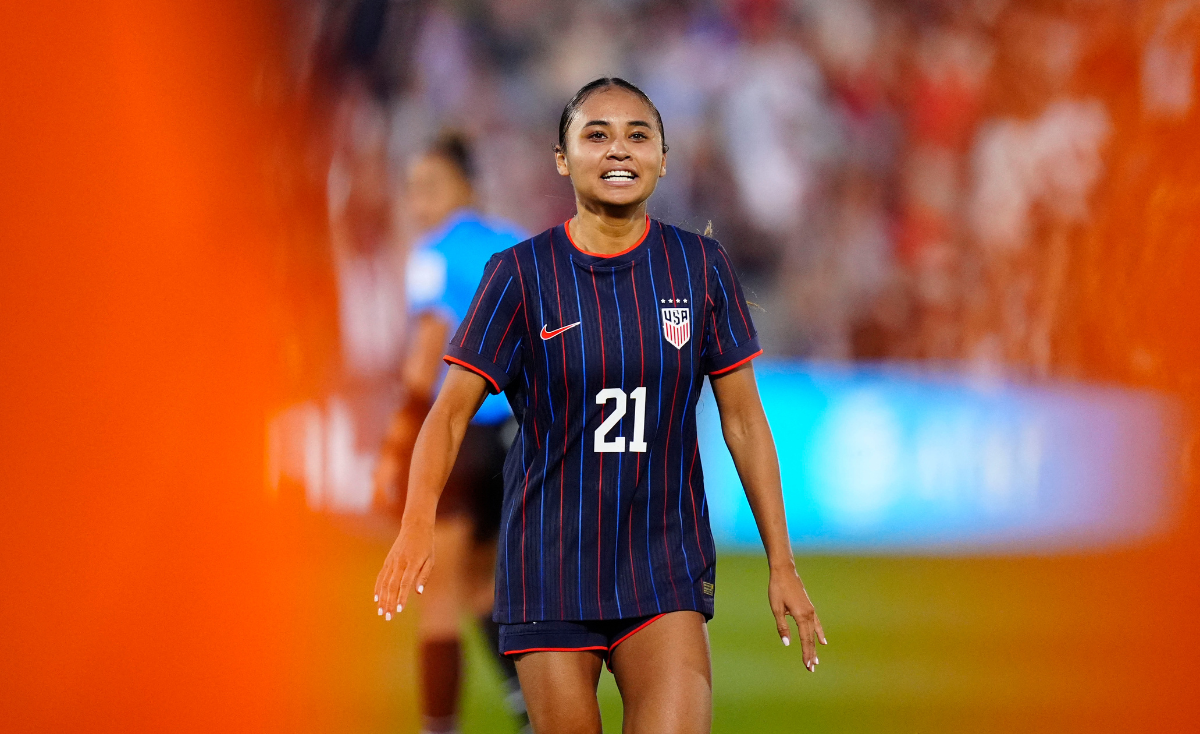
Women’s soccer is going from strength to strength. But beneath the surface of this growth lies a subtle, often overlooked factor that may be shaping who gets selected, who progresses, and who drops out: the Relative Age Effect (RAE).
RAE refers to the advantage players born earlier in the selection year often have over their younger peers. These athletes may show early physical and anthropometric advantages as well as earlier engagement in football leading to advanced technical, tactical, psychological, and social skills, resulting in coaches to perceive them as more ‘talented’.
As a result, they often gain access to better coaching, facilities, competition, and support factors that shape development. Meanwhile, later-born peers face fewer opportunities, lower selection rates, and higher dropout risks.
This imbalance can impact long-term participation and performance in women’s soccer. For example, FIFA reported that in the 2024 U20 Women’s World Cup, 28.4% of players were born in the first three months of the year (i.e., January, February, March; Q1) compared to 22.8% of players who were born in the last three months of the selection year (i.e., October, November, December; Q4).
In male soccer, this phenomenon is well-documented – but what about the women’s game? My colleagues and I set out to explore this question through three studies involving thousands of female players across Europe, the United States, and the CONCACAF region. What we found offers practical insights for coaches at every level of the women’s game.
For coaches in the women’s game, understanding RAE is crucial. It’s not just about identifying talent it’s about creating equitable environments where all players, regardless of birth month, have the chance to thrive and achieve their potential.
The myth of the early birth advantage
In male soccer, players born in the first quarter of the year (Q1) are up to 4.3 times more likely to be selected than players born in the last quarter (Q4). But in our studies of female players across recent UEFA and CONCACAF tournaments, this pattern didn’t hold. In fact, in 2,387 European female players, no significant RAE was found at any age group including senior players. In the United States, where youth soccer has high participation rates and is highly competitive, although RAE was present at club level and regional Youth National Team talent ID camps, it disappeared by the time players reached the full Youth National Team.
Coaches tip
Don’t assume early-born players are more talented. In the women’s game, RAE is inconsistent and often absent at the highest levels. Focus on skill, motivation, and development, not birthdate.
Maturity as well as month
One reason RAE may be less prevalent in female soccer is the complex interplay between biological maturation and social factors. It is also important to remember that relative age and biological age or two independent constructs, which may require different approaches to moderate related biases.
Every athlete grows at her own pace. From height and muscle development to hormonal changes, these shifts known as biological maturation can shape how a player performs, how confident she feels, and whether she gets noticed during selection. It’s not just about age it’s about timing, and every player’s journey is unique.
In youth female players in the United States, early-maturing players were more likely to be selected at club and regional levels. But interestingly, late-maturing players were more likely to reach the Youth National Team level, suggesting a reversal of the typical RAE.
This may reflect deeper sociocultural dynamics. Early physical development in girls can sometimes conflict with gender norms or lead to self-consciousness, increasing dropout risk. Coaches need to be aware of these pressures and avoid conflating physical maturity with long-term potential.
Coaches tip
Consider biological age, not just chronological age. Late bloomers may have the greatest long-term potential. Create environments that support all stages of development and avoid overvaluing early physical maturity. If a player appears to be struggling, it may be due to recent maturation-related changes. Don’t hesitate to speak with parents to see if they’ve noticed any physical and/or emotional shifts. These conversations can offer valuable insights.
Position-specific patterns
Although RAEs are generally absent in female soccer, recent research has shown that they are not entirely absent, especially in youth categories. Data from our CONCACAF and U.S. studies show that goalkeepers and central defenders tend to show stronger RAE patterns. This is likely due to physical demands and height preferences associated with these positions.
Midfielders and wide forwards show a more balanced birthdate distribution, suggesting technical and tactical qualities are prioritised over physical attributes.
Coaches should be cautious not to overlook technically gifted players who may not fit the ‘physical profile’ early on. Encouraging young female players to explore multiple positions before specialising can help reduce dropout rates and support long-term development.
Coaches tip
Avoid position-based stereotypes and allocating specific positions early in development.
Consider game intelligence and technical skills as key selection criteria that often predict long-term success.
Context is everything
RAE is not a universal truth it’s a context-dependent phenomenon. In nations with deep talent pools and competitive structures, RAE may be more pronounced. In emerging soccer nations or environments with limited resources, it may be absent or even reversed. Cultural norms, socioeconomic status, and access to facilities all play a role.
For example, in soccer nations that employ ‘pay-to-play’ models means access to elite development often depends on family resources, which can mask or amplify RAE effects. Coaches must be aware of these broader influences when evaluating talent.
Coaches tip
Understand your environment. RAE may look different in your club, region, or country. Tailor your approach to the realities your players face.
Final whistle: what coaches can do?
The journey to elite women’s soccer is complex, and RAE is just one piece of the puzzle. While it may not dominate the landscape as it does in men’s soccer, its subtle influence especially in early selection stages should not be ignored.
Traditional selection models based on age and physicality may not serve female players well. Instead, what works is a holistic approach, one that values attributes such as skill, drive, maturity, and the unique context each player brings.
As a coach, you have the power to create environments where every girl feels seen, supported, and set up to succeed –regardless of when she was born. Whether you’re guiding U10s or scouting future internationals, understanding RAE helps you spot potential that others might miss.
The future of women’s soccer depends on coaches who see beyond stats and nurture the whole player. Here are two strategies to mitigate the RAE.
Coaches tip
During trial periods, let players wear bibs or shirts numbered by birth month. It’s a simple tweak that makes age differences visible to coaches and scouts, which has been shown to reduce selection biases.

Dr Matthew Andrew and Prof Adam Kelly
Latest Content
Subscribe Today

Newsletter Sign Up
Subscribe Today

Newsletter Sign Up
Subscribe Today
Latest Issue
Discover the simple way to become a more effective, more successful soccer coach
In a recent survey 89% of subscribers said Women's Soccer Coaching makes them more confident, 91% said Women's Soccer Coaching makes them a more effective coach and 93% said Women's Soccer Coaching makes them more inspired.
*includes 3 coaching manuals
Get Inspired
All the latest techniques and approaches


Women's Soccer Coaching offers proven and easy to use soccer drills, coaching sessions, practice plans, small-sided games, warm-ups, training tips and advice.
We've been at the cutting edge of soccer coaching since we launched Soccer Coach Weekly in 2007, creating resources for the grassroots youth coach, following best practice from around the world and insights from the professional game.
