
 close
close


 LOGIN
LOGINYou are viewing
2 of your 3 free articles
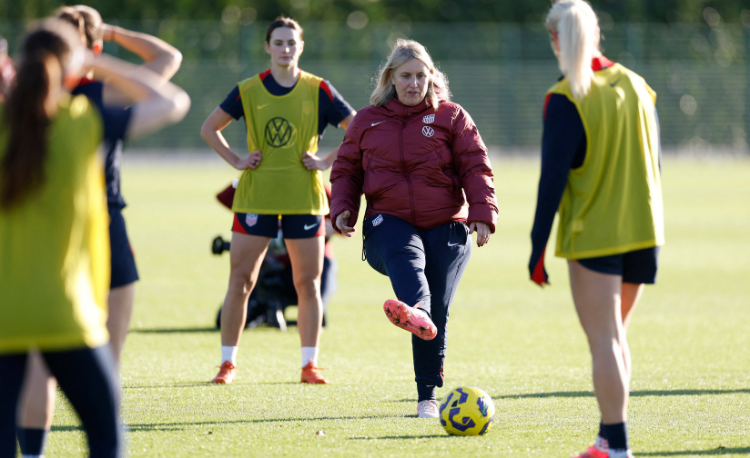
Three things I’ve learned from Emma Hayes
High standards and care, constant learning, and being yourself... coach Gemma Moris shares the three biggest lessons she’s taken from the USA head coach



Watching Emma Hayes’ journey over the years has been both inspiring and challenging. Not just because of what she’s achieved, but because of how she’s gone about it.
As an iconic female coach, her approach has made me reflect on my own behaviours, standards and the way I show up every day on the training pitch. These are three key lessons I’ve taken from her way of doing things and tried to apply in my own coaching.
1. High standards and care can coexist
One of the strongest messages I take from Emma Hayes is that demanding excellence and caring deeply about people are not opposites. For a long time, I felt tension between being supportive and being challenging, as if pushing players hard risked damaging relationships or not being liked.
Hayes’ leadership shows that clarity, honesty and high expectations are absolutely forms of care.
She doesn’t dilute standards to be liked and she doesn’t hide behind authority to enforce them. Everything is clear – what’s expected, why it matters and what happens if it slips. That clarity creates safety. It’s pushed me to be braver in addressing small drops early, knowing that consistency and fairness build trust far more than avoidance ever will.
2. Constant learning is a non-negotiable
Another lesson is her visible commitment to learning. Emma Hayes openly talks about evolving, adapting and being influenced by others – across sports, environments and cultures. There’s no sense of “arrival.” Success hasn’t made her static.
As a female coach myself, that’s been powerful. It’s easy to feel pressure to appear certain, knowledgeable and fully formed, especially in male-dominated spaces. I’ve often been the only female on a coaching course or CPD event and have always felt pressure to speak up and somehow prove what I know, prove I’m confident.
Hayes’ example has helped me reframe learning as strength rather than weakness. I’ve become more comfortable saying, “I’m exploring this,” or “I’m still refining that,” and more intentional about putting myself in environments where I’m challenged rather than reassured.
3. Be authentically yourself, not palatable
Perhaps the biggest takeaway for me is her authenticity. Emma Hayes doesn’t soften her personality to fit expectations of how a female leader should behave. She is articulate, emotional, intense, reflective and unapologetically herself. That permission matters.
For years, I filtered parts of myself, worrying how I’d be received. Watching Emma Hayes has reinforced that credibility doesn’t come from fitting a mould but from alignment between values, actions and communication. Players don’t need a version of you that feels safe to present, they need the real one they can trust.
Emma Hayes’ journey hasn’t just changed how the women’s game is viewed, it’s changed how many of us see ourselves within it. Her example has encouraged me to coach with greater clarity, curiosity and conviction and to stop shrinking in spaces where I’ve earned the right to stand tall.
If there’s one overarching lesson I’ve learned, it’s this: you don’t have to change who you are to succeed. You just have to commit fully to becoming better.

Gemma Moris
Latest Content
Subscribe Today
Newsletter Sign Up
Subscribe Today

Newsletter Sign Up
Subscribe Today
Latest Issue
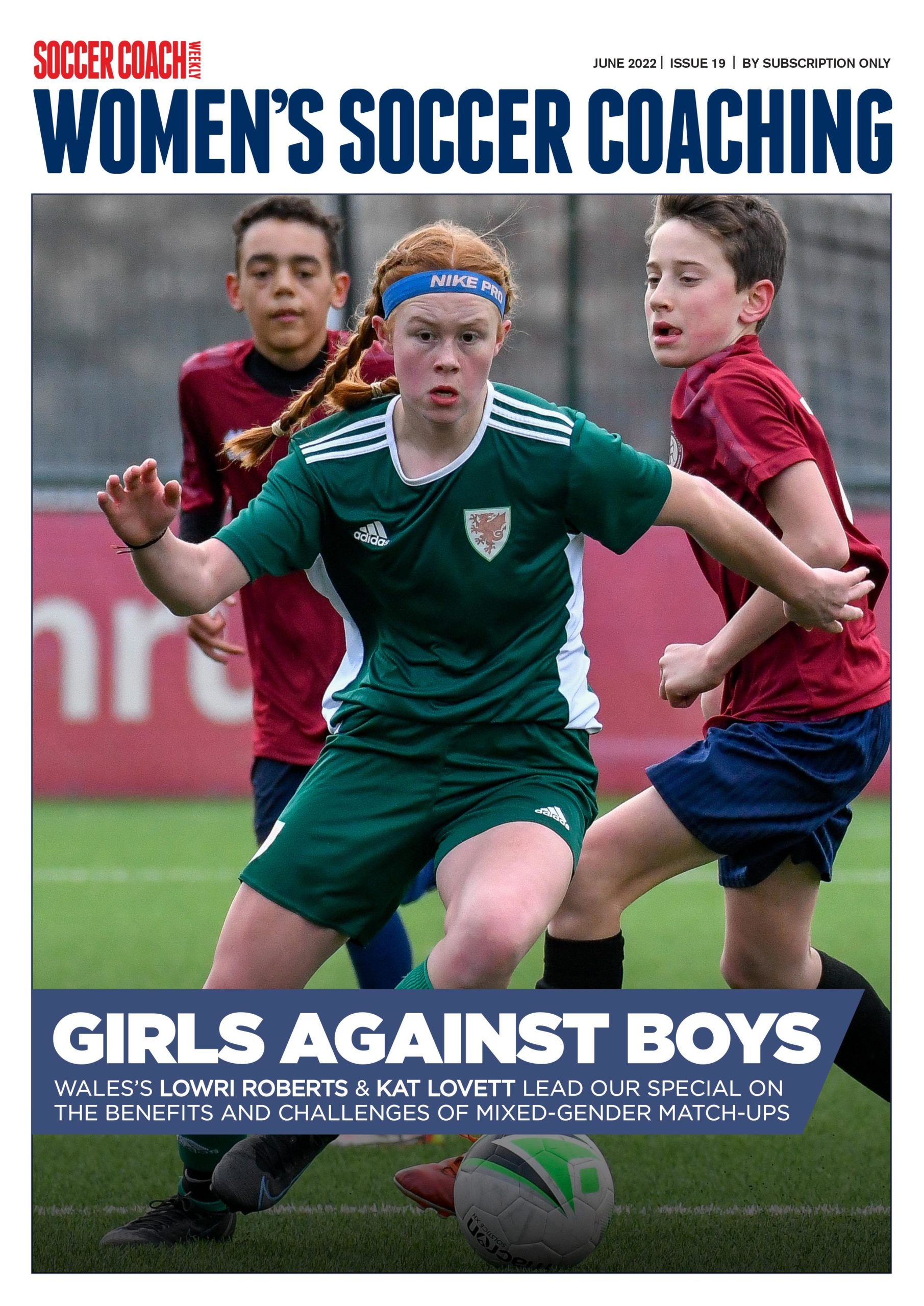
Discover the simple way to become a more effective, more successful soccer coach
In a recent survey 89% of subscribers said Women's Soccer Coaching makes them more confident, 91% said Women's Soccer Coaching makes them a more effective coach and 93% said Women's Soccer Coaching makes them more inspired.
*includes 3 coaching manuals
Get Inspired
All the latest techniques and approaches


Women's Soccer Coaching offers proven and easy to use soccer drills, coaching sessions, practice plans, small-sided games, warm-ups, training tips and advice.
We've been at the cutting edge of soccer coaching since we launched Soccer Coach Weekly in 2007, creating resources for the grassroots youth coach, following best practice from around the world and insights from the professional game.
