
 close
close


 LOGIN
LOGINYou are viewing
1 of your 3 free articles
Transition at speed
Train your players to turn defence into attack quickly with this three-part session. Session structure: warm-up, practice, small-sided game.


WHY USE IT
This three-part session works on players’ ability to transition quickly and effectively from defence to attack and from attack to defence.
Warm-up
SET-UP
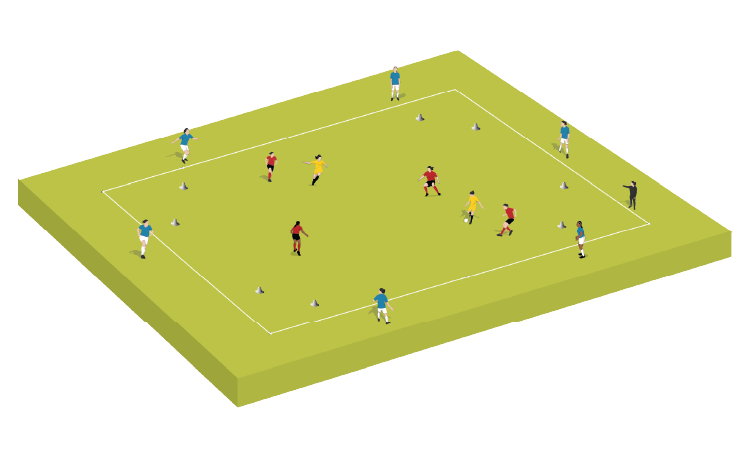
Set up an area relative to the age and ability of your players. It should consist of one larger square, with a smaller square within it. Remember, the focus of the session is transitions, so the area size should provide plenty of opportunities for this.
HOW TO DO IT
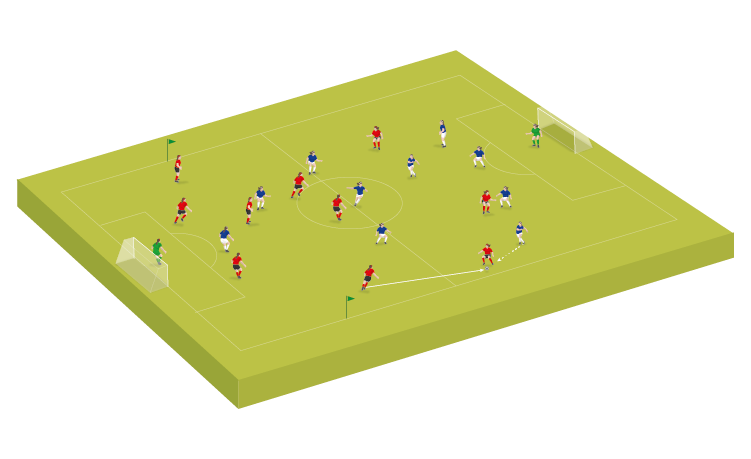
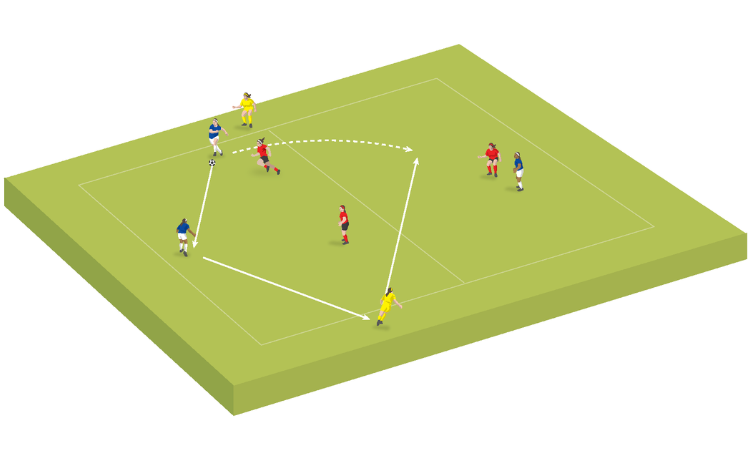
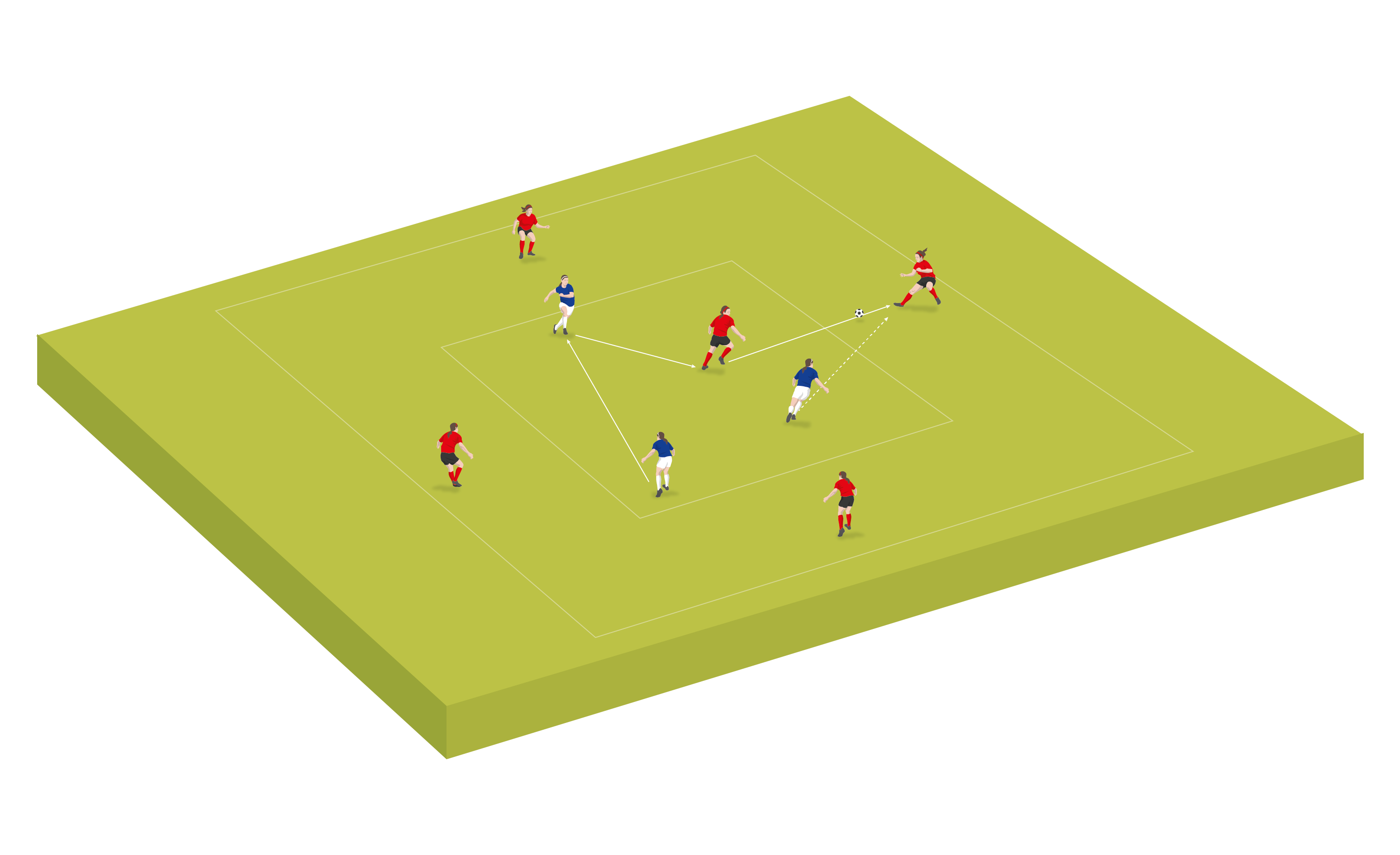
Start with 3v1 in the inner square in favour of Blues. When the defender wins possession, they must quickly pass it to one of the four players in the outer square and the game now opens up to a 5v3, in favour of Reds.
If the Blues regain possession or the ball goes out of play, the game restarts in the small square with a 3v1 (rotate defending player).
Adaptations: If the one defender is struggling to win possession, you can play a 3v2 in the smaller square, with three players waiting in the outer square. The inner square can also be made smaller to reduce the challenge for the defender.
Progressions: Add mini goals to the outside so, when in the 5v3, the five Reds can score after a set number of passes. Alternatively, if the three Blues regain possession, they can immediately score.
COACHING POINTS
Players in outer square must stay wide as they wait to get the ball to ensure the player winning possession has options to play away from pressure. Players should be encouraged to transition from defence to attack, and vice versa, quickly, both mentally and physically.
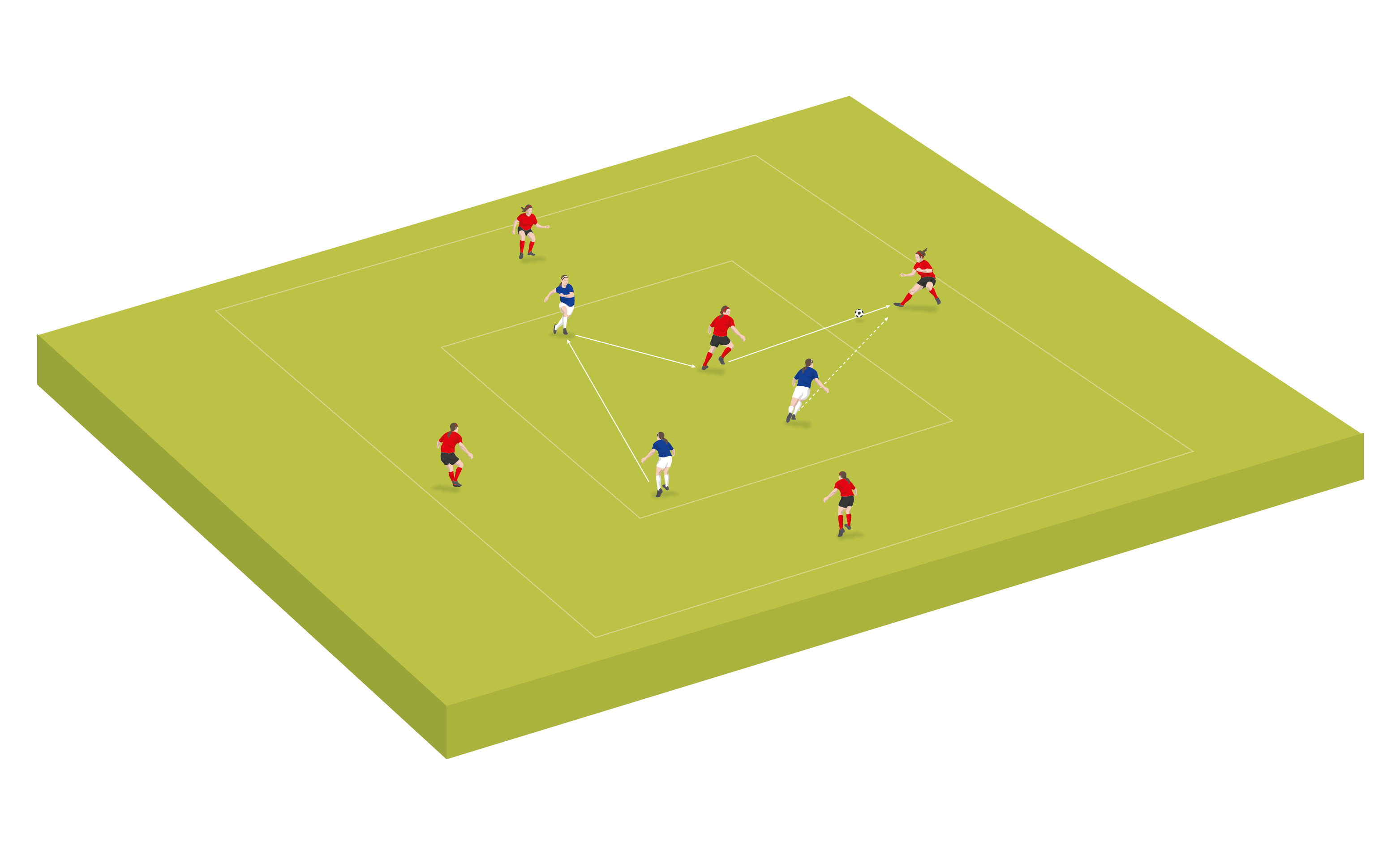
2. If defender wins the ball, they try to transition to attack quickly and find a pass to a team-mate in the outer square
3. Game opens out to a 5v3. If Blues regain possession, game restarts in inner square
Practice
SET-UP
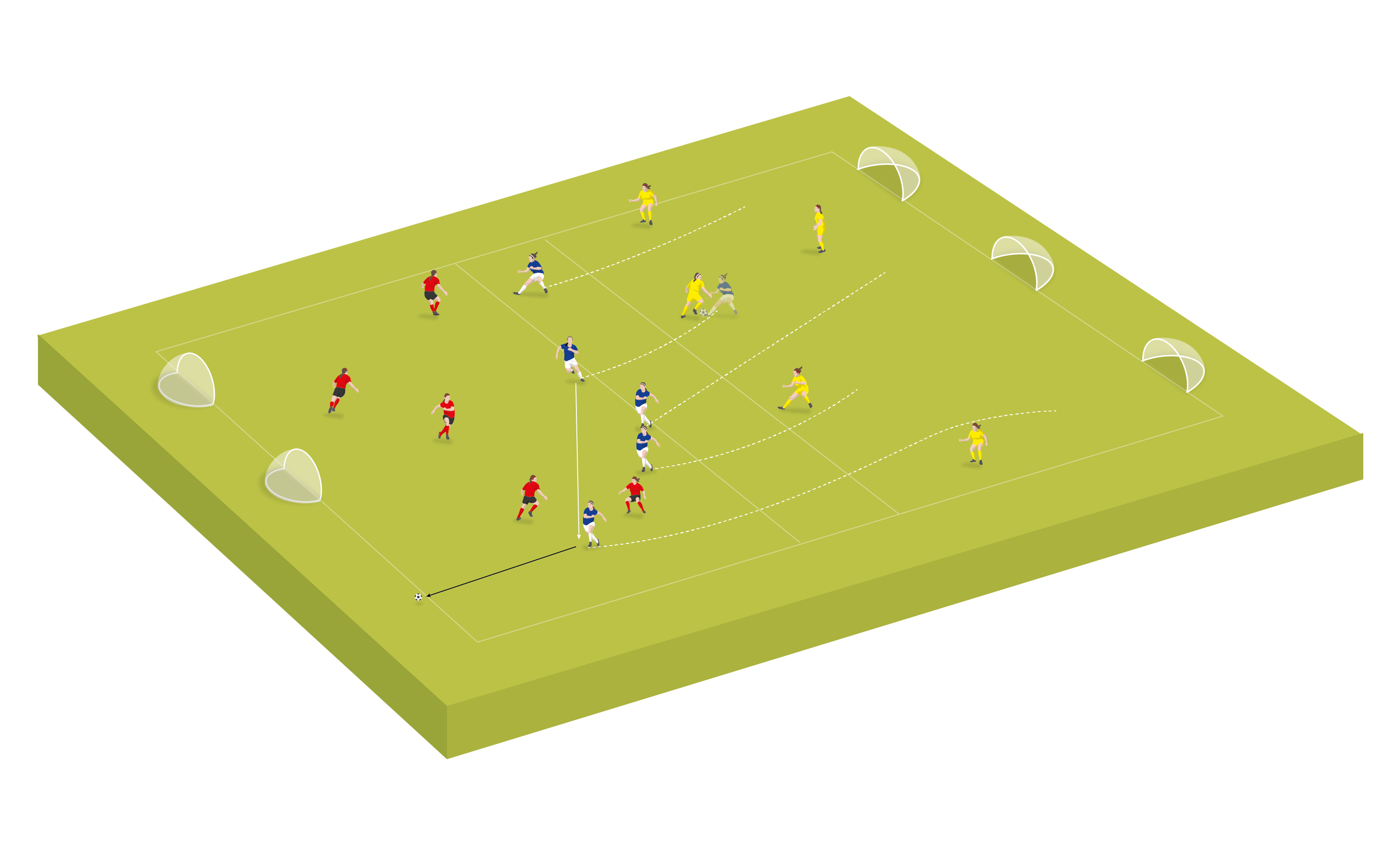
Set up an area relative to the age and ability of your players. Divide the area into three zones, the middle one being smaller than the two end zones – this is a ‘no-playing zone’. Place three mini-goals at each end. Divide players into three teams.
HOW TO PLAY
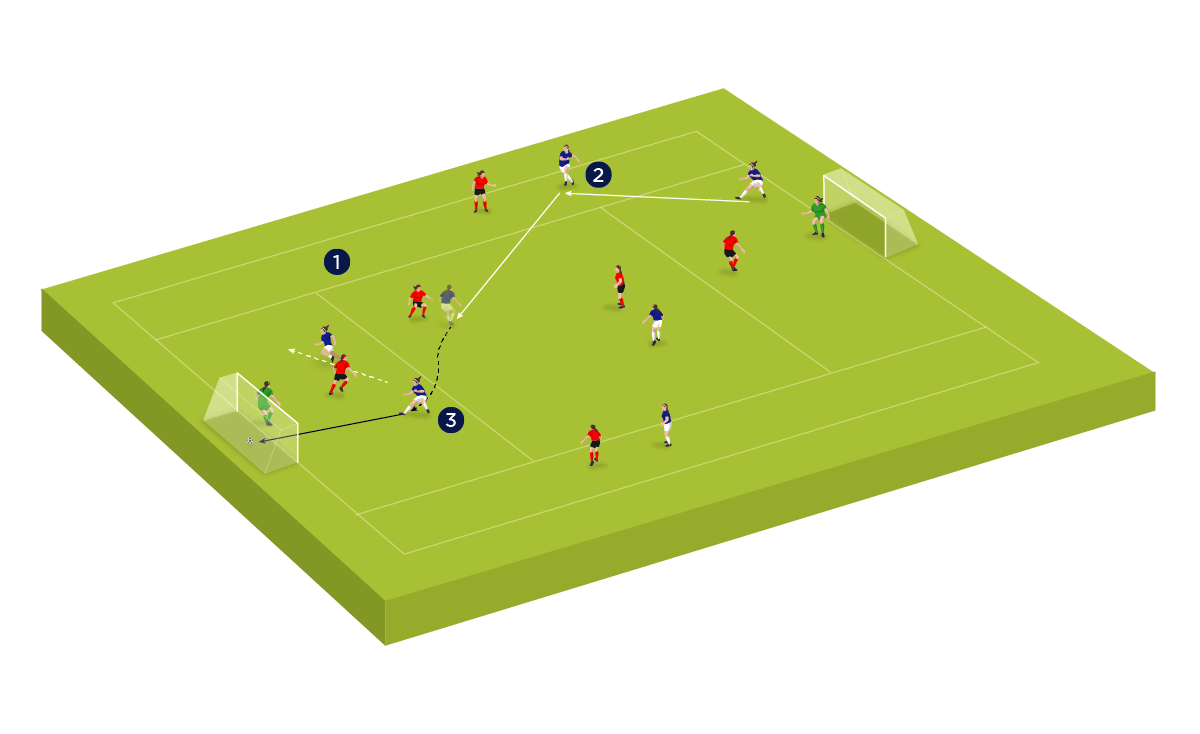
The game starts with a team in the central no-playing zone. They decide which half they want to attack. If they score, they go back to the no-playing zone, get a new ball and attack the other team. If the ball goes out of play, or the defending team wins possession, the original attacking team stays in that half and the original defending team will now attack the other half. This game allows for a lot of transitions to occur.
Progressions: Allow an attacking team who loses possession the chance to win the ball back before their opponents get the ball (a new ball can be played in by the coach) into the ‘no play zone’. If the original attacking team regains possession, they can continue their attack within that half of the pitch.
COACHING POINTS
When transitioning to attack, players should make the field wide by spreading out, and one should give depth by remaining behind their team-mates. The movements of each player depends on the coach’s game model. Players should be encouraged to transition from defence to attack – and vice versa – quickly, both mentally and physically.
Related Files
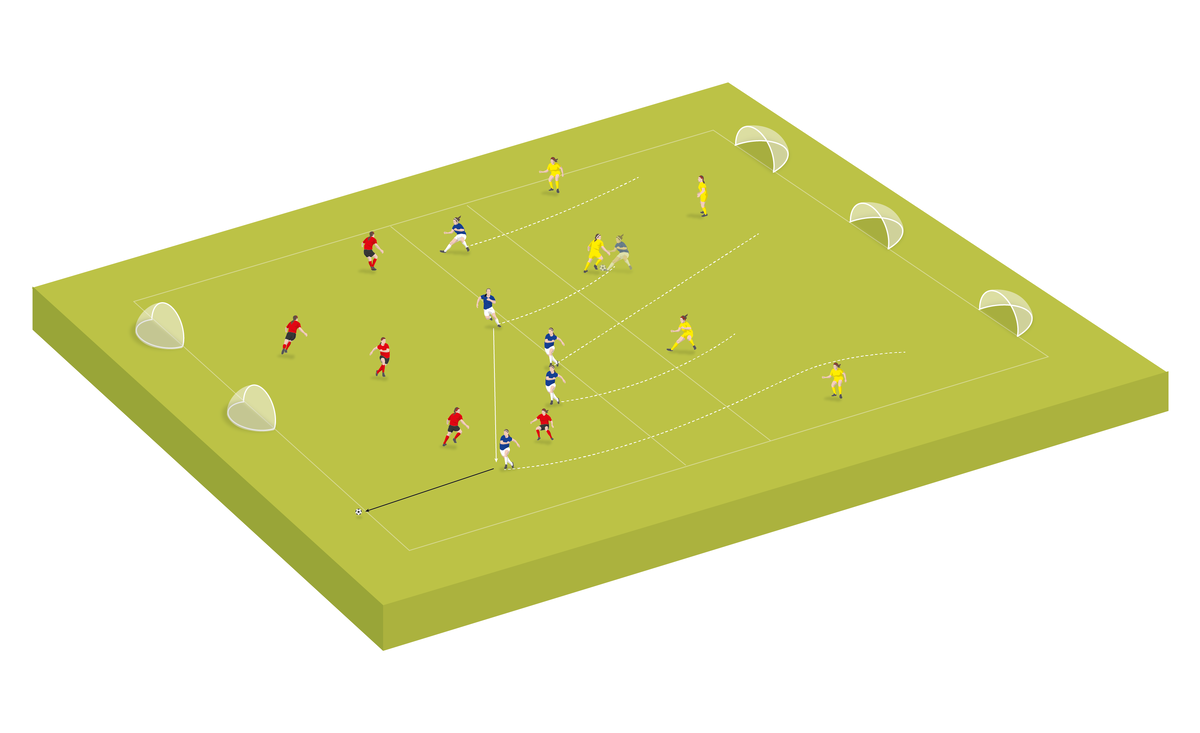
2. If defending team wins possession, they transition to attacking opposite half.
3. If an attacking team scores, they retain possession and attack the opposite half again.
Small-sided game
WHY USE IT
This three-part session works on players’ ability to transition quickly and effectively from defence to attack and from attack to defence.
SET-UP
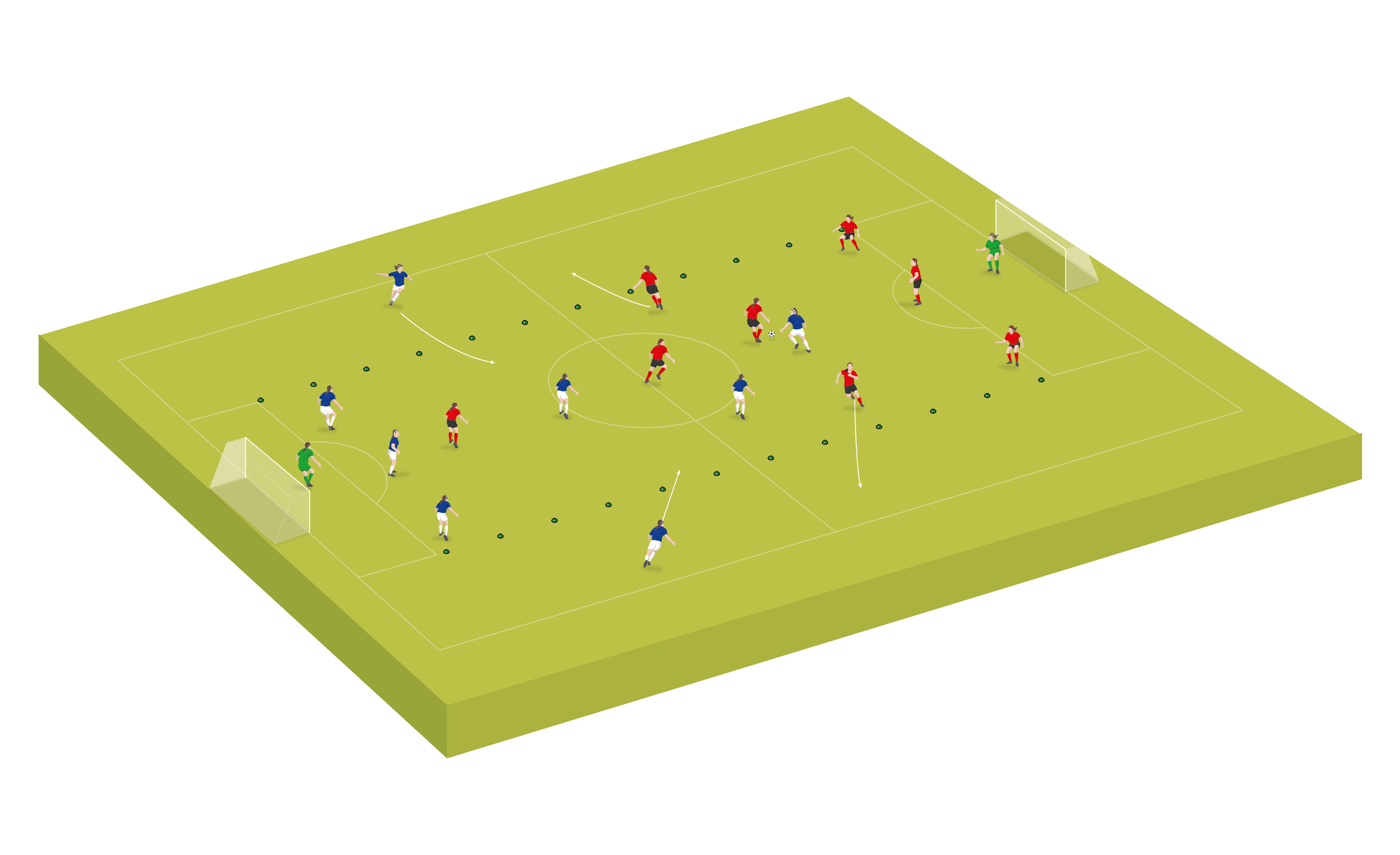
Set up an area relative to the age and ability of your players. Mark out a wide channel on each side and place a goal at each end. Divide players into two teams, including goalkeepers.
HOW TO PLAY
Play a normal game, but using the two outside channels for the following:
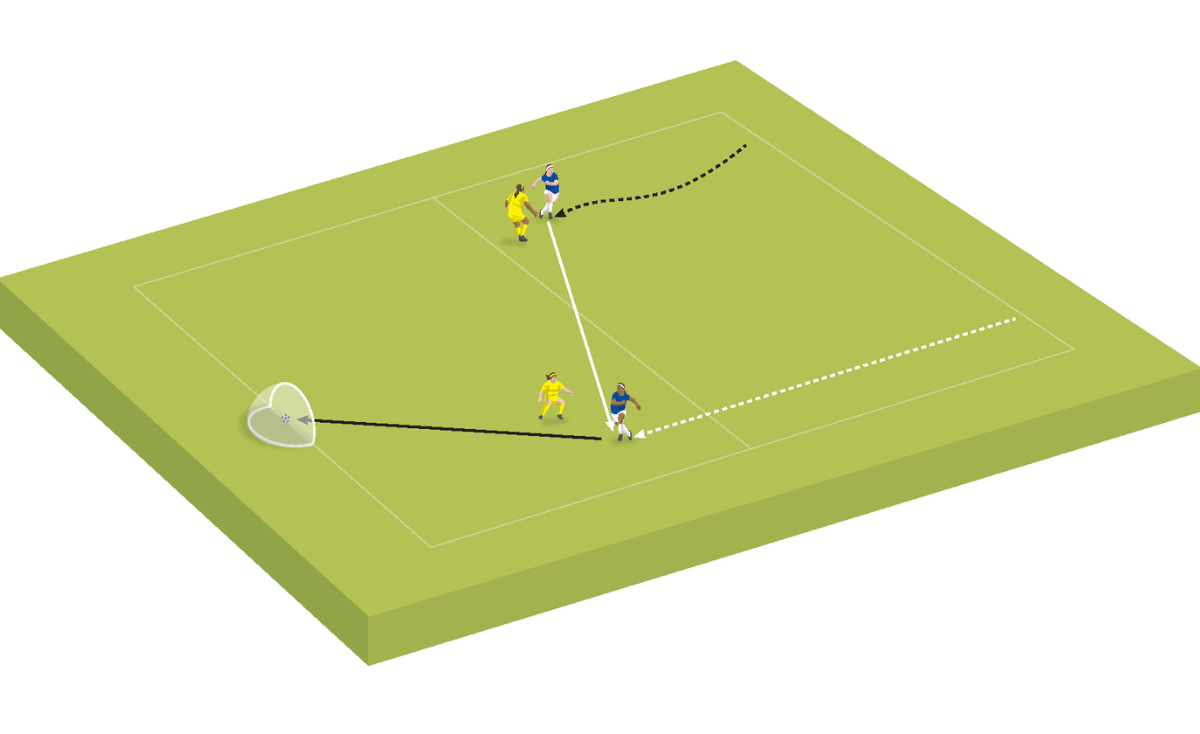
• To provide a visual cue to defenders so they stay compact when out of possession. When defending, players must try to stay in the central area - only one defender can move into the wide channels to defend 1v1.
• When the team transitions to attack, they must have one player in each wide channel as quickly as possible. If the team doesn’t provide a wide option at the transition, they commit a foul (three fouls = a penalty kick).
Adaptations: To make the game easier to begin with, you can start with one neutral player in each wide channel. When a team wins possession, their first pass must be to one of these players. Once players are in the habit of looking for a wide pass out of pressure, you can remove the neutral players and return to the rules above.
Progressions: Remove the wide channels but continue to encourage compactness out of possession, and quickly providing a wide option when in possession.
COACHING POINTS
Players must get wide when they transition to attack. The defending team must stay compact and try to play within the central area.
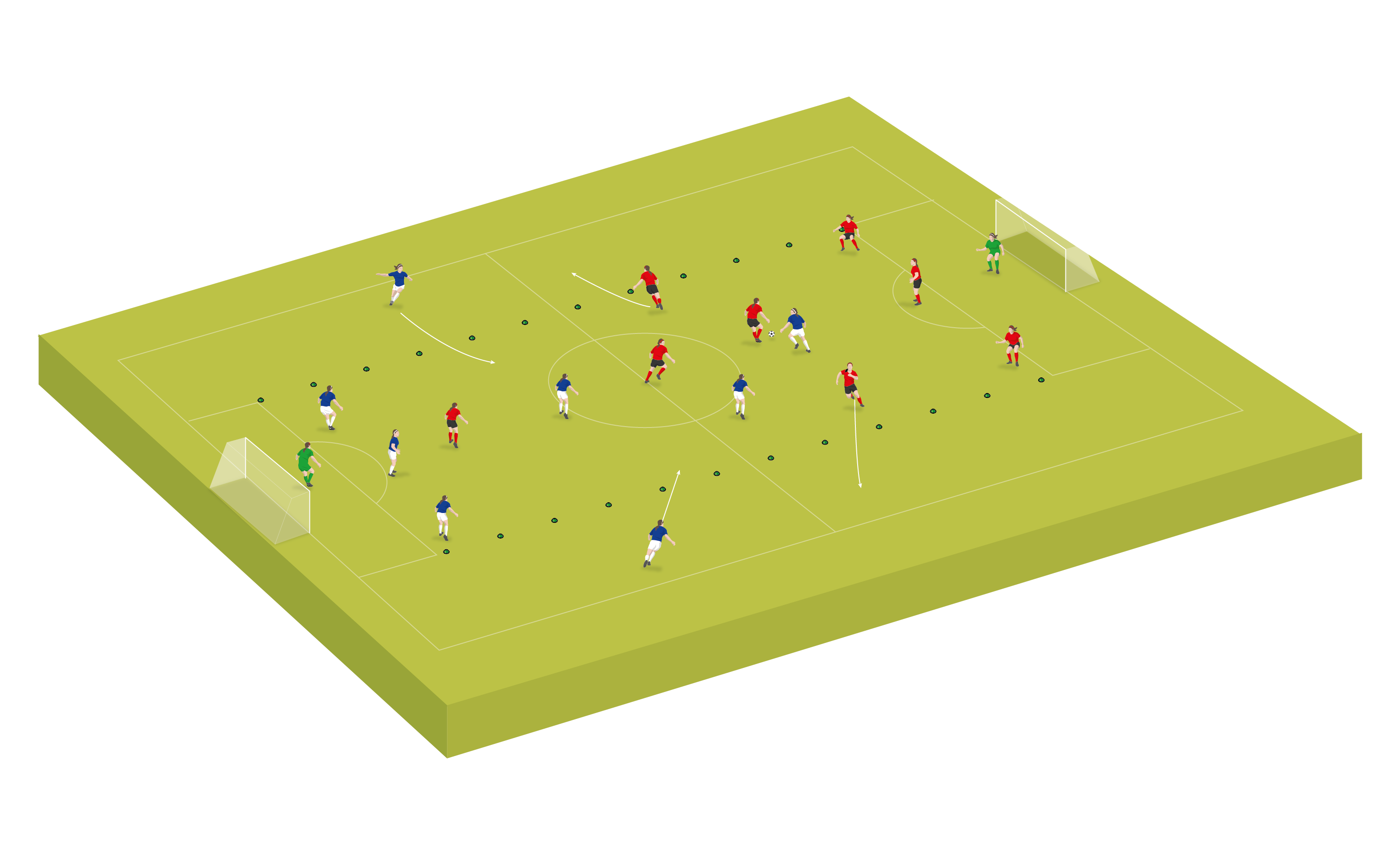
2. A team in possession must have a player in each wide channel
3. A team out of possession must defend the central area.
Latest Content
Subscribe Today

Newsletter Sign Up
Subscribe Today
Newsletter Sign Up
Subscribe Today
Latest Issue

Discover the simple way to become a more effective, more successful soccer coach
In a recent survey 89% of subscribers said Women's Soccer Coaching makes them more confident, 91% said Women's Soccer Coaching makes them a more effective coach and 93% said Women's Soccer Coaching makes them more inspired.
*includes 3 coaching manuals
Get Inspired
All the latest techniques and approaches


Women's Soccer Coaching offers proven and easy to use soccer drills, coaching sessions, practice plans, small-sided games, warm-ups, training tips and advice.
We've been at the cutting edge of soccer coaching since we launched Soccer Coach Weekly in 2007, creating resources for the grassroots youth coach, following best practice from around the world and insights from the professional game.
