
 close
close


 LOGIN
LOGINYou are viewing
1 of your 3 free articles
Up, back and through to progress
A three-part session which develops players’ awareness for third-man forward runs to progress play, with multiple game-realistic scenarios for up-back-through progressions. Session structure: Warm-up, Practice, Small-sided game


Why use it
This three-part session is designed to develop players’ awareness for third-man forward runs to progress play. The session provides multiple game-realistic scenarios for up-back-through progressions.
Warm-up
Set up
Mark out an area relative to the age, ability and number of your players. Divide players into groups of seven or eight, with two or three defenders.
How to play
Play like a normal rondo. One attacking player should be on the outside of each side of the area, with another playing centrally within the area. The defenders can move anywhere within the area. The aim is for attackers to progress the ball from one side to the other. If they are able to combine with the central attacker, the move is worth an additional point. If defenders win the ball, they can dribble out of the area for a point. Play for 90 seconds and switch defenders.
Progressions/adaptations
The challenge can be increased by making the area smaller or adding a defender. The challenge can be made easier by making the area bigger or adding another central attacker, or removing a defender.
Coaching points
- Attacking players should play with an open body to see the whole area
- Take your first touch in the direction you want to go
- Look for the further forward available pass
- Move as the ball is moving to give the receiver a good angle for their next pass
- Know when to change the tempo: Speed play up to drag defenders out of shape to create space for killer pass. Slow play down if defenders aren’t jumping and you need to entice them out, or when you need to regain control after a period of chaos
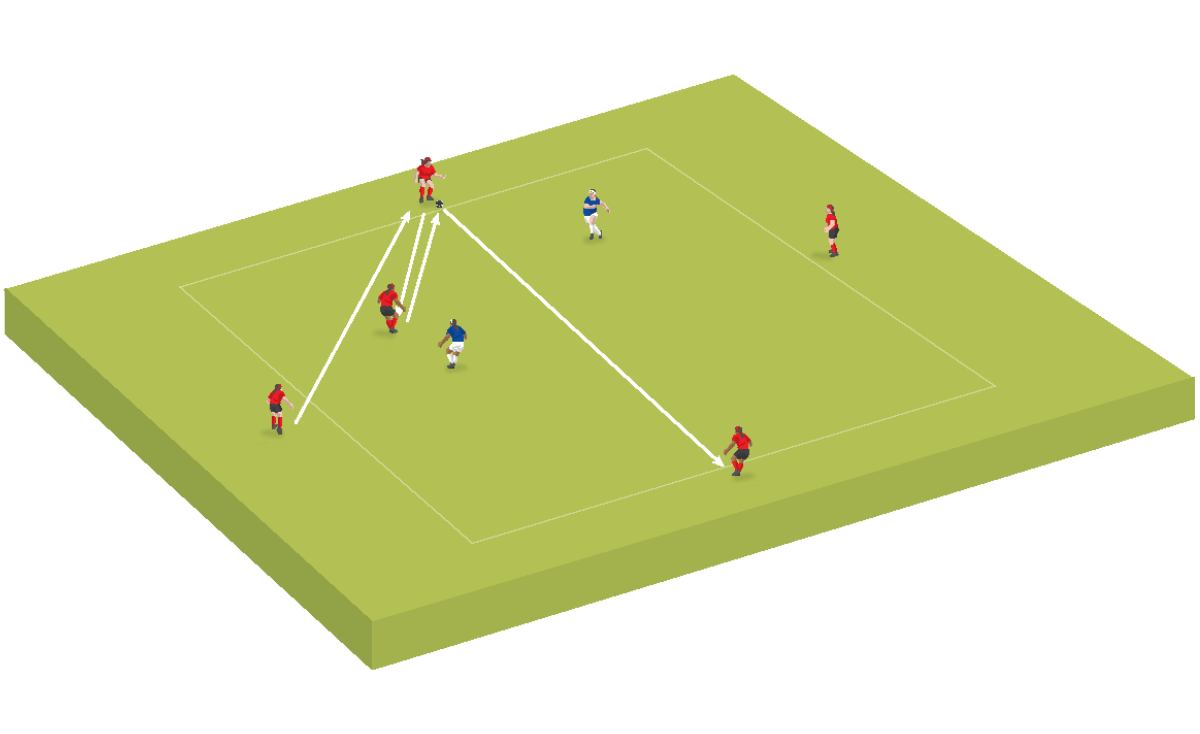
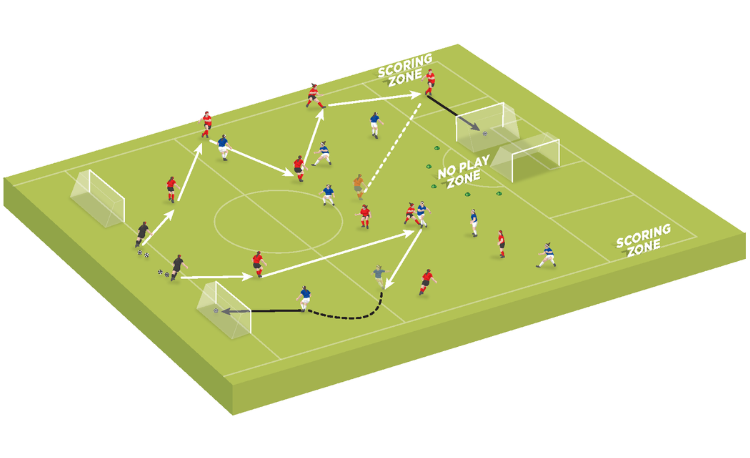
1. Play a rondo, with one attacking player on the outside of each area, and one in the middle
2. The aim is for attackers to progress the ball from one side to the other, combining with the central attacker results in an additional point
3. Defenders look to win the ball and dribble out of the area for a point
Practice
Set up
Mark out an area relative to the age, ability and number of your players. Mark out a narrow channel across the middle of the area. Divide players into two equal teams – four defenders and six attackers.
How to play
Four attackers start in one half, two in the other. Two defenders start in each half. The four attackers start with the ball and look to move the ball to the other half via a third-man runner receiving the ball in the opposite half. One attacker from the opposite half can drop into the middle channel unopposed to set the ball back – they can’t wait in the channel for more than a few seconds. To progress the ball, one of the four attackers must receive the ball on the run in the opposite half. Play then restarts in that half, with another attacker joining to make a 4v2 again.
Progressions/adaptations
Progress so a defender can follow the attacker into the central channel.
Coaching points
- Attacking players should play with an open body to see the whole area
- Take your first touch in the direction you want to go
- Look for the further forward available pass – this involves a well-timed run from a forward in the opposite half into the central channel to provide an option for a bounce pass
- Time your run into the opposite half to avoid being offside
- Move as the ball is moving to give the receiver a good angle for their next pass
- Know when to change the tempo: Speed play up to drag defenders out of shape to create space for killer pass. Slow play down if defenders aren’t jumping and you need to entice them out, or when you need to regain control after a period of chaos
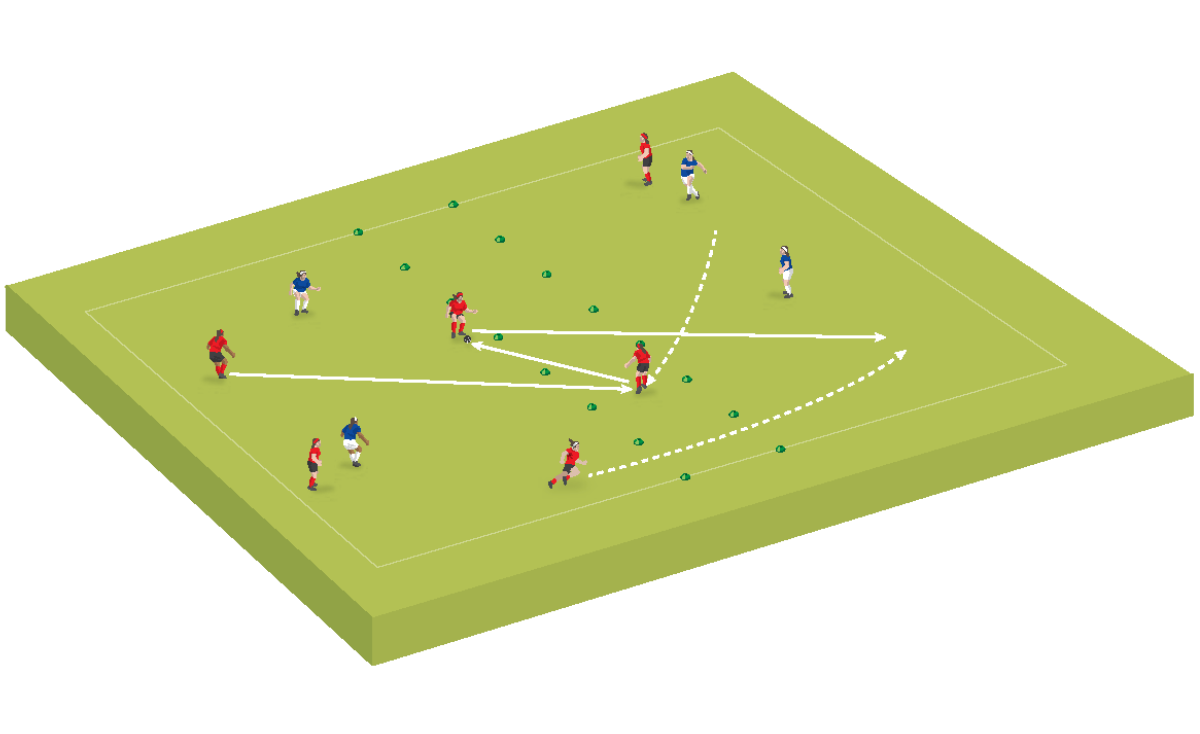
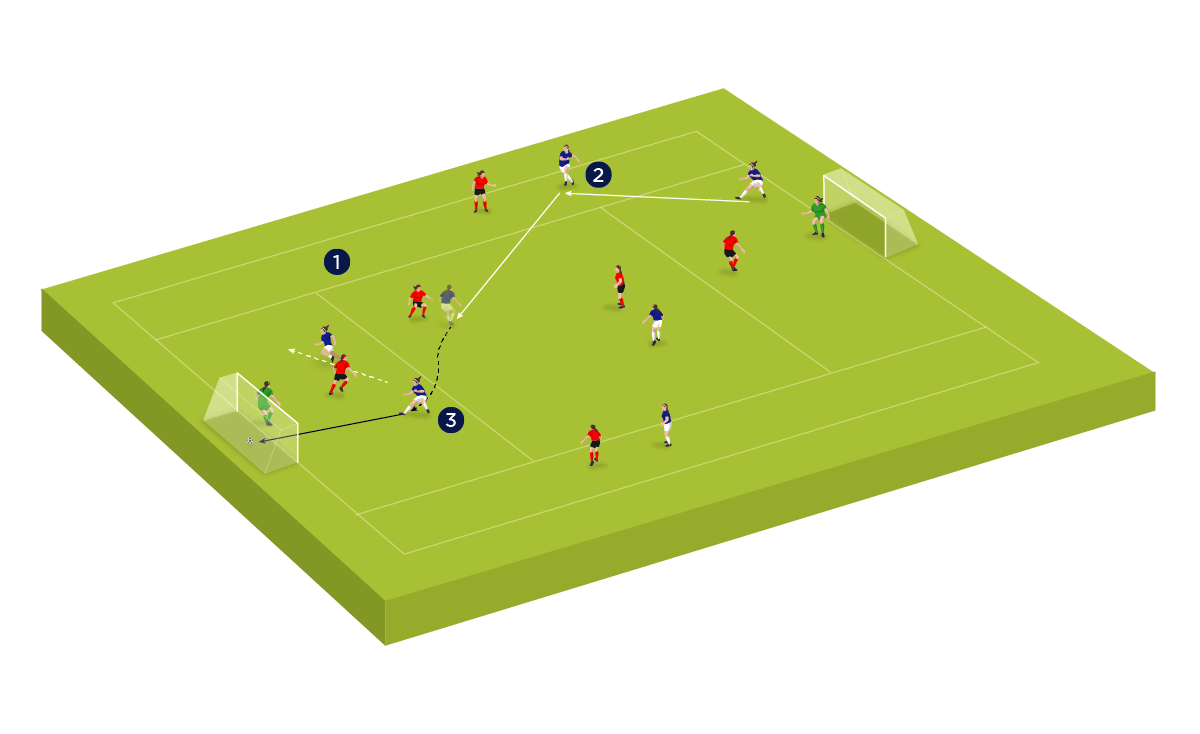
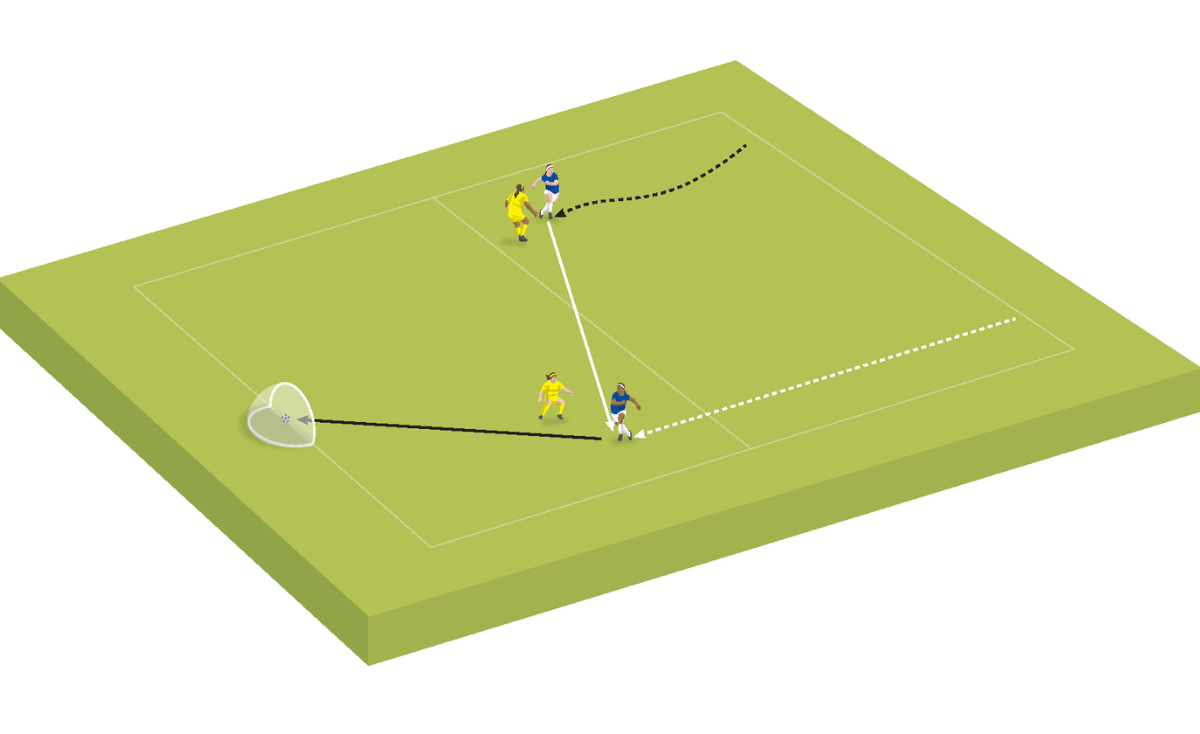
1. Four attackers start in one half, with two in the other. Two defenders are in each half
2. The attacking team look to switch play via a third-man runner
3. One attacker can drop into the middle channel to set the ball back
4. For the progression to be successful, one of the four attackers must receive the ball on the run in the opposite half
Small-sided game
Set up
Mark out an area relative to the age, ability and number of your players. Divide players into two equal teams, one team has a goalkeeper. Ideally divide players into attackers v defenders where possible. Place a large goal at one end and two mini goals at the other.
How to play
Play like a normal small-sided game. The defenders attack the two mini goals. The attacking team always restart play from the goal-line between the two mini goals.
Progressions/adaptations
The challenge can be increased by making the area smaller, or decreased by making the area bigger. You can add touch limitations to encourage quick passing and forward-thinking.
Coaching points
- Players should play with an open body to see the whole area
- Take your first touch in the direction you want to go
- Look for the further forward available pass
- Move as the ball is moving to give the receiver a good angle for their next pass
- Know when to change the tempo: Speed play up to drag defenders out of shape to create space for killer pass. Slow play down if defenders aren’t jumping and you need to entice them out, or when you need to regain control after a period of chaos
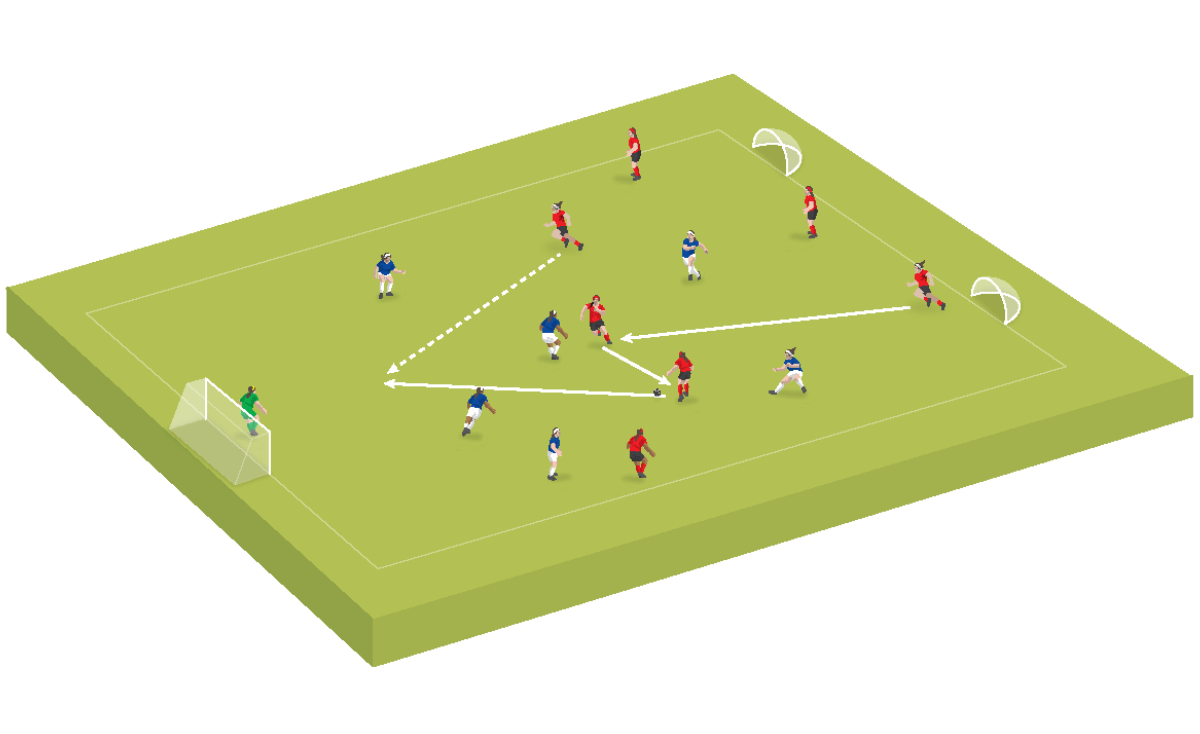
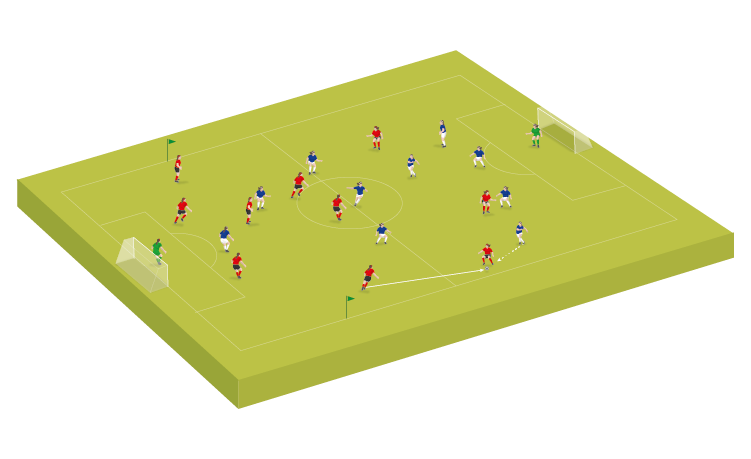
1. Play a normal small-sided goal
2. The defenders attack the two mini goals
3. The attacking team must always restart from the goal-line between the mini goals

Women's Soccer Coaching
Latest Content
Subscribe Today

Newsletter Sign Up
Subscribe Today
Newsletter Sign Up
Subscribe Today
Latest Issue

Discover the simple way to become a more effective, more successful soccer coach
In a recent survey 89% of subscribers said Women's Soccer Coaching makes them more confident, 91% said Women's Soccer Coaching makes them a more effective coach and 93% said Women's Soccer Coaching makes them more inspired.
*includes 3 coaching manuals
Get Inspired
All the latest techniques and approaches


Women's Soccer Coaching offers proven and easy to use soccer drills, coaching sessions, practice plans, small-sided games, warm-ups, training tips and advice.
We've been at the cutting edge of soccer coaching since we launched Soccer Coach Weekly in 2007, creating resources for the grassroots youth coach, following best practice from around the world and insights from the professional game.
